










Engineering for Impact: Ep. 13 of the ‘No Wrong Door’ Podcast
No Wrong Door is a podcast from Findhelp that explores how social care delivery is evolving to better support whole person care. Hosted by Findhelp’s VP of Marketing Amy Gordona, the series features conversations with social care experts, healthcare and government innovators, and Findhelp leaders who are shaping the future of access, coordination, and connected care.
Each episode offers an inside look at the systems, decisions, and ideas driving change—and what it takes to build a social safety net that works at scale.
Technology in social care is at its best when it acts as an invisible bridge—operating behind the scenes so care delivery remains front and center.
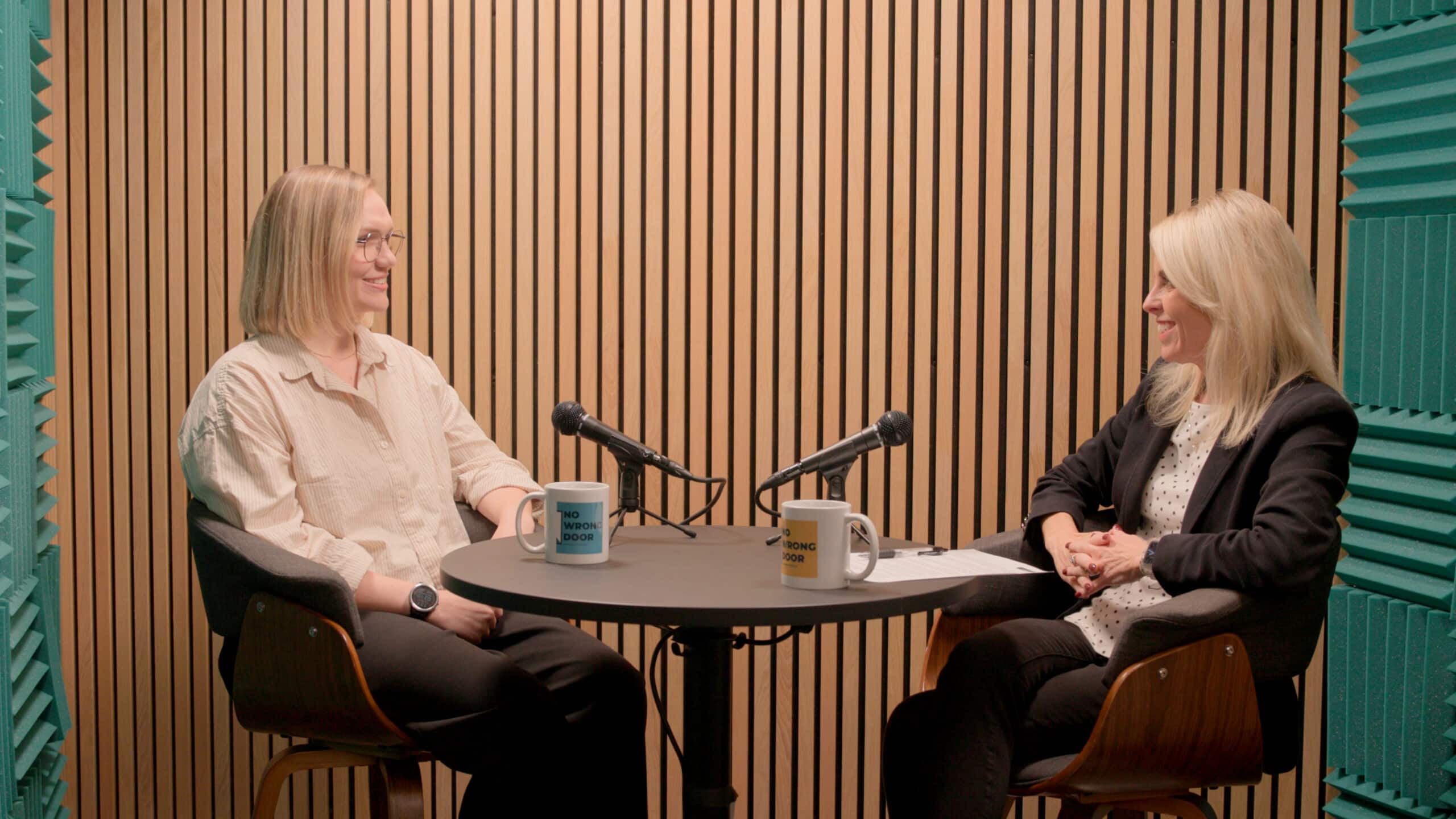
In Episode 13 of No Wrong Door, host Amy Gordona sits down with Rachel Frock, Director of Engineering at Findhelp, to explore how human-centered software design is quietly transforming an industry long reliant on paper forms, spreadsheets, and sticky notes. Drawing from her five years at Findhelp and her unique journey from music theory to software engineering, Rachel breaks down how frontline user feedback, customer-led product innovation, and engineering immersion trips are driving the digital evolution of social care delivery.
In this episode, we explore:

Building the invisible bridge: How subtle, intuitive technical infrastructure empowers navigators and CBOs without getting in the way.
Engineering through immersion: Why Findhelp sends engineers into the field to shadow frontline navigators, unlocking crucial user experience improvement opportunities.
Evolving from necessary tools to bold possibilities: How customer demand led to supportive innovations for complex reimbursement workflows and integrated behavioral health networks.
Watch episode 13: “Engineering for Impact”
Key themes from the conversation
Digitizing social care isn’t merely about replacing paper intake forms with web screens; it requires deeply understanding the real-world friction case managers face every single day. Rachel and Amy explore how empathetic engineering, on-site field research, and customer-driven platform innovation turn technical infrastructure into human-centered software design that drives connection.
Technology as an invisible bridge
When a family seeking support connects with a local community organization, the digital platform facilitating that interaction should feel completely seamless. For software engineers building social care infrastructure, success means crafting low-friction, reliable systems that allow navigators to keep their full focus on the person in front of them rather than struggling with software.
“Technology is often at its best when it acts as an invisible bridge. When a family in need connects with local support, they aren’t thinking about the infrastructure or the technology working behind the scenes. They are focused on getting help and the organizations supporting them are focused on delivering it.”
Amy Gordona
VP of Marketing
Findhelp
Cultivating empathy through customer immersion
Traditional software development often insulates engineers from the end-users they serve. Findhelp disrupts this pattern through immersion trips, sending product and engineering teams directly into healthcare facilities, call centers, and nonprofits to observe navigators in action.
By witnessing real-world friction points firsthand, such as page load speeds or awkward form dropdowns, engineers gain the context they need to solve genuine workflow problems.
“In engineering or any sort of product and engineering organization, oftentimes you don’t connect directly with the end users. You are somewhere off in a building, building out the technology in a dark room… Having that direct input—we specifically have invested in user research—to understand users’ needs really unlocks and takes the value of the product to the next level, where it’s actually providing and solving problems in real life workflows.”
Rachel Frock
Director of Engineering
Findhelp
The benefits of a mission-driven culture
Building software for a public benefit corporation requires combining technical precision with human empathy.
Rachel highlights how the prospect of creating technology that serves vulnerable communities naturally attracts people who care about others, who value personal relationships and peer support. This creates a culture where engineering teams support one another while scaling tools that help millions of individuals navigate crisis.
“Because this is a company that is mission-driven, it attracts people who care about people, which then means you’re working with people that care about others. And so even the culture itself is different because you’re surrounded by people that care not just about the company as a whole and the mission that we’re driving towards, but care about each other.”
Rachel Frock
Director of Engineering
Findhelp
LEARN MORE ABOUT WHAT IT’S LIKE TO WORK AT FINDHELP
From meeting immediate needs to imagining what’s possible
When Findhelp began digitizing social care workflows, the primary goal was to solve immediate tactical challenges: replace paper directories, organize program listings, and streamline basic referral intake.
As platform adoption matured, customer demand pushed engineering teams to design broader capabilities—such as embedding billing and reimbursement mechanics and expanding into behavioral health networks.
“Start by doing what’s necessary and then you’re able to start thinking about what’s possible… When I started at Findhelp, it was like, do what’s necessary. We need to respond to all these requests, solve all the bugs that are out there. I feel like we have evolved and more recently have hit a pivot point where we’re now imagining what’s possible.”
Rachel Frock
Director of Engineering
Findhelp
A bridge, not a barrier
As social care delivery continues moving into a connected digital future, human-centered software design is essential. By learning directly from frontline navigators and continually broadening what software infrastructure can achieve, engineering teams ensure technology remains an empowering bridge rather than a barrier.
Subscribe to No Wrong Door wherever you listen to podcasts to be notified when new episodes drop: