










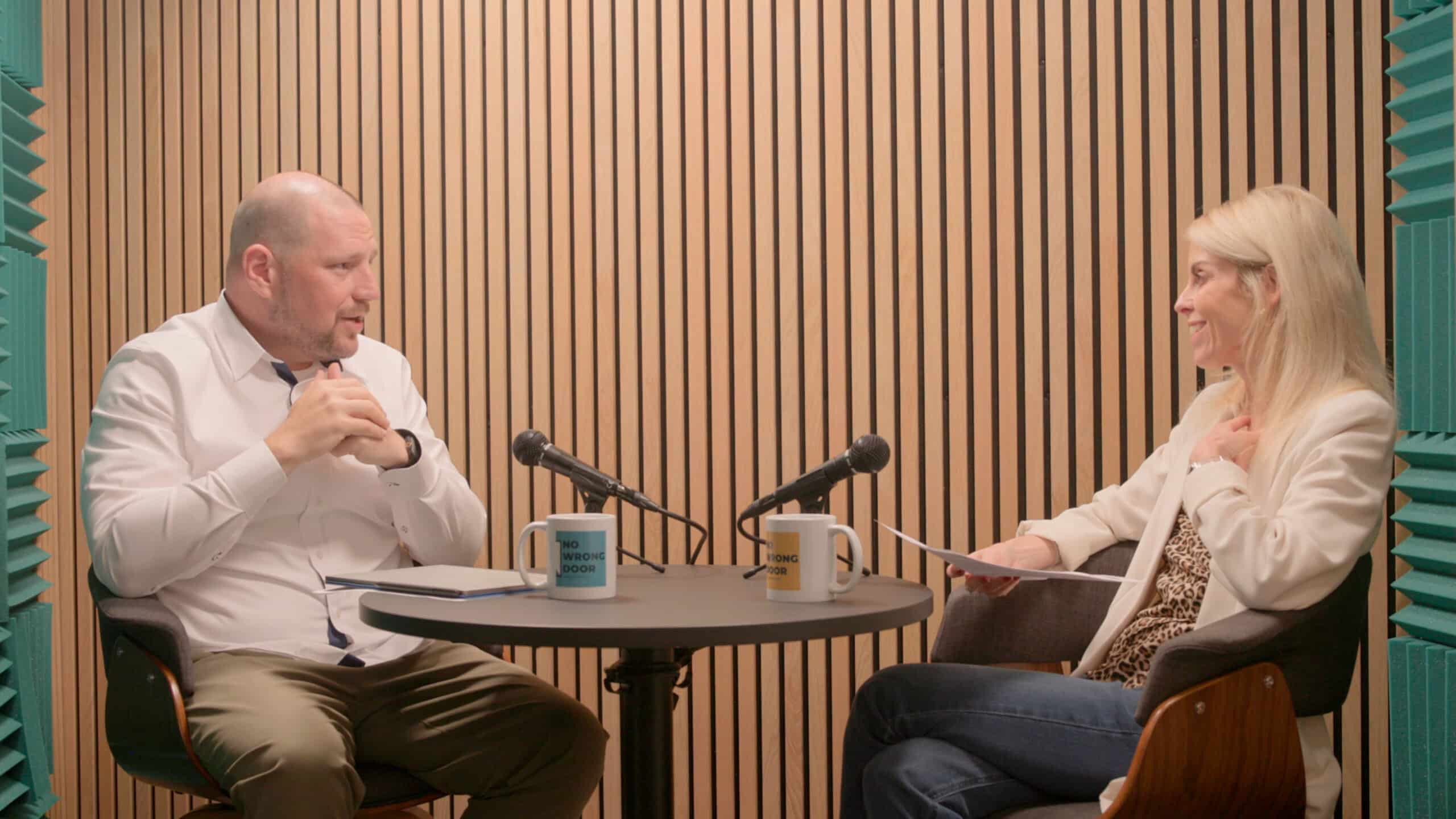
Building Person-Centric Systems: Ep. 10 of the ‘No Wrong Door’ Podcast
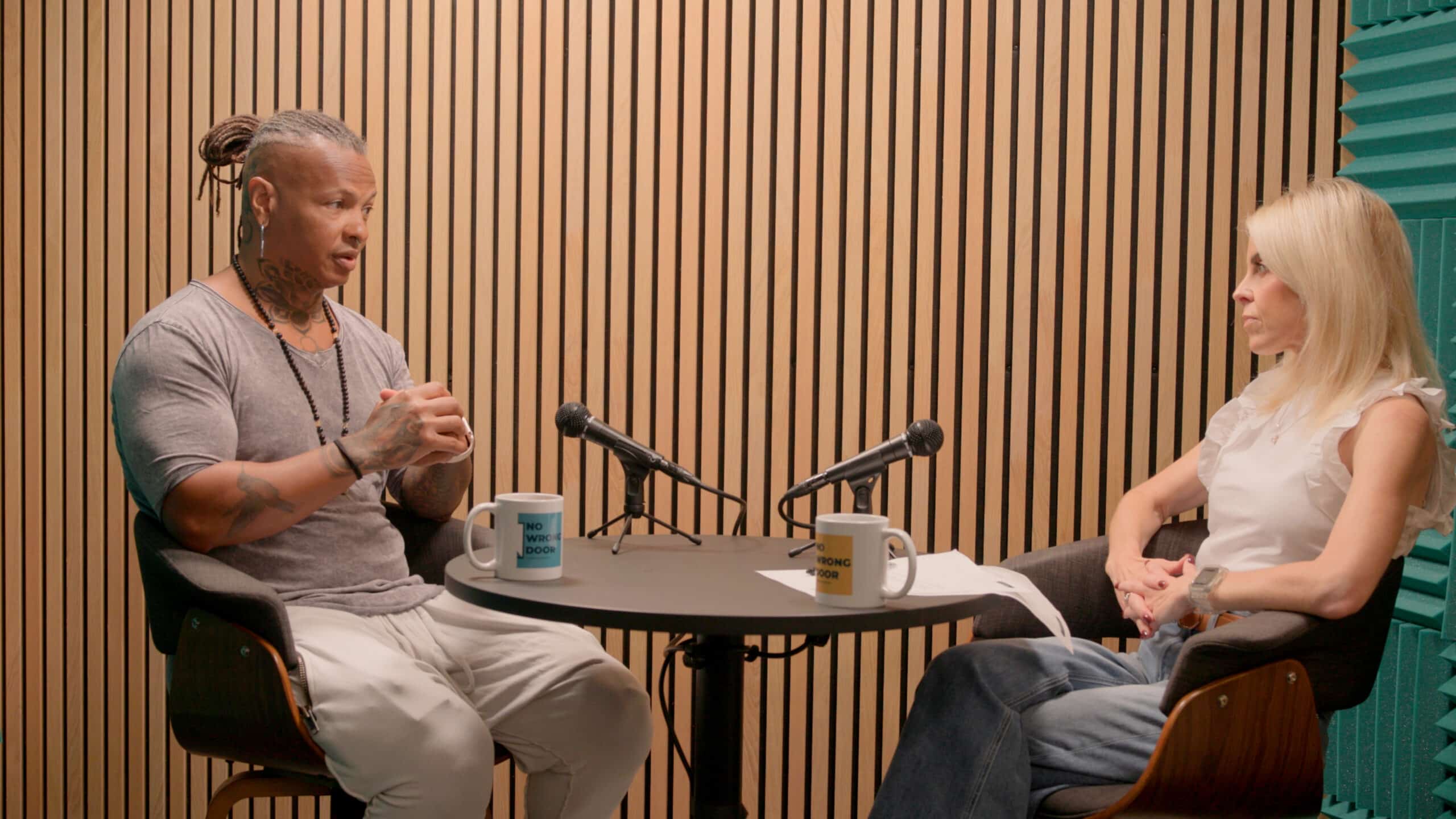
No Wrong Door is a podcast from Findhelp that explores how social care delivery is evolving to better support whole person care. Hosted by Findhelp VP of Marketing Amy Gordona, the series features conversations with social care experts, healthcare and government innovators, and Findhelp leaders who are shaping the future of access, coordination, and connected care.
Each episode offers an inside look at the systems, decisions, and ideas driving change—and what it takes to build a social safety net that works at scale.
When people think about the social safety net, they often picture individual, siloed programs—food assistance, housing support, Medicaid, or WIC applications. But for state governments, the ultimate hurdle isn’t launching these standalone resources; it’s connecting them so that residents can easily find support and administrators can see what’s actually working.
In Episode 10 of No Wrong Door, host Amy Gordona sits down with Kraig Dalton, Director of State Accounts on Findhelp’s government delivery team. Drawing from his personal history of utilizing Medicaid and navigating disconnected assistance as a young father in rural West Virginia, Kraig shares an inside look at how state agencies can transition from program-centric bureaucracy to human-centric coordination.
In this episode, we explore:

The state as the connective tissue: Why state governments are uniquely positioned to align healthcare providers, managed care organizations (MCOs), and localized non-profits under a singular digital ecosystem.
The handshake vs. the handoff: How true closed-loop referral tracking replaces the passive hope of a connection with accountable, collaborative care.
Data-driven budget adjustments: How integrating social care data with healthcare claims data allows states to measure long-term clinical outcomes—like lower hospitalization rates—and adjust program funding in real time.
Watch episode 10: “Building Person-Centric Systems”
Key themes from the conversation
Scaling social care across an entire state requires shifting deep-rooted administrative mindsets from tracking bureaucratic checklists to holistically improving human lives. Kraig highlights the tactical blueprints, agency integrations, and approaches that are necessary to break down traditional government silos and build a sustainable, outcome-driven health infrastructure.
Shifting from program-centric to person-centric care delivery
Government benefit programs often evolve independently across different decades, creating siloed operations that force vulnerable individuals to prove their eligibility over and over again.
When a state invests in a shared infrastructure, it flips the focus entirely.
Instead of viewing a resident through the lens of a single program’s restrictions, agencies can collectively wrap their resources around the individual’s complete set of needs.
“When a state takes that approach of creating this environment, they bring all of those agencies together and you move from a program focus to a person focus. So you go away from ‘Does Kraig qualify for my program?’ to ‘What are Kraig’s needs and how can we as a series of agencies wrap around Kraig to get him everything he needs, rather than qualifying him one program at a time?’.”
Kraig Dalton
Director of State Accounts at Findhelp
The handshake of closed-loop referrals
In traditional social care delivery, referrals to community resources are often treated as a passive handoff, leaving the care navigator to simply hope that the resident physically received the help they needed.
A true closed-loop system functions as a collaborative handshake.
It establishes an active, transparent link between the referring entity, the community-based organization (CBO), and the individual to ensure accountability and track when the need has actually been met.
“The way I think about it is a referral is a handoff and a closed-loop referral system is a handshake. So in a referral you send it off, you hand it to somebody and say ‘Here, it’s yours. Now you deal with it, I hope the person gets help’. In a closed-loop referral environment, you hand it to somebody and you say, ‘Hey, this is Kraig. These are Kraig’s needs’. The person on the other end says, ‘Hi, Kraig, I’m here. I can help meet your needs. And I’m going to tell the person who referred you that I help meet your need’.”
Kraig Dalton
Director of State Accounts at Findhelp
Measuring outcomes instead of measuring outputs
It is easy for large-scale public health programs to rely on basic outputs—such as counting the sheer volume of assessments filled out or referrals sent—to declare a program successful.
The real human and financial transformation happens when states move toward outcome tracking.
By merging social care data directly into healthcare claims databases, states can prove the tangible clinical value of social interventions, such as charting how a delivered food box directly decreased hospital readmissions for a diabetic patient.
“If you’re not tracking outcomes, you’re just measuring outputs. So you’re just counting how many referrals, how many assessments, but you’re not seeing what the impact of those [is].”
Kraig Dalton
Director of State Accounts at Findhelp
Turning the social care maze into a map
When a cornerstone entity like a state Medicaid agency—such as Tennessee’s TennCare program—takes the initial step to build a statewide social care ecosystem, it provides a blueprint for other departments to follow.
Bringing major state agencies like the Department of Health, Human Services, and Disability and Aging onto a single platform successfully collapses systemic silos.
This collective approach turns a confusing bureaucratic maze into a clear, navigable map for residents, insurers, and care providers alike.
“When I think about this at a macro level, we have a real opportunity between governments and insurers and health care providers to turn the social care navigation from a maze into a map… that says, ‘Okay, to do this, I need to go here, here, and here’.”
Kraig Dalton
Director of State Accounts at Findhelp
Learn more about TennCare’s success
Tennessee went live with a digital infrastructure designed to modernize care coordination and reduce inefficiencies while improving health outcomes for over 1.4 million TennCare Medicaid members.
The Tennessee Community Compass, powered by Findhelp, connects TennCare, its MCOs, healthcare providers, and CBOs through a centralized system that supports referrals, service authorizations, data exchange, and CBO payments.

Live from Tennessee: MCOs Complete 13,000 Screenings & 4,000 Referrals in First 3 Months
A vision for nationwide, seamless care
Ultimately, the ongoing evolution from isolated state programs to unified, person-centered care delivery points to an even larger, more ambitious future: As more states step up to build these foundational networks, the long-term vision is to create a reality where a person’s care history is just as mobile as they are—ensuring that structural transitions or geographical moves never mean starting over from scratch.
“My hope is that if Kraig moves from Tennessee to New Mexico or New Mexico to California, that there’s a way that everything that Kraig has, all the services that have been provided, the outcomes that have been given… travel with him in a way that is able to be seen and understood in a different state.”
Amy Gordona
VP of Marketing at Findhelp
What’s next for No Wrong Door?
“Building Person-Centric Systems” is available now—Episode 11 will be released on July 8 and features leaders from MHS Wisconsin (part of Centene Corporation) exploring how their operational model moved beyond compliance to measurable, whole-person impact.
Subscribe to No Wrong Door wherever you listen to podcasts to be notified when new episodes drop: