



Impact in Action Video: How the University of Hawaiʻi Empowers Student Success

Findhelp customers empower student success at more than 15 higher education institutions around the country, from community college systems to private universities and prestigious schools of medicine. These institutions want to help students achieve their professional goals and dreams, but social factors beyond the institutions’ control can have detrimental impacts on student success and graduation rates

Barriers to Student Achievement

Income, Pell Grants, and student aid have not kept up with the cost of college; affordability is a significant barrier to college completion and successful entry into the workforce. Students from communities with low incomes commonly contribute financially to their families while in school – not the other way around. Each year, 3 million students drop out of college because of a financial emergency of $500 or less (Hope Center for College, Community and Justice).

According to the Hope Center for College, Community and Justice’s most recent basic needs survey, nearly three in five of the almost 200,000 students who responded said they had experienced basic needs insecurity. 39% of students at two-year colleges and 29% at four-year colleges experienced food insecurity, and 48% of all students experienced housing insecurity.

Post-secondary credentials are key pathways to economic security; higher education institutions partner with Findhelp to provide access to support programs for their students so that they can focus on their studies, instead of worrying about their next meal or where they’re going to sleep that night. 

Learn how we’re helping colleges and universities across the country improve student outcomes and empower students.

Link to our higher education use case


Impact in Action: Our New Customer Video Series

We’re launching a new series as part of our storytelling initiative: “Impact in Action.” In this series we’ll explore stories of how our customers successfully partner with us to positively impact their communities and support the populations they serve. 

Watch the short video below to learn more about how the University of Hawai‘i empowers student success and achievement through the Findhelp platform. 


Supporting the Whole Student: the University of Hawai‘i

University of Hawai' System logoi

Founded in 1907, the University of Hawaiʻi (UH) System includes 3 universities, 7 community colleges and community-based learning centers across Hawaiʻi. In March 2021 UH launched their Student Basic Needs platform (powered by Findhelp) to provide a quick and easy way to connect with social care resources in their area. 

Using Findhelp’s single sign-on (SSO) capabilities, students and faculty use their university email credentials to log in to the platform, streamlining access to additional Findhelp features like favorites folders and referrals.

“This is not about what students have or don’t have; this is about humanity.”

– Farrah-Marie Gomes, Ph.D. | Associate Vice President for Student Affairs, University of Hawai’i System

Student Basic Needs Committee

UH President David Lassner formed the University of Hawai‘i Basic Needs Committee (UHBNC) to better understand and address food and other forms of basic needs insecurities in the student population. The UHBNC is dedicated to supporting students’ basic needs so that they can achieve their personal and educational goals. With designated committee members from each UH campus, the committee is familiar with accessible resources available specific to their campus and the surrounding community.

To gain insight into the social need barriers facing their students, UH partnered with Temple University’s The Hope Center for College, Community and Justice in 2020 to survey students and report on their social care needs. The Hope Center’s free reports and resources provide the evidence and the insight needed to support #RealCollege™ students. Despite the high levels of basic needs insecurity that were identified, the report showed that only a small number of UH students reached out for support.

To address the needs of their students, the Committee developed a Basic Needs Master Plan for social care barriers like food, housing, childcare, mental health, clothing, living expenses, and transportation. According to the 2020 UH student survey, more than half of their students experience some type of basic needs insecurity. 

Cover of the University of Hawaii's Student Basic Needs Master Plan

Notably, UH requires that students log in to their Findhelp platform via single sign-on, so that needs, resources, and outcomes can be tracked to an individual student’s record. Between March 2021 to January 2024, more than 4,000 students have logged into the platform, completing more than 21,000 searches and 2,000 connections. Staff, faculty, and students are all encouraged to use Findhelp and the basic needs committee website, and UH leads monthly webinars to teach people how to use their basic needs site and Findhelp platform.

Meeting Students Where They Are: Virtual Basic Needs Café

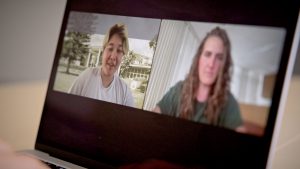
UH launched its Virtual Basic Needs Café in early 2023, and expanded it to all campuses later that spring. The program, available to students outside of regular business hours, connects them to professional staff to identify and access basic needs resources via UH’s Findhelp platform. The café operates Sunday to Thursday, from 8pm to 12am and provides a safe and welcoming space for students.
Virtual Student Basic Needs Cafe

A UH student being helped via the Virtual Student Basic Needs Cafe.


Support Student Success

If you’d like to learn more about how we partner with higher education institutions nationwide and can help you support your students, grab some time with us.

CTA - Chat with us

SDoH Analytics: Health Leaders Amplify Impact Through Insights

For people navigating the complexities of life, social care can be a bridge between struggle and progress, but for organizations providing support, understanding the needs of their communities can be a fragmented puzzle. Findhelp’s closed-loop referral management platform provides social drivers of health (SDoH) analytics and reporting that allow leaders in healthcare, education, and social care to see and measure the needs of their community and the impact of their actions. These insights also help social care groups identify trends, track needs, spot issues, and secure funding to help more people–all while protecting user privacy.


Highland Rivers: Seeing social care needs, serving with precision

Imagine a public safety net agency like Highland Rivers Behavioral Health in Georgia, an organization that serves individuals and families wrestling with food insecurity, housing instability, and a lack of healthcare.Highland Rivers’ clinicians and case managers use the Findhelp platform to identify and refer clients to local resources for food assistance and legal aid.

highland rivers behavioral health logo

Findhelp enables the company to amplify its impact by seeing and addressing needs with precision using the platform’s Customer SQL product. This feature enables Highland’s team to unlock a trove of insights, not just through tracked social care referrals, but through anonymous, aggregate search trends.

A recent Cobb County Courier article featured the success Highland Rivers has achieved from putting these insights to work. Highland’s Findhelp sites supported 8,661 searches, with ‘housing’ emerging as the top concern across the communities they serve. County-level analysis, however, revealed fascinating nuances. While ‘housing’ dominated several counties, ‘healthcare’ needs took the lead in Cherokee and Gilmer Counties, and Murray County grappled with food insecurity as its primary need.

This granularity is precisely what empowers Highland Rivers to meet people where they are. Informed by data, they can strategically allocate resources and tailor interventions. Knowing that Pickens County faces a housing crisis while Murray County prioritizes food assistance allows them to direct their investments and partnerships in the most efficient way.


Highmark Health: From insights to impact, building a data-driven social care network

Highmark Health is another thriving organization working with Findhelp to deliver better outcomes for its community. The organization serves over 7 million members in Pennsylvania, Delaware, and West Virginia.

A Findhelp partner since 2020, they leverage the platform’s power to connect members with local social services and streamline internal workflows. But Highmark takes it a step further. They harness Findhelp’s data by building custom SDoH analytics, powered by tools like Tableau, that allows them to identify high-performing partner organizations, track user engagement, and even map needs against external datasets like income, revealing deeper layers of insights.

One of Highmark’s most powerful initiatives is their social care network pilot in Allegheny and Westmoreland Counties. In partnership with Findhelp, they created a Trusted Network where participating community-based organizations (CBOs) receive financial support for services provided. To ensure value-based reimbursement to these CBOs, enhanced analytics were crucial. By leveraging Findhelp’s SDoH analytics, Highmark identified the top-performing organizations and tracked engagement, ensuring efficient resource allocation within the network.

Read our case study!


Empowering collective impact: Communities empowered, lives transformed

The stories of Highland Rivers, Highmark, and dozens of other customers  in the Findhelp network illustrate the transformative power of data-driven social care. Findhelp’s Customer SQL product empowers organizations to see beyond immediate needs, revealing the broader landscape of community struggles. This enables them to:

Ultimately, the insight the Findhelp platform provides isn’t just about numbers; it’s about making a positive impact on health and wellness. It’s about the Highland Rivers client finding stable housing or a healthy food source. It’s about ensuring health equity with access to essential healthcare and being there to ensure clients’ most pressing needs are met with dignity and ease. It’s about empowered communities, one insight at a time. As more organizations tap into the power of Findhelp’s data-driven solutions, the future of social care promises to be one of greater impact, deeper understanding, and ultimately, healthier communities for all.


Unlock SDoH insights with Findhelp

You can start unlocking insights from SDoH data by scheduling a demonstration of the Findhelp platform today. See how Findhelp makes managing social care initiatives more efficient and effective with complete closed-loop referral management and the nation’s largest network of free and low-cost social care programs.


PA Navigate: Partnering with HIEs to Support Pennsylvanians in Need

We are thrilled to announce that we have been awarded a contract with the Consortium of Health Information Exchanges (HIEs), funded by the Commonwealth of Pennsylvania’s Department of Human Services, to build a statewide online tool called PA Navigate that will connect Pennsylvanians in need of social care services with providers.

Findhelp has partnered with the HIE Consortium members (Central PA Connect, ClinicalConnect HIE, HealthShare Exchange, and Keystone Health Information Exchange) to build and support a system that addresses the social drivers of health (SDoH). Consortium members will use PA Navigate, powered by Findhelp’s closed-loop referral system and nationwide social care network, to assess the SDoH needs of Pennsylvanians and refer them to providers, with dignity and ease. 

Quote from Bill Marella

A key benefit of the PA Navigate platform (powered by Findhelp) will be its ability to allow healthcare providers to see the most complete view of an individual’s social care history and current status – to ensure Pennsylvanians are getting the help they need in the most efficient manner possible – while guarding their privacy and ensuring unrivaled protection of their personal information.

Press release link


Successful HIE Support: Idaho Health Data Exchange (IHDE)

Health information exchanges (HIEs) exist to “support health care professionals and patients to appropriately access and securely share a patient’s medical information electronically” (HealthIT.gov). At Findhelp, we have established best practices for supporting HIEs, from Idaho to Washington, D.C. and in-between. Below is just one example of how we partner to bridge the gap between medical and social drivers of health (SDoH) data. 

About IHDE

IHDE is a non-profit 501(c)(3) company and Idaho’s statewide HIE; they are dedicated to meeting the needs of healthcare providers and ensuring that Idaho’s citizens receive the most effective health services possible. IHDE works with a wide array of stakeholders to actively deliver best in breed technology infrastructure. They provide access to reliable data and information, combining traditional healthcare data with other data sources to help address the medical, behavioral, and social needs that influence the well-being of Idahoans.

Idaho Health Data Exchange logo

Partnering with Findhelp

IHDE has partnered with Findhelp since 2020 to better support clinical operations across the state through access to validated social care assessments, which both help providers who serve Idaho Medicaid beneficiaries and better enable them to refer patients to appropriate services in their community.

In this partnership, Findhelp facilitates service provider outreach and engagement on behalf of a collective of organizations, including local United Ways, hospital systems, health centers, YMCAs, regional governmental agencies, food banks, and many others. Through these collaborative endeavors, Findhelp supports IHDE and its membership in deepening partnerships, better understanding needs, and developing novel strategies to more effectively and efficiently deliver services.


Our Network in Pennsylvania

One of the reasons the Consortium chose Findhelp is because we have an engaged network that’s already in place. Our network spans the entire Keystone State and Pennsylvanians across the Commonwealth are using our platform to find and connect to needed services and support. Additionally, our superior integration capabilities, financial incentives to community-based organizations, and #1 rating by KLAS, a healthcare research firm, further recommended us. 

Findhelp’s data and analytic tools can identify gaps in services and provide actionable insights to inform public policy. For example, over the past two years, monthly users and searches on Findhelp’s network in Pennsylvania jumped 129% and 96% respectively, reflecting our important (and growing) role in connecting Pennsylvanians to local social assistance. 

Graph of top 5 search times in Pennsylvania over time
Graph of top 5 search terms in Pennsylvania over time


Partnering for Success in Pennsylvania 

Over the past five years more than 750,000 Pennsylvanians have already used Findhelp to connect with social care services. As of January 2024, we partner with ~40 customers through the Commonwealth to connect their patients, members, students, constituents, and clients to local resources. 

Logos from our Pennsylvania network of customers


Here are some highlights of how these organizations successfully partner and innovate with us to lift up their communities.

Highmark Health

A national blended health organization, Highmark Health and their businesses support millions of customers with products, services, and solutions aligned to their mission of creating remarkable health experiences, freeing people to be their best. Headquartered in Pittsburgh, they are regionally-focused in Pennsylvania, Delaware, West Virginia, and eastern and northwestern New York with customers in 50 states and the District of Columbia.

In partnership with Findhelp, Highmark launched their social care platform in August 2020 and have created a Trusted Network of more than 100 social service programs in Pennsylvania to receive referrals from their staff, patients, and members.  

Quote from Amy Shannon at Highmark Health


Washington County

Washington County Department of Human Services supports individual and family needs of Washington County residents in order to promote self-sufficiency and improve their quality of life. 

Washington County Pennsylvania logo

They launched the Help In Washington platform (powered by Findhelp) in June 2022; since then, more than 2,500 community members have sought assistance with food, housing, employment, and more. The County has raised awareness for this service through the use of creative postcards and QR codes which they distribute at their events.

The county’s help center, housing coordinators, veterans assistants, and youth services coordinators all leverage Help In Washington to streamline their workflows while making it easier for Washington County residents to get the support they need. County staff are also working closely with public school guidance counselors to provide additional support and training to enable them to leverage the platform to address their students’ social needs. 


Geisinger Health

Geisinger Health is a health and wellness organization focused on making better health easier for Pennsylvania communities through primary care, specialty medicine, pharmacies, health plan options, and more. Operating for more than 100 years with over 24,000 employees, innovation through transformative healthcare delivery is at the core of their model.

In 2020, Geisinger launched their Neighborly platform (powered by Findhelp) to assist patients and members in navigating for social care services. Since then, they have expanded into staff referrals via an integration with their Epic electronic health record (EHR) system and continue to innovate by establishing relationships with local nonprofits to improve patient experiences, quality, efficiency, and outcomes.


Next Steps for PA Navigate & Pennsylvania

On January 23, 2024, Pennsylvania Department of Human Services (DHS) Secretary Dr. Val Arkoosh, Findhelp Founder & CEO Erine Gray, and Community Action Partnership (CAP) Lancaster CEO Vanessa Philbert introduced PA Navigate’s public-facing website, pa-navigate.org, the first step in a multi-year project.

Not only will individuals be able to find help for themselves via the platform, but local nonprofits, healthcare organizations, state and county agencies, and community-based organizations will be able to refer individuals for assistance related to their social care needs. These agencies will also be able to track the outcomes of these referrals to ensure individuals’ needs have been met. 

Secretary Dr. Arkoosh quote

“We have built a strong relationship of trust with Pennsylvanians and are excited to work with our new partners to help more residents in need,” said Findhelp Founder and CEO Erine Gray. “Every member of the Consortium cares deeply about the people of the Commonwealth.”

Speakers at the DHS press event for PA Navigate
Lancaster, PA. (L-R) Erine Gray, Alice Yoder, Keith Cromwell, Dr. Val Arkoosh and Vanessa Philbert, pose for a group photo after Tuesday’s PA Navigate launch event. The Pennsylvania Department of Human Services (DHS), along with local partners and officials announce the launch of PA Navigate, an online tool that connects Pennsylvanians with community-based organizations, county and state agencies, and healthcare providers, for referrals to community resources that help them meet their most basic needs like food, shelter, transportation, and more. PA Navigate also allows individuals to refer themselves for services and facilitates greater connection and communication between healthcare providers and organizations that serve shared populations. January 23, 2024.


CTA - Watch the announcement


We can help your constituents

To learn how we can help you support your constituents, connect with our team.

CTA - Chat with us

Basic Needs Navigation to Help Families Thrive

Child Welfare departments and child-serving organizations across industries face the complex challenge of reducing child removals while grappling with the unmet basic needs of children and families. Significant hurdles exist in navigating the maze of services, from mental health and substance abuse treatment to programs that address basic needs like paying for utilities, housing, transportation, food, and employment assistance. 

Up-to-date knowledge of these programs, eligibility requirements, how to enroll, and capacity is difficult at best and can be exacerbated by issues like staff turnover and cross state kinship placements. 

Findhelp is dedicated to supporting the holistic needs of children and families. Whether that’s ensuring families have access to services when a need first arises, to being there when crisis strikes, we’re committed to ensuring that families — and their advocates — have a trusted resource at their fingertips.

Read our child serving use case


Supporting Families Along All Points of the Continuum

The Findhelp network spans the entire United States and millions of people across the country are already using our publicly-available, free online platform (findhelp.org) to find and connect to needed services and support.

Prevention Levels


Unique Ways Findhelp Supports the Holistic Needs of Children and Families

Ensuring the health and well-being of children and families is a community effort. We’re grateful to work with hundreds of organizations at the center of children and family services — from health care entities and health plans, to nonprofits, state and community-based child welfare agencies, and more. Below is just a snapshot of some of the organizations we’re partnering with to help families thrive.

Find Help Georgia

A partnership among Prevent Child Abuse Georgia, the Georgia Department of Early Care and Learning, and the Technical College System of Georgia and housed in the Georgia State University School of Public Health, the Find Help Georgia platform and mobile app (powered by Findhelp) were launched in 2022.

“What’s wonderful about Find Help Georgia is how easy it is to search and self-navigate for resources, even without creating an account. It’s also simple, and free, for helpers and organizations to keep up with the resources shared with the individuals and communities they serve,” said Prevent Child Abuse Georgia Training and Resource Coordinator Kimberly Stewart-Lucas.

Individuals can search by ZIP Code or speak directly with a resource specialist by phone or online chat.

Find Help GA quote

Sutter County Children & Families Commission

Sutter County Children & Families Commission is committed to ensuring all children ages 0 to 5 are born healthy and raised in nurturing homes and communities. The Commission is led by nine individuals appointed by the Sutter County Board of Supervisors. The Commission adopts a strategic plan that addresses identified challenges, strengths and problems faced by children 0 to 5 and their families and funds programs and services that align with the plan.

They launched the Sutter Kids platform (powered by Findhelp) in 2022 to help parents & families find assistance, and help organizations coordinate care.

Sutter County quote

Kids’ Central

Formed in 2003, Kids Central is the lead nonprofit agency charged by the State of Florida to treat and prevent child abuse in several counties. As a prevention program, Kids Central offers Kinship Care Support for relatives raising relative children to keep them from entering foster care. For children who cannot safely remain with their families, Kids Central recruits, trains, and licenses foster homes.

Kids Central Connect (powered by Findhelp) enables investigators and case managers to connect families to both protective factor services as well as apply, manage, and track multiple family referrals to Kids Central’s evidence-based programs.

Kids Central quote


Findhelp’s Nationwide Network

Millions of individuals have used the Findhelp platform to find and connect to free and reduced-cost health and social resources in their communities. Our industry-leading network serves individuals in every ZIP Code in the United States.

We partner with more than 600 customers nationwide, including state, county, and city governments and hundreds of payer and healthcare organizations. We work with nearly a dozen state agency customers in Colorado, Delaware, the District of Columbia, Georgia, Indiana, Missouri, Pennsylvania, South Dakota, Tennessee, and West Virginia. 

Seeker Journey


Partner With Us!

To learn how Findhelp can help you achieve your organization’s strategic social care goals of supporting the holistic needs of children and families, connect with our team.

Read our child serving use case

“American Compassion” Podcast: LBJ and the American Social Safety Net

On January 8, 1964 (60 years ago today!) President Lyndon Baines Johnson (LBJ) gave the State of the Union address to the United States Congress. During his speech, LBJ proposed legislation as “an all-out war on human poverty” in response to a national poverty rate of around nineteen percent: “This administration today, here and now, declares unconditional war on poverty in America”.

In honor of this declaration and LBJ’s progressive legacy, we’re launching season two of American Compassion, our podcast about the history of the social safety net in America.

Listen to the podcast button

From the New Deal to the Great Society

In season 1 of American Compassion we went back in time to the turn of the 20th century to explore poverty and wealth, philanthropy and charity, work, health and politics, and policy at a time when the idea of a safety net was just a dream, and we dove deep into what and who it took to make those dreams a reality. From workplace safety, fair labor standards, and child labor laws to the New Deal, we scratched the surface of the complex history of the social safety net in America.

American Compassion logo

In season 2, we explore not only what programs and legislation President Johnson created to build the safety net we have today, but we also delve into why LBJ was so committed to civil rights, education, economic opportunity, and so much more. We do this through both archived recordings and speeches and interviews with Pulitzer Prize-winning biographer Robert Caro. Other guests on the podcast include biographers, economists, policy advisors, and historians, H.W. Brands, Julian Zelizer, Guian Mckee, Mark Updegrove, Martha Baily, Andrew R. Smith, Melody Barnes, and Erine Gray.

Episode 1: Taking The Reins and Passage of The Civil Rights Act 

In May of 1964, six months before he would be elected president of the United States in a landslide victory, President Johnson laid out his vision for The Great Society in a speech at the University of Michigan: “The Great Society rests on abundance and liberty for all. It demands an end to poverty and racial injustice, to which we are totally committed in our time.” It was there that he was to begin his life’s work, with “liberty for all”. Passing the civil rights bill was crucial for Johnson, not only because he was continuing Kennedy’s legacy, but because it was a foundational piece of his Great Society and the American Safety Net.

In this episode we explore Lyndon Baines Johnson the man and the president with Pulitzer Prize-winning biographer Robert Caro, we hear conversations between LBJ with Martin Luther King Jr. and we get a better understanding of the context and the consequences of this monumental moment in American history.

Mark Updegrove quote.

Episode 2: The (Revolutionary) Economic Opportunity Act

It’s the summer of 1964 and Lyndon Johnson has just signed the most sweeping civil rights legislation since Reconstruction, but when it came to the safety net Johnson’s vision encompassed far greater legislation. President Johnson was willing to wager his presidency on the War on Poverty – but why? 

In this episode, we will pull apart the fine details of the Economic Opportunity Act and hear some conversations that illustrate the tension and the stakes of creating some of the most revolutionary safety net programs of the 20th century. We’ll talk about why the War on Poverty and programs like Community Action, Job Corps, and Head Start were so important to LBJ as a person and as president, and we’ll talk about the compromises it took to create and pass this legislation. In addition, we’ll explore the impact of programs like the Job Corps through the experiences of George Foreman.

Episode 3: The Road to Realization for Medicare and Medicaid 

By passing the Civil Rights Act on July 2, 1964, and The Economic Opportunity Act on August 20, 1964, President Lyndon Johnson continued the work of Franklin Roosevelt as an interim president before he was elected in his own right in November of 1964. However, there was a significant element of the safety net that no president before LBJ was able to conquer, and that was healthcare. In this episode, we explore Medicare’s tenuous, little-known road to realization and the masterminds behind its conception.

Episode 4: The Legacy of The War on Poverty

In his State of the Union address on January 8, 1964, Johnson says, “This administration here and now declares unconditional war on poverty in America.” But we still see poverty in America today; does that mean the War on Poverty failed? In this episode, we’ll look at the legacies of the Great Society, the War on Poverty, and LBJ’s presidency.  What did the policies that came out of his administration mean for the American Safety Net, and why aren‘t more people aware of LBJ’s social policy legacy?

Listen to the podcast button

Partner With Us to Rebuild the Safety Net

If you’d like to learn more about how we partner with more than 600 customers nationwide to rebuild the social safety net, connect with us.

Health Equity Quality Measures: Supporting Accreditations, Regulations, & Policy

Social care and health equity quality measures exist to ensure healthcare organizations are providing high-quality services that relate to one or more goals including effective, safe, efficient, patient-centered, equitable, and timely care.

In late 2022 and early 2023 the Joint Commission, National Committee for Quality Assurance (NCQA), and Centers for Medicare & Medicaid (CMS) introduced new requirements to advance health equity. Healthcare and health plan organizations will now be required to report on their efforts to reduce health disparities and screen patients for social determinants of health (SDoH) needs. 

Read on to learn how Findhelp is here to support you and your organization across these various policies, accreditations, certifications, and requirements into 2024.


NCQA: Health Equity Accreditations

The National Committee for Quality Assurance (NCQA) provides 2 accreditation options: the Health Equity and Health Equity Plus. Each provide health care organizations with an actionable framework for improving health equity; these accreditations are starting to be required by state Medicaid agencies in order to be considered for contracts.

NCQA logo

Findhelp software helps customers earn these accreditations via closed-loop referral tracking (married with the customer’s system-of-record data) and Community Engagement activities (outreach, partnerships, and trusted networks), as well as supporting the discovery / confirmation of non-discriminatory practices at community-based organizations.


NCQA Health Equity Accreditation Logos


Learn from successful customers


The Joint Commission

The mission of The Joint Commission is to continuously improve health care for the public, in collaboration with other stakeholders, by evaluating health care organizations and inspiring them to excel in providing safe and effective care of the highest quality and value.

They do this by setting quality standards, evaluating an organization’s performance, and providing an interactive educative experience that provides innovative solutions and resources to support continuous improvement.

Joint Commission logo


Requirements to Reduce Health Care Disparities

These Joint Commission’s requirements to reduce disparities took effect on January 1, 2023, and apply to organizations in accreditation programs for ambulatory, behavioral and human services, critical access hospitals, and hospitals.

Findhelp’s product and services support all of the Joint Commission’s new requirements to Reduce Health Care Disparities:


Health Care Equity Certification

In July 2023 the Joint Commission started accepting applications for a new Health Care Equity Certification to recognize organizations that go beyond the basic accreditation requirements and strive for excellence. It’s a voluntary program for hospitals, separate from accreditation, with a focus on health care equity. Certification requirements build upon long-standing and recently-released health care equity accreditation requirements.


The Centers for Medicare & Medicaid Service (CMS): Health Equity Framework

CMS is the federal agency that provides health coverage to more than 160 million through Medicare, Medicaid, the Children’s Health Insurance Program, and the Health Insurance Marketplace. CMS works in partnership with the entire health care community to improve quality, equity and outcomes in the health care system.

Centers for Medicare and Medicaid Services logo

CMS updated their framework for health equity to highlight Five Health Equity Priorities for Reducing Healthcare Disparities:


Learn from successful customers


Unique Ways Findhelp Supports Health Equity Quality

Social care and health equity quality measures, whether legally required or voluntary, are an important differentiator for healthcare organizations. At Findhelp, our policy team closely monitors updates regulatory changes so that we’re ready to support and advise you.

Here are some of the services we provide:


Quality Support for Quality Measures

Connect with our team to see how we can help your organization acheive health equity accreditation and support your social care requirements and regulations.

Welcome Home: Helping Immigrant and Refugee Families Thrive

Many American cities, counties and towns are experiencing a surge  of newly-arrived immigrant and refugee individuals and families. The New York Times has described some of these towns as “welcoming but worried”.  Communities have found many of their  public and private social services overwhelmed by unexpected placement of refugees. Well-intentioned communities need support in helping immigrant and refugee families thrive.

Connecting to these services can be a complicated and overwhelming task due to cultural, economic, and language barriers. We partner with government agencies and community organizations responsible for providing vital, life-saving services to those just arriving, and our technology enables both self-referrals and assisted navigation to housing, food, healthcare, legal aid, and other resources. 


How the Findhelp Platform Supports Immigrants and Refugees

The programs that are part of the Findhelp network are as diverse as the people they support. We have multiple ways for users to find the programs that are the best for them or the person they’re helping.

Program Filters

Program language filter screenshot

Digital Equity

Language Support

Language Translation Screenshot


Partnering with Our Customers to Support Their Communities


City of Dallas logo

The Welcoming Communities and Immigrant Affairs (WCIA) Division of the City of Dallas seeks to bridge the space between newcomers and existing Dallas residents to foster informed understanding and promote shared leadership.​​​​​


Immigrant Welcome Center logo

The Immigrant Welcome Center (IWC) collaborates with Findhelp to augment their mission to be a trusted partner and advocate for all immigrants. IWC’s work includes immigrant and refugee programming, collaboration with local leaders, and the assembly of a community-based network of services. 

Watch our short Findhelp films documentary about how the Immigrant Welcome Center is helping immigrant and refugee families thrive.


How Can We Help You Support Immigrants and Refugees?

Schedule a demo with us to see how we can partner with your organization to address the social needs of the immigrants and refugees you serve and support.

Call to action: collaborate with findhelp

Social Care Without Stigma: Supporting People Living with HIV/AIDS

HIV, or the human immunodeficiency virus, weakens someone’s immune system by destroying their cells that fight disease and infection. While there is currently no cure for HIV, with proper medical care, it can be controlled. If left untreated, HIV can lead to AIDS (acquired immunodeficiency syndrome).

According to the Centers for Disease Control and Prevention (CDC), an estimated 1.2 million people in the United States had HIV at the end of 2021, and of those people, about 87% knew they had HIV (source). CDC data shows that from 2017 to 2021 HIV diagnoses in the US decreased 7% overall, but there were still more than 36,000 people who received an HIV diagnosis in 2021 (source). The CDC has a goal to decrease the number of new HIV diagnoses to 9,588 by 2025 and to 3,000 by 2030.

This post is the second in a two-part series timed to World AIDS Day on December 1 (read the first part).

the social care challenges faced by people living with HIV / AIDS

Specific Findhelp platform features designed to support them

Innovative ways that we’re collaborating with our customers for whole person care


How stigma harms people living with HIV/AIDS

There is widespread social and individual stigma surrounding HIV: negative attitudes and beliefs about people living with HIV. As a result of this stigma, people living with HIV often face high levels of discrimination.

Map showing HIV infection rates per U.S. state.
Darker colors = higher rates of infection.

According to the National Institutes of Health, social stigma surrounding HIV can result in:

  • Isolation
  • Social exclusion / loss of social support
  • Diminished self-esteem
  • Restricted opportunities for employment, education, and personal relationships
Graphic of interlocking hands

HIV stigma can also lead to “reluctance in seeking HIV testing, disclosing HIV status, or accessing healthcare services, hindering timely diagnosis and engagement in care” (source).


How our platform makes it easy to find help

As highlighted by the American Psychological Association, HIV is a disease that “is embedded in social and economic inequity, as it affects those of lower socioeconomic status and impoverished neighborhoods at a disproportionately high rate” (source). Our nationwide platform lists free or low-cost programs that provide direct services to address the social impacts of chronic disease and illness.

Easily identify non-medical needs

Customers can implement custom or standard social needs assessments on their Findhelp platform. Individuals can self-assess or be helped by a staff navigator.

  • Based on the responses, the platform will display a curated list of partner resources or a personalized search that highlights relevant programs and services. 
  • Our platform provides filters (“HIV/AIDS”, “AIDS Treatment”, “AIDS-Related Lymphoma”) for people to easily find and connect to both medical treatment and targeted support resources provided by more than 1,200 programs nationwide.
  • People with chronic illnesses like HIV/AIDS often struggle with decision fatigue, and we do our best to make it easy to quickly connect to resources that can help.
Screenshot of HIV/AIDS typeahead search

Social care without stigma

Individuals can use our platform to self-navigate, anonymously and securely. Furthermore, we have a “Don’t reach out” option on our referral form that gives the program  a heads up that someone needs their help but keeps the initial outreach in the hands of the individual, as an added layer of privacy. Our platform is HITRUST certified and HIPAA-compliant.

Screenshot of referral form


Supporting people living with HIV / AIDs

We partner with several of our customers nationwide to connect people to local resources. Here are some highlights of how these organizations successfully partner and innovate with us to lift up their communities.

Siloam Wellness

Siloam enriches the well-being of people living with HIV/AIDS by providing a broad range of integrative mind, body and spirit services and programs.

When the city of Philadelphia shut down in early 2020 due to the COVID-19 pandemic, Siloam’s Executive Director, Sarina DiBianca, got all of their classes online in only four days, and used it as an opportunity to open them up to participants anywhere in the world, in part by listing them on the Findhelp platform. 

Siloam Wellness Center logo
Last week our storytelling initiative, Findhelp films, released a documentary shortabout Siloam’s holistic work to support people living with HIV/AIDS.

Classes like chair yoga, grief group, trauma support, and breathwork were now available to anyone with an internet connection. Siloam’s Man Cave Support Group and HIV/AIDS Support Group remained reserved specifically for those with an HIV/AIDS diagnosis, but their trauma, grief, and movement classes were opened to the public. These programs were listed on the Findhelp platform, and Sarina turned on referrals in hopes of reaching more people in need of these vital services. 

Today, Siloam receives around 100 referrals a month on the Findhelp platform from individuals and care navigators nationwide. Not only does the Siloam team respond to every referral, they also update the status to let care navigators know that they reached out. When Sarina emails a client, she shares all of the programming at Siloam. She knows that someone might have been referred to a yoga class but actually needs the Grief Group. Even if someone isn’t ready to attend right away, they have the knowledge that there’s a safe space waiting for them and lots of different ways to get involved and be supported.


Dallas County, Texas

Dallas County has a population of 2.6 million and is the ninth-most populous in the United States. Its county seat is Dallas, which is also the ninth-largest city in the United States. It’s a very diverse county, with only 28% of residents identifying as non-Hispanic White (according to the 2020 U.S. census. Their mission is “To provide quality service, public safety, and positive behavior change through the use of effective techniques for the betterment of the community.”

Dallas County is also on a mission to end the HIV Epidemic in Dallas by 2030. 

Dallas County logo


CommUnityCare Heath Centers 

CommUnityCare (CUC) is a federally qualified health center (FQHC) that serves uninsured and underinsured people in Central Texas. They operate a health center dedicated to providing innovative HIV treatment and prevention to those living with HIV and those at a high risk of contracting the disease. 

CommUnityCare logo


DC Health

The Washington, D.C. Department of Health (DC Health) promotes health, wellness and equity across the District. Their responsibilities include identifying health risks; educating the public; preventing and controlling diseases, injuries and exposure to environmental hazards; promoting effective community collaborations; and optimizing equitable access to community resources.

DC Health logo

DC Health launched LinkU (powered by Findhelp) in 2019 in an effort to provide accessible self-navigation services for residents in the greater-DC area.


Integral Care

Integral Care is a federally qualified health center (FQHC) in Austin, Texas that supports adults and children living with mental illness, substance use disorder, and intellectual and developmental disabilities through a 24-hour helpline, counseling, drug and alcohol treatment, and housing.  

Integral Care logo


Partnering for good

If you’d like to learn more about how we partner with customers nationwide and can support your organization’s social care goals, connect with our team.


Our Expanding Commitment to North Carolina

The Findhelp network has been serving customers across the country for nearly a decade, and we’ve been partnering with organizations in North Carolina since 2016 to connect the individuals they serve to local, state, and national community social care resources and services. Read on to learn more about our vast statewide network of customers and community partners and how we’re collaborating and innovating with to improve health outcomes.

The North Carolina Landscape

Every state has its own unique challenges. According to the North Carolina Department of Health and Human Services (NCDHHS), these are some of the social care barriers facing North Carolinians:

North Carolina network

To address these challenges, NCDHHS successfully applied for a Medicaid 1115 waiver and awarded a sole-source contract to a social care vendor. The approved waiver pilot is focused on high-need populations like individuals with significant behavioral health issues, children in foster care, and people struggling with substance use. Nearly four years into the Healthy Opportunities project (using the NCCare360 referral platform), things are still moving slowly. Without changes, especially to the referral process, North Carolinians in need of services could keep not getting the help they need (Forbes, North Carolina Health News, WRAL-Raleigh).

Complex Support to Address Complex Needs

At Findhelp, we have a history of successfully supporting 1115 waivers, facilitating invoices and payments, and supporting mental and behavioral health across industries and states.

We’ve built many platforms like NCCare360 that support comprehensive social care programs like Healthy Opportunities that are delivering value, expanding in scope, and sustaining funding to provide the best outcomes for individuals. What makes the difference? Experience designing and launching successful programs, a dedication to interoperability, support for CBO choice, and a fundamental commitment to privacy.

Prioritizing Privacy

Privacy is a cornerstone for both Findhelp and the customers we serve, as is protecting the dignity and safety of the people seeking services. Here’s how we think about the privacy of our users:

Getting these programs off the ground is complex; you need a partner who has done it before, and done it successfully. 

NAMI Testimonial

Our Network in North Carolina

Organizations across industries continue to sign with Findhelp and use our platform to support their populations.

North Carolina Customer Timeline


One of the reasons these organizations are choosing Findhelp is because we have an engaged network that’s
already in place. Our network spans all 100 counties and North Carolinians across the state are using our platform to find and connect to needed services and support. 

Findhelp’s data and analytic tools can identify gaps in services and provide actionable insights to inform public policy. For example, over the past two years, monthly users and searches on Findhelp’s network in North Carolina jumped 551% and 270% respectively, reflecting our important (and growing) role in connecting North Carolinians to local social assistance. 

Quarterly-Searches-in-North-Carolina-on-findhelp-Platforms

As of November 2023, we partner with more than 16 customer organizations throughout North Carolina to connect their patients, members, students, constituents, and clients to local resources. Below are highlights of how some of these organizations successfully partner and innovate with us to lift up their communities.

Building Trusted Networks of Community Partners

A successful and sustainable network requires that Findhelp, our customers, and community partners each have a seat at the table. These partnerships are the foundation for building Trusted Networks

Trusted Networks allow Findhelp customers to prioritize specific community partners and highlight them in search results on their platform. This tight-knit network of priority partners helps establish deep, long-term relationships which lead to stronger outcomes for your seekers.

Atrium Health logo

Atrium Health is a nationally-recognized leader in shaping health outcomes through innovative research, education and compassionate patient care. Based in Charlotte, North Carolina, Atrium Health is an integrated, nonprofit health system with more than 70,000 teammates serving patients at 40 hospitals and more than 1,400 care locations.

Carrabus County Testimonial

Novant Health

Novant Health is a multi-hospital system with more than 350 physician practices offering advanced medical treatment and headquartered in Winston-Salem, North Carolina.

Expanding the Capacity of CBOs

Trusted Networks also provide a clear path for our customers to support community-based organizations (CBOs) through funding or other financial incentives, increasing the CBOs’ capacity and expanding their local impact.

MedAssist Logo

As the only statewide nonprofit pharmacy in North Carolina, NC MedAssist provides prescription and over-the-counter medications at no cost to their neighbors in need. They believe that no one should ever have to choose between purchasing food or buying their medicine.

MedAssist Testimonial

Serving Students Statewide

Schools want to help students achieve their academic goals and dreams, but social factors beyond the institutions’ control can have detrimental impacts on student success and graduation rates. Findhelp supports students at educational institutions around the country, from Ivy Tech in Indiana to Dallas Community College District in Texas.

North Carolina Community Colleges

North Carolina Community Colleges System (NCCCS) is focused on providing the best path to meet educational and career goals for aspiring academics and professionals across the state. They are the only public organization in North Carolina dedicated to providing affordable college access to anyone in the state. They have 58 community colleges serving 594,457 enrolled students.

North Carolina Community Colleges Listed Programs

Supporting Mental & Behavioral Health

At Findhelp, we have a history of partnering with our customers to address the social needs of substance users and support mental and behavioral health. Our social needs assessments allow your staff navigators to identify an individual’s current needs, and our platform filters help users find specialty programs that adress substance use and mental or behavioral health challenges.

Eastpointe is a managed care organization dedicated to working with individuals and families in eastern North Carolina who struggle with substance abuse, mental health, and intellectual and developmental disabilities. They are committed to ensuring that no member falls through the cracks, and work side by side with providers and community partners to ensure their members have the medical, social, transitional, and vocational support they need.

Our Ongoing Support for North Carolina

Findhelp is modernizing America’s social safety net for anyone who needs help or helps others. With the largest network of community-based organizations and a Best in KLAS closed-loop referral system, Findhelp is the fastest and most reliable way to get help with privacy and dignity.  

We’re investing in North Carolina communities for the long term and are committed to ensuring that individuals connect to the resources that they need. We believe that community organizations and service providers should be able to work within their chosen systems of record, to choose which systems they want to integrate with, and have control over who has access to see their data. 

Findhelp’s expanding commitment to North Carolina includes continuing to advocate for our customers, community partners, and people in need across the region and welcoming the state of North Carolina and other institutions to discuss an inclusive approach to interoperability, focusing on data sharing standards that allow us all to be good stewards of the information entrusted to us. We’re excited to continue expanding our North Carolina network of customers and CBOs to modernize the safety net for all.

Partner With Us!

If you’d like to learn more about how we partner with organizations like these both in North Carolina and nationwide and can support your goals, connect with our team.