











Closing the Behavioral Health Referrals Gap: Ep. 8 of the ‘No Wrong Door’ Podcast
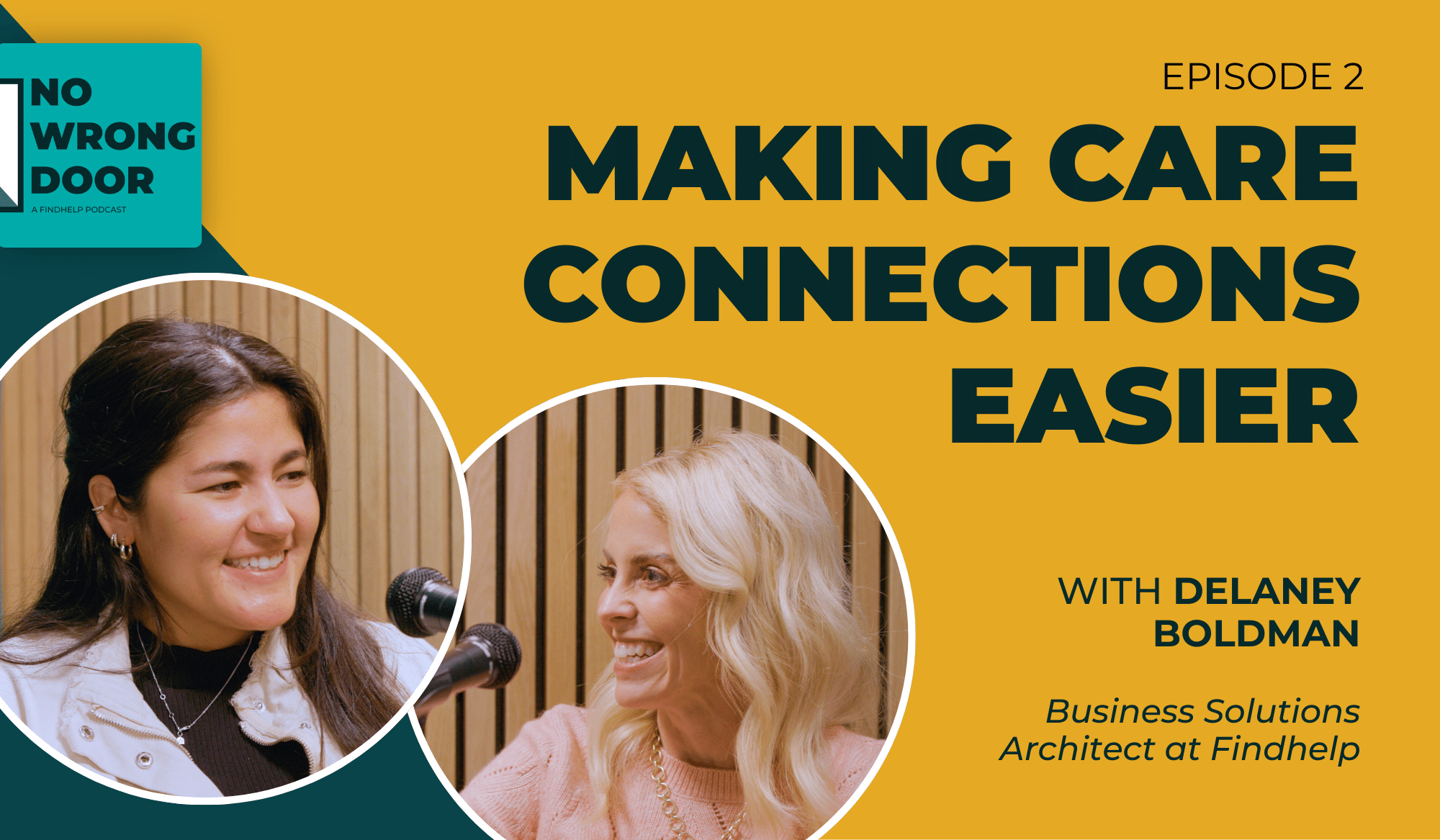
No Wrong Door is a podcast from Findhelp that explores how social care delivery is evolving to better support whole person care. Hosted by Findhelp VP of Marketing Amy Gordona, the series features conversations with social care experts, healthcare and government innovators, and Findhelp leaders who are shaping the future of access, coordination, and connected care.
Each episode offers an inside look at the systems, decisions, and ideas driving change—and what it takes to build a social safety net that works at scale.
Getting connected to behavioral health care should not feel like an obstacle course built from spreadsheets, dead phone numbers, and five-month waitlists. But for many individuals and families, that’s still the reality.
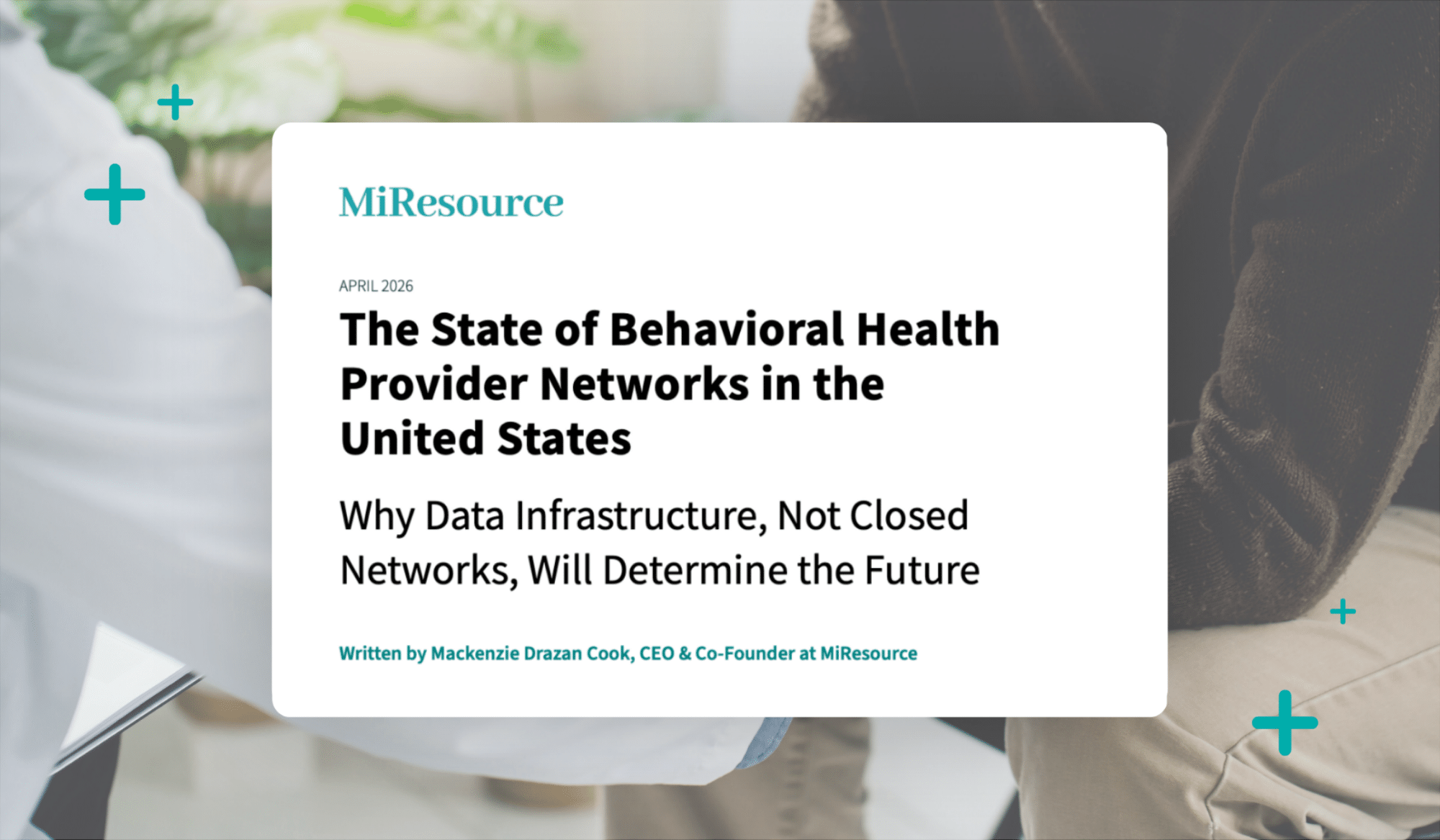
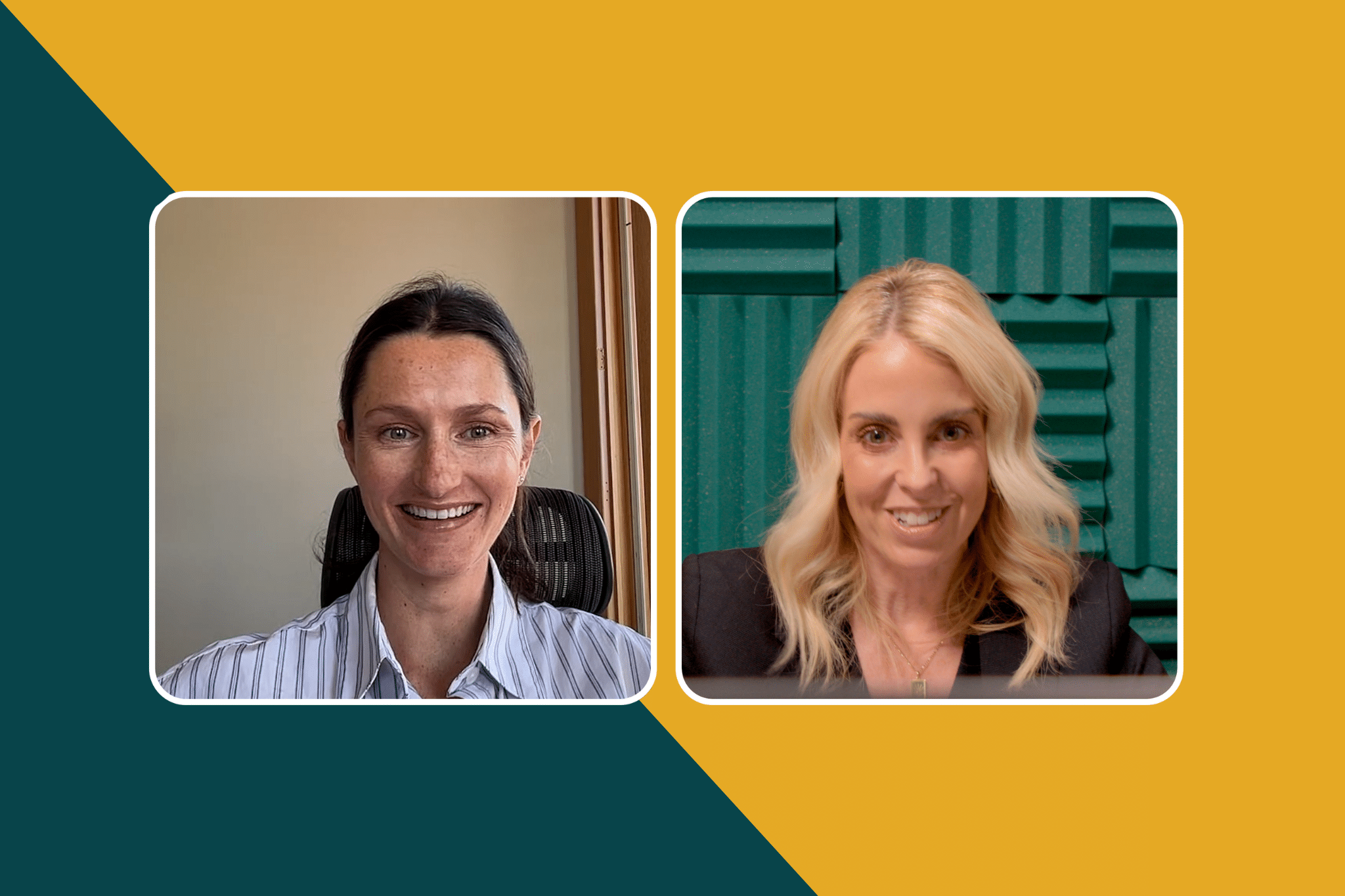
In episode 8 of No Wrong Door, Amy Gordona sits down with MiResource co-founder and CEO Mackenzie Drazan Cook to discuss why behavioral health referrals so often break down, how outdated provider data creates barriers to care, and what it takes to build behavioral health networks that actually work for patients, providers, and care teams alike.
Drawing from personal experience navigating mental health care with her sister, Mackenzie shares how grief, frustration, and curiosity ultimately led her to focus on improving the infrastructure behind behavioral health referrals and provider matching.
In this episode, we explore:

Why behavioral health access problems are often data problems disguised as provider shortages
How inaccurate or incomplete provider information delays care and contributes to patient drop-off
What coordinated, searchable behavioral health networks could mean for hospitals, care teams, and whole-person care delivery
Watch episode 8: “Closing the Behavioral Health Gap”
Key themes from the conversation
Behavioral health care is deeply personal, but the systems supporting it are often fragmented, manual, and difficult to navigate. Throughout the conversation, Amy and Mackenzie explore how better data, better coordination, and more thoughtful referral infrastructure can help close gaps between referral and care placement.
The hidden complexity behind behavioral health referrals
Behavioral health matching goes far beyond finding a nearby therapist. Patients often need providers who align with clinical severity, accessibility needs, insurance coverage, transportation realities, cultural preferences, language, and personal comfort levels.
Mackenzie explains that successful behavioral health care depends on solving for all of those factors simultaneously, not just availability.
The conversation highlights how difficult this process becomes for people already struggling with depression, anxiety, grief, or other mental health conditions. Even motivated patients and families can face overwhelming barriers trying to navigate fragmented provider networks.
“If any of those three buckets [clinical severity, care accessibility, and cultural context] are not solved for, you’re not going to have a good therapeutic outcome.”
Mackenzie Drazan Cook
Co-Founder and CEO of MiResource
Behavioral health access is usually a data problem
One of the episode’s clearest themes is that many breakdowns in behavioral health access stem from incomplete, outdated, or overly simplistic provider data. Amy shares her own experience helping her mother navigate mental health care after a family crisis, describing how difficult it was to identify providers who met specific needs around grief support, accessibility, and location.
Mackenzie argues that healthcare systems frequently treat behavioral health directories like standard medical directories, even though behavioral health care is far more individualized and fragmented.
“I fundamentally believe that at the root of this problem is a data maintenance problem.”
Mackenzie Drazan Cook
Co-Founder and CEO of MiResource
The discussion explores how missing details, such as provider specialties, accessibility accommodations, patient preferences, or real-time availability, can derail referrals and delay treatment.
The process often breaks after the referral is made
A recurring challenge in the episode is the gap between making a referral and successfully connecting someone to care.
Many care coordinators, social workers, and primary care providers rely on small referral pools, static spreadsheets, PDFs, or outdated lists of clinicians. Patients are often left calling provider after provider, only to discover long waitlists or providers who are not the right fit.
Amy notes that even families with insurance, internet access, and strong support systems can struggle to navigate the process. Without support, many patients disengage before they ever receive care.
“Actually finding and connecting with care is Mount Everest number two. Mount Everest number one that you have to climb is making that brave step of saying, ‘okay, I’m ready to get help and I want to get help’.”
Mackenzie Drazan Cook
Co-Founder and CEO of MiResource
Connected behavioral health networks for whole person care
The conversation also explores how the partnership between MiResource and Findhelp can help create more connected behavioral health referral systems.
By consolidating fragmented referral lists, verifying provider information directly with clinicians, and integrating behavioral health resources into broader social care workflows, organizations can reduce administrative burden while improving patient outcomes.
“It’s really about meeting patients where they are, not requiring them to speak the technical language of the health industry.”
Mackenzie Drazan Cook
COO at Co-Founder and CEO of MiResource
Amy describes a future where behavioral health referrals, transportation support, food access, and clinical care all exist within a connected longitudinal care record, giving providers a fuller picture of a person’s needs over time.
The episode closes on a hopeful note, emphasizing the dedication of behavioral health professionals, social workers, and care coordinators who continue pushing for better systems despite persistent barriers.
Learn more about MiResource
Earlier this year we hosted a behavioral health webinar with Mackenzie and other guests to explore how clinically-aligned behavioral health networks, real-time provider availability, and integrated social care connections can replace today’s fragmented directories.
Alright. Welcome in, everyone. We’re so excited to have you here today. It is eleven thirty three on the dot, so we’ll go ahead and get started. I know we had close to seven hundred RSVPs, and I see a couple hundred on the line today. I think the the attendance that we have today here just really speaks volumes to how important it is to access behavioral health in today’s day and age. So let’s go ahead and get started. My name is Delaney Baldman. I’ve been at Find Help for about four years now and have played many roles, but my most recent one is as a senior business solutions architect. And I’ve really been bringing the behavioral health specialty network to life at Findhelp. So very excited for today’s launch. Joining me today, we have several panelists that I’ll allow them to go ahead and introduce themselves real quick, And we’ll start off with Joffer. Thank you, Delaney. Welcome, everyone. I’m Joffer Trash. I serve as the chief operating officer at Find Help, and we’re humbled to have you all here with us today. I’ll pass it to Mackenzie. Super. Thank you, Jafar. Hi, everyone. My name is Mackenzie Draisen Cook, and I am the CEO and cofounder of MiResource. And I’ll go ahead and pass the torch to Lindsay. Thank you so much. I am Lindsay Oberleitner. I am the head of clinical strategy at Simple Practice and a clinical psychologist myself. So grateful to be here with all of you today, and I will pass it to Wes. Thanks, Lindsey. I’m Wes Nepper. I oversee SonderMind’s clinical programs. I’m a therapist by training and excited to be here. I think it goes back to Delaney now. Great. Thank you all, and we’re gonna be hearing a little bit more from our panelists later on. What to expect for today? We are really setting the stage for Find Help’s behavioral health specialty network. It’s our first official launch of this network. Joffer and I will be sharing the vision behind the behavioral health network at Findhelp, the why, and the problems that we are attempting to solve to solve. We’re also going to learn a little bit more from our partners who are actually powering the network. I’ll provide a quick demo as well about what this looks like in practice for the end users today. And then we’re gonna have a partner panel discussion and then live q and a. So throughout the session today, please feel free to use the q and a icon at the bottom of your screen to go ahead and log questions. So just a quick couple of housekeeping items. Yes. This recording, this webinar is going to be recorded, and we will share it out later this week at the end of the week. And, again, we have a little icon there about how you can actually go ahead and submit the q and a as well. Okay. So a lot of you have been customers with Findhelp for quite some long time. So you’re well familiar with our mission, which is to connect all people in need and the programs that serve them with dignity and ease. The vision that we have is really powering the American safety net by simplifying the process of connecting people to help. In the past, that has really meant social care and social services. But today we’re going to dive into how we are expanding that into behavioral health as well. Thanks, Delaney. And for those of you that have worked with Find Help over the years, you’ve known that we’ve always been powering social service referrals, primarily free and reduced cost direct service programs and supporting many of your own internal programs that you offer from your own unique organizations. And this goes beyond health care. This reaches into the, education space, into the government sector, and also into the employer space. We expanded that work to social care fulfillment, and that really is delivery of goods and services. For example, diapers and pest control and other services that help people get to their appointments such as transportation, and furthering that work with claims and reimbursements support, including with CMS waivers. We have recently expanded that work into government benefits, helping people with income based government benefit enrollment, most recently with Medicaid redetermination, and helping people submit and track their applications. Lastly, we’re really thrilled today to speak to our specialty networks work that Delaney has been leading the charge on, including with behavioral health. Great. So we’ve often heard about the behavioral health provider shortage, but we really only believe that that is just part of the story. Yes. Demand is rising. More than one in five adults experience mental illness annually, and youth needs are increasing at an even faster rate. But we believe that the deeper issue isn’t that providers don’t exist. It is that we are inefficient at connecting people to the providers who actually do. Eighty one percent of listed clinicians in federal studies are unreachable or out of network. So what does this really tell us? It’s not just a capacity problem. It’s a data and coordination problem as well. And now with CMS enforcing ninety day verification and significant fines for inaccurate provider data, this really isn’t just a user experience issue. It’s also now becoming a compliance and financial risk issue as well. So the problem we’re solving is better infrastructure to connect people to the right providers with accurate and usable information, which brings us to the important nuance when actually finding a match for a provider in the behavioral health space. Just because someone is credentialed doesn’t necessarily always mean that they’re a good match. Behavioral health is extremely relational, and a referral doesn’t just succeed because the license is correct. It succeeds because the provider treats the right populations. They use the right modalities. They accept the right coverage, and they align culturally and clinically with the patient’s needs. That’s the clinical mismatch problem. Most behavioral health providers are also solo practices practitioners today, and they’re not updating multiple systems daily. So directory data quickly becomes outdated. And finally, scale. Most public directories simply aren’t built to capture the nuance required for behavioral health matching. So sustainable access requires more than just a list of providers. So I’ve just talked through some of the challenges and inefficiencies within the behavioral health space. So why do we at Findhelp want to take on this challenge? And to us, honestly, the answer is very, very simple. Social care and behavioral health have a deep correlation, and mental health does not exist in a vacuum. If someone is struggling with clinical depression or battling addiction, often those needs need to be addressed first or alongside needs such as food insecurity or helping pay for utilities. This is where our behavioral health network comes in, and we are focused on really two main elements in this network that we are providing. One is our strategic partnerships, all the folks that are on the line with me today. We’re not trying to rebuild behavioral health networks from scratch. We’re partnering with behavioral health organizations that already maintain accurate and clinically nuanced provider networks today. The second element that we are focused on is actually providing that unified search. So the care teams, the discharge planners, the the caseworkers, the social workers that are oftentimes already searching for behavioral health and social care can do that in just one place. So our goal is to actually provide a unified search to actually provide that to care teams. Thanks, Delaney. And lastly, for this to be successful, we need to recognize that, one, part of our success has been a no wrong door approach to where people receive care. And secondly, many of the users that are navigating for behavioral health care to assist people coming in their door are using electronic health records and case management tools today. And we have to drive parity of an accurate search through much of the existing infrastructure that is across the United States today. And we do that. We do that by modernizing the workflows inside of the electronic health records and case management systems, by ensuring an accurate data driven compliance, by bringing the data about providers into those case management systems, and making sure that customers have control over the types of networks that they want to include for the right types of a population. So this really brings together much of what Delaney’s described and Find Help’s natural approach to integrating information into the systems our customers use. So our behavioral health network vision. It really is one search, all services, and this is something that we’ll be continuing to march toward with the years to come, helping organizations not only find the right social care support and fulfillment, but the right potential government benefits, post acute care, and now behavioral health, making it easier for a navigator to reduce the number of systems they’re using and have more efficient, more effective workflows inside of their daily, infrastructure to accomplish their goals with their population. So behavioral health care. Let’s jump in. First, we’re really excited to welcome three partners to the webinar today: Simple Practice, My Resource, and SonderMind. And we’ve selected these three because we believe they’re mission aligned and they carry the same integrity that we believe is necessary for continuing to march forward in simplifying and streamlining access to behavioral health practitioners with those principles that we’ve described. So to kick us off, let’s hear from each of our partners to start, and then we’ll dive into the future Find Help workflows that we’ll be supporting together. Simple practice. Thank you so much for that handoff. I’m so excited to be here and so excited about, partnering with Find Help. We at Simple Practice want to share a little bit of information about who we are and where we sit, in the behavioral health field. So we, sit as the core operating system for independent mental health providers. And we believe deeply in the ability of technology to serve as a connectivity layer to the nationwide, mental health clinician base. We know historically independent practice, as we’ve already heard a little bit today, can be fragmented and hard to reach at times. And additionally, as representing the many clinicians who use simple practice, many clinicians feel that desire to be able to connect more into broader systems, into health systems, into other social service agencies as well to build those connections and ensure the best care for their clients. So our mission is to empower independent mental health practices to thrive, and we do that by offering all to our customers, our behavioral health clinicians, all of the services to run their practice, meaning we are integral in their daily workflow. This is how they have client communication, deep information about who they serve, what practices they engage with, what insurance and payment options that they have. It allows them to communicate deeply within our website. In addition to maintaining documentation, it also allows them to deeply be involved in the scheduling flow to ensure that clients, patients do not fall off in that process. We build technology tools to make this easy, something that has been historically, as a clinician myself, having been there within systems, hard to ensure that continuous flow and connectivity to the system. And we’ve also worked hard to make billing something historically difficult for behavioral health to manage as simple as possible. In fact, so much so that we have seen an increasing amount of clinicians on platform who bill insurance with approximately half or more of payments on our system of the twelve billion that we see going through being through insurance. And, as we think about the next slide, this is at a very large scale. When we think about one thing already mentioned by Delaney earlier is how many solo providers there are in the community. So SimplePractice has over two hundred and fifty thousand, clinician users on our system, and that represents ten million patients served annually. When we think about that ten million number, that is approximately three percent of the US population, but even more meaningfully, probably about when we look at estimates of who seeks outpatient mental health care, ten, between fifteen and twenty percent of care that is provided. And every month, we are seeing a very active amount of clinicians and also that many, approximately forty percent, have appointment availability within the next five days. So as we already heard, sometimes the connection issue is finding the right person who offers the right services and actually being able to access them. And that’s something that we allow through some of our options like online scheduling. And finally, really important about the customers who use SimplePractice to run their behavioral health, mental health practices, they are throughout the United States. They are deeply embedded in the communities, and they provide a wide variety of treatment. And again, we see all of this as we see their care day in and day out, what they’re providing on our platform. So there is a range of specialties, both across license types from both prescriber through, all the primary behavioral health license types and across a variety of populations served. Forty two percent report treating individuals under the age of eighteen. Many individuals report serving, Spanish speaking primarily and across different diagnostic categories because we can help support and see the data and who they’re seeing and continue to find the right individuals and the right match. And one one other note, just as we think about the spread throughout communities, a large number of our clinicians using simple practice also reside in some of the states with the lowest mental health access, truly integral across the United States. And, I thank you for some time to share a little bit about Simple Practice and about the Simple Practice, the community of clinicians who use Simple Practice. But I will now pass this over to Mackenzie. Thank you, Lindsey, and thank you so much for having me, I’m gonna spend the next few minutes on a problem that every Find Help customer who is looking to connect care seekers to mental health care runs into. Behavioral health referrals are only as good as the provider data behind them. Most institutions probably already have a referral list in some form. Sometimes that might be a PDF. Sometimes it’s a shared Excel file. Sometimes it’s a Word document. And in many organizations, the most important information is actually not written down anywhere. It’s held in the heads of the case managers, of the social workers, of the care coordinators who have been doing this for years. Teams generally often intend to update those lists about quarterly or annually, but in reality, this rarely happens. Behavioral health is too fragmented and the information just changes too quickly. So the result then is predictable. A case manager starts a referral, calls the first provider, finds out that they’re not taking new patients, they call the second provider, they learn they don’t take post discharge patients, they call the third, and intake is only on Tuesdays and Thursdays. Meanwhile, the patient’s waiting and the staff time per referral is going to balloon. This is the exact problem that my resource was designed to solve. My resource is a behavioral health provider network data service. You tell us which providers you want in your preferred network, and we collect and maintain the data on those providers so your team can make fast and confident referrals. And this is important. My resource manages the data behind the scenes, but your team keeps using Find Help as the interface that they already know. The main reason most provider directory systems fail for behavioral health is that they were built for medical providers, and medical networks typically have admin support. Someone answers the phone, someone updates the directories, but behavioral health is very different. It’s dominated by solo practices and small groups, and then you have the other extreme, where you have complex programs like residential treatment programs, partial hospitalization programs, IOPs, and these provider types operate completely differently and require different engagement systems if you want to have accurate data on the full continuum of care. And that’s exactly what my resource was built for. We tailor our provider engagement based on provider type so that you get really core accurate data on everything within your preferred network. So what kind of data are we talking about? This isn’t just name, phone number, and address. Those fields are table stakes. The data that actually determines whether referral succeeds includes things like, does the provider have availability right now? Do they accept patients who have recently been discharged from the hospital? Do they hold appointments for post discharge patients? Do they accept high acuity needs like self harm risk, suicidal ideation, eating disorders, or psychosis? If it’s a program, what days do they do intakes, and is intake rolling or scheduled? Those are the details that really drive referral outcomes, and without them, staff are gonna spend time chasing dead ends. So here’s what the model looks like in practice. You give us the list in whatever form it’s in, it could be a spreadsheet, a PDF, a Word document, a folder of different documents, and then we take it from there. We directly engage the providers to create profiles, and on average, we collect over one hundred different data points per provider. Then we continuously verify and refresh that information so that the data stays current over time. My resource can also work with you to grow your referral network, so you can have your original list of providers and simple practice providers and SonderMind providers all in one place. And this is something we can really point to real outcomes. We consistently see institutions reduce referral times per patient from about sixty minutes down to ten minutes once they have accurate searchable provider data. We also see really strong provider engagement. Today, eighty percent of the My Resource provider network updates their availability every fifteen days. This means accurate availability on even your solo practices and providers, which are the hardest groups to engage that still use analog, haven’t switched to digital scheduling tools. For customers who need it, we have a hundred percent compliance with CMS ninety day provider attestation requirements, and we have really strong proof that this works even when providers are not digitally activated. With MyResource clients, we see about only ten percent of their network, their providers use digital scheduling tools. We would love it if everyone used simple practice, but unfortunately, sometimes the reality is that you may have providers that still prefer phone call outreach. So that’s exactly what we’re designed to do is to be able to make sure that you have connectivity to even the hardest to reach providers. My resource supports over eighty university counseling centers across the US, and we maintain data on a large national provider network. We also support the United States Olympic and Paralympic Committee Psychological Services Network, and we’ve worked with hospitals and health insurers. So if you’re a Find Help customer who wants behavioral health referrals to be faster and more reliable, the core idea is simple. You control who’s in your provider network, my resource maintains the accuracy of that network, and your team continues to make referrals inside FindHelp, but with data that they can trust, and that’s what we’re bringing to this partnership. Thank you so much. Alright. Thanks, everyone. So I’m Wes Knepper again. I’m here to talk a little bit about SonderMind. SonderMind is a nationwide behavioral health provider. We provide therapy and psychiatry services in all fifty states in DC, and it’s really a technology enabled platform. And so we’ve talked a lot about the, individual practitioners that make up a lot of these provide like, lot of the providers out there are solo practices, and they don’t have the capacity to bring all these tools to bear or to negotiate with insurance companies. And and so a lot of the times, like, someone looking for care and using their insurance isn’t able to find that provider. And so we have created a system systems that allow providers to take see the clients that kinda wanna come to them. They wanna take care of people and allows clients to see providers that are able to take care of them and to use their insurance to do that. And so that’s really the the goal of Sound of Mind. In order to do this, we we’ve had to challenge a lot of assumptions about how how this would work and re really support the relationship between the providers and the clients and help negotiate on behalf of the providers to all the institutional support that’s needed to really deliver care using insurance benefits because there is many providers will stop taking an insurance company or or not seek out additional ones because of the administrative burden. So we shoulder that burden for them and allow them to get back to doing what they really wanna do, which is providing care. So on the next slide, that at at scale, what this looks like is we’ve got over sixteen thousand providers spread across the country. There’s virtual. There’s in person sessions. This we have a ton of quality checks built in to make sure this this is right and have been investing so much in our own technology around AI provider tools so that providers can really truly focus on the work that they wanna do. In terms of access, we maintain this on a very, like, tight basis so that we know that when someone wants to get seen, they can get seen really quickly. I mean, they need to be like, there’s a moment of bravery, I would say, last for a very brief window for folks who are trying to seek behavioral health care. And so we need to be able to strike when they have that moment of bravery and when they’re feeling that support to be able to reach out and ask for the help that they need. Sometimes somebody might not want all of the all of the offerings of therapy. They might just need some digital health tools, and so we have AI self care tools for for clients that are client facing. The providers can also use in between sessions with clients. So because the clients are really doing the work, the providers are just helping to guide them. And we measure and track symptomology using standard measures that are patient reported so that we can see how quickly they’re getting to a subclinical level for their symptomology. And in general, it takes about seven sessions. In terms of scale, we’ve delivered over five million sessions. That’s that growth has been really, really fast, and we’re up to about a hundred and thirty thirty thousand sessions a month. We’ve covered a large, large, large volume of the population, which is about half of the country via health plans and network contracts. And we’re deeply integrated with payers, health systems, government, other strategic partners because we want to be able to make sure that we’re seeing these outcomes, but also the other systems that they’re connected to are able to share in these gains and have the visibility into who’s actually being successful in care. Thank you. Thank you so much, Wes, and thank you to all three, of our partners that have joined today. What’s very exciting now is in in just a few moments, Delaney will showcase what this looks like in FindHelp, as an option for many organizations. But just before that, one other thing to share. Working with any one of these networks or your own or others is not mutually exclusive. How this would work in practice is based on the type of organization you are and the population you serve. Perhaps you are a safety net hospital system like Parkland or BMC, or perhaps you’re a payer that’s specifically serving a Medicaid population. You may want access to the largest possible network of Medicaid accepting providers, and that may be a combination, of those you see here or others today, and that’s perfectly okay. The control over that network, is entirely within your reach. Another example, perhaps you are a national payer and you offer commercial, Medicare, and Medicaid lines of business. You may want to work with multiple, networks that really provide the best fifty state coverage, for your populations, and that is perfectly okay as well. And lastly, perhaps you, serve a commercial population as a health system or an employer, and you may want to really focus on contracts that already exist with a large network, and one or more of these partners may be best to serve that arrangement as well. So there’s flexibility built in to how you may work with one or more partners to achieve the network reach, that you have, you know, for your organization and for your population. And that is a bit of secret sauce as we go forward for what’s possible in this network access approach. I’ll turn it back to Delaney. Awesome. Thank you. This is talking about the problem to really showing how we are solving it. So earlier, we discussed the need for a unified search experience, and this is really what that looks like in practice. So allow me to introduce you all to Find Help’s advanced search. Advanced search allows navigators to search across both social care and behavioral health in a single workflow. So instead of treating needs as a separate problem that requires separate searches, we bring them together into one coordinated experience. So a navigator can actually enter social care needs like food assistance or food pantries nearby while also specifying behavioral health needs such as anxiety, depression, the treatment type, or focus area. Insurance coverage, location, and out of network preference are also factored in at the same time. This really matters because people because real people don’t experience these needs in silos. So by matching on need, coverage, treatment criteria simultaneously, we will reduce guesswork and save navigator time. So this isn’t truly just about expanding the network. It’s also making access more intentional, coordinated, and efficient. So now we’ve transitioned to the results view, so after that advanced search has been submitted. And this is where the flexibility really becomes clear. You’ll notice that the results are actually organized into two different tabs, social care and behavioral health. This allows navigators to move between domains without actually starting over. So the search context at this top will stay intact, but the results and filters adjust based on what tab they’re in. When you’re in the behavior health tab, for example, the filters shift to reflect clinically relevant criteria like therapy type, focus area, visit preference. There’s also clear signals on those listings, such accepting new patients, which we know is one of the most important factors when finding a match. If you toggle back to social care, those filters dynamically update to match that domain, so it will adapt. On the left hand side, filters can be refined at any point. Visit preference can be changed from in person to remote. And additional filters can even be layered in using the add filter, which is going to make more needs by adding without actually restarting the workflow. So if a seeker situation evolves throughout the conversation, the navigator can evolve that search in real time as well. The goal here is really flexibility without friction so navigators don’t have to backtrack, open new windows, or rerun separate searches. And the final page, so how we are actually closing the loop. Up until now, we’ve talked about search, filtering, and matching, but access doesn’t improve unless something actually gets on the calendar. This final step shows how a navigator can request an appointment directly through our platform. Availability is being pulled in through our partners, that we just heard about today. So the times being displayed actually reflect real time scheduling data, not just static office hours. The navigator can confirm client details, review the appointment summary, and submit the request without leaving this workflow. This is important because one of the biggest inefficiencies is in behavioral health access isn’t just finding the right provider. It’s converting that match into an actual scheduled visit. So by integrating availability, we are reducing the drop off between referral and care. So in summary, this workflow, the end users will be able to start an advanced search indicating both behavioral health and social care needs. Coverage and out of network preference is also indicated. Once search once searching, dynamic filters can be applied to further add inclusions or exclusions based on what they’re looking for. And once finding a match, if the provider has set their availability in one of our partners’ platforms, navigators will be able to directly book that appointment. Perfect. So now we’re going to jump into a panel discussion with our partners today. So I’m going to start off with a round robin question, and I will start with you, Lindsay. From your perspective, what is the single biggest barrier to timely outpatient behavioral health access today? Finding the people who actually have availability and are ready to see clients, that mismatch between who’s available and who needs it is one of the hardest things, I’ll say, having experienced it personally, having seen it also on that side, right, of, you know, technology and what we can do to ensure that availability is clear and we know who is taking someone today now at this time. Great. Mackenzie or West, did you wanna add to that? Yeah. I I think that it’s honestly, some of it’s hope. It’s just the client needs to have hope that they’re actually going to be able to find someone that does what they want and can see them and will see them. And and so trying to make sure that we’re sending them and connecting them with providers that do what they want to do, have experience addressing their concerns and their population, and and are able to actually deliver results and that they can actually get better. Like, that it is it is not uncommon to hear for us to hear stories about someone that’s tried multiple times and has done sent, like, twenty emails out to, like, people that never responded at all. And so the like, going from that to being able to have a list of providers, all of which they have availability in the next couple days to be able to see you is and to do what you want them to do is is is really a huge difference. And and I think that that really sparks that hope because without that hope, they’re not gonna take that leap into scheduling and trying this. Therapy’s hard. It can be scary if you haven’t done it. So I think that they have to have that hope. I think just to echo what Wes and Lindsay was saying, you know, it’s a really brave first step to say, okay. I’m ready to get help. So it’s Mount Everest one, and Mount Everest two is actually connecting to that care. And one of the important things is knowing that the providers have availability, like Lindsay and Wes mentioned, but also making sure, depending on what criteria that you’re actually trying to match on to the specific needs of the patient? Were they just discharged from the hospital? Does that provider actually take patients who have been discharged for psychosis? Not all providers do, and there’s no way to tell. Just saying they’re a clinical psychologist isn’t going to guarantee that they even treat that type of patient. And so having the granularity of filters that I know that Find Help is building into this platform is really, you know, something you might not think about topically, but when push comes to shove and you’re trying to get that referral in, it’s gonna be mission critical. Great. So really making sure there aren’t road bumps along the way when getting access to someone, especially since we know that first leap of knowing that you want to get help is really such a big one to begin with. Mackenzie, I have a question for you now. You talked a lot about how, you know, where you work with partners and organizations today, you’re taking a bunch of different types of lists that they may have, maybe Excel or paper, whatever it may be. What changes when organizations move from static list of providers to really a deeply vetted referral ready network? Great question. So I would say that there are three main things that are gonna change. The first is going to be speed, your confidence with that referral, and then outcome. So with speed, with a static list, if staff are gonna spend between thirty to sixty minutes, calling down a PDF or a spreadsheet, like what Wes was saying, checking who’s accepting patients, who takes specific insurance, or who can see someone that is recently discharged from the hospital. But in a vetted network, that work’s already been done for you. So you know that availability, intake criteria, specialty filters are current, and that you can actually search on them, that those filters are in Find Help, which they’re going to be, so that you can make those actionable referrals. So then you can expect referral time to drop down to minutes instead of thirty minutes, two hours. And the second would be confidence. A static list is a guess. No one knows when it was last updated, case managers are gonna hesitate because a bad referral erodes that trust with patients. And in a referral ready network, providers have recently been confirmed that those key data points, you know that it’s documented in the system. So that way that you’ve confirmed that they’re accepting new patients, that they treat certain populations, that they are actually in network without insurance and accepting patients on those panels, they have the right clinical focus and those intake timelines if you’re thinking about more residential treatment programs or more programmatic types of behavioral healthcare. And that’s gonna reduce those failed referral rates and that you won’t need to do those repeat outreaches anymore because those referrals are actually gonna go through, and you’ll know that because it’s confirmed by the Find Help system. And I would say the third is accountability. You know, static lists don’t have any feedback loops. There’s no systematic way to know which providers respond, which ones hold discharge slots, which ones are routinely declining certain types of cases. In a vetted network, you can track engagement and attestation cycles. And so that’s gonna support your CMS directory requirements and also give organizations really defensible process. Thank you. And I know that, Mackenzie, your team has been absolutely critical in helping us to really define some of those most needed filters within find help. So really appreciate all the collaboration that you’ve provided there. My next question is for you, Lindsey. Would love to get your take on this, especially as being a clinician yourself. Where does friction most often show up between referral and the first appointment, and how can technology actually reduce that? I love this question, and the answer is so many ways, but I’ll keep it to a few of the the major ways that we see some of that fall off happen often. Again, having having worked in the field and seeing where some of these things fall from referral into someone actually becoming engaged with care. Right? Not even just that first appointment, but truly being engaged in care. I think one of the most important things to consider and to think about when we see that referral moving into an appointment, because that’s the goal. Right? The referral isn’t meaningful until we know that connection has really happened, is the fact that motivation is not static. So when we see someone who’s working with a case manager, who’s working with someone in a system and is saying, I’m ready. I wanna take that step towards care. It’s important that they have the ability to make some of that step in that moment. When I think back to, you know, some years ago, when I was working within health systems and thought about the times that what I did hand to people, unfortunately, would be a PDF of a list of here’s people. And I’d sit and call with them, and the number who were closed to practice didn’t take the motivation goes down. So, again, knowing that motivation for a client themselves is not something that we can assume just because they’re motivated in the moment. They will continue to be motivated. Giving that piece of they can make an actual step forward when they’re feeling it is important. So where does technology come in? A whole host of ways in this. I think one is although we know that a warm handoff itself in the most traditional way isn’t always scalable, technology makes that more scalable. Right? It allows that connection between systems to know that this is someone that you trust in this moment, client, you’re working with someone, case manager, whoever it may be. You trust them, and they’re making that step with you to say, we’re gonna schedule you to this online appointment. Right? We’re gonna get you this appointment for whether it’s in person or virtual, but we’re gonna get you scheduled. It’s a technology way that actually does scale to show, like, a true translation of where you are to that next step. I also think a whole lot of the other reasons that it falls off that technology can answer is referrals used to be just that, a phone number. You didn’t have information as a clinician. Client didn’t have information about that client, about that clinician. So you were making guesses if you were a right fit. There’s a reason that even that one session is our modal number, the most common number of treatment sessions we see people occurring, is because that match wasn’t there. Having that information, allowing, like we do with technology on simple practice, clinicians to build those intake questions that are important to them that get answered in advance so that they can say before someone shows up, here’s, you know, here’s why we might be a great fit. Here actually is my colleague who even is better if this, information I’ve gathered is not a right fit so that someone doesn’t lose that motivation as they make that first step. They can actually, again, translate it along and hopefully have found that right fit through that active information, active engagement. Client portals is something else that we engage with in simple practice, which is giving clients voice to seeing where things are in the process, communicating with that therapist they’ve connected with. I think each of those and many more, I will keep to those few key ones, but I think there are many ways in which technology eases those previously very manual and difficult to scale processes that we know work in the past. Yeah. Thank you so much for your add something to that, Delaney? Because Yeah. Of course. The piece where that meets with what Mackenzie just spoke about, and Lindsay was absolutely right, is that these therapists, they want to do great work. They wanna take care of people, but they they have a niche. They do they there’s a things they do really well. Not everyone does everything really well, and so they don’t want the referral. They don’t wanna say no. They don’t they want the referrals that do that highlight their strengths. And, like, this is an ability to where we can match a client need with a provider’s, like, where their passion is, that’s the sweet spot. That and that really, like, drives all of this home. And so the ability to use the sort of the front end tools and the communication and all those technology and then getting those referrals to the right person is is so crucial for both parties. Yeah. I love that. Thank thank you both. And, Lindsay, I I really loved what you said too of, you know, maybe you’re not the right match for me, but I do know someone else or another colleague. And I think that’s, you know, not necessarily even a technology piece, but it’s about the communication and the relationships even within the provider networks as well that is so important. Wes, I have a a question for you. Would love to understand how do you measure whether a behavioral health network is truly perform performing beyond just the provider count? Yeah. So, obviously, if you don’t have providers, the odds of being successful are pretty small. So start there. And then we’ve talked about this and this is a step where we you you have to get clients connected to those providers. If that initial conversation doesn’t happen, if that first session doesn’t happen, so get doesn’t that doesn’t work. And I’ve never yet, Howard, anyone say that they wanted to go into therapy to have one session or just to even to be in therapy. That’s not why anyone goes into therapy. And so we need to get them engaged. And so that means for us, we’re we’re looking at our providers that are getting clients to, like, that third session within thirty days. There’s getting that cadence going. Therapy takes work. The first sessions are a lot of questions and then, like, really getting into the work and helping folks deliver on the results. But even if I get you to engage in care, that’s not why that’s not why I would go to therapy. That’s not why I’ve been to therapy. It’s because I wanna have seems I wanna see changes. And so we use standardized measures for most major diagnoses to track are is are these clients saying that they’re getting better? And that allows us, one, to track this over time. We can share we can share this on a graph over time of, are you delivering this for each individual client, and are you delivering this for your caseload at large? And then as as an organization, are we delivering this for the entire population? And so that helps us identify where some providers might need help or might need a guidance because to like, with McKinsey’s work, if we aren’t telling if providers aren’t the best judge of who they’re actually really good at working and serving, they may think that they’re amazing with this population or this diagnosis, and maybe they’re not. And this allows us to have some of those structured conversations with them around you’re saying this, but, like, the data is showing a different thing. And so how do we how are we able to, like, follow-up with them and really help them shape that? And so we really index on, are people getting better? Are they saying that they’re getting better? And do they trust the provider they have? After every session, we ask follow-up questions. Do you understand your treatment goals? Do you trust the provider? Do you feel seen and heard by like and if the answer to those isn’t all an absolute yes, we’ve sent that back to the provider so they can address that in the next session. Because at the end of the day, the relationship between the client and the provider is the most predictive factor for someone improving and getting better. And and that’s our entire system is built around maximizing that and delivering that relationship. Excellent. Yeah. I I love that idea of actually having some of those immediate feedback loops, you know, right after a connection has been made. That’s great. One final question here for our panelists. This one’s gonna be for you, Joffer, before we get into the q and a. So we’ve discussed a lot today, the curation of providers, the navigator workflow, and network performance. How do we really bring that all together into one cohesive experience for our care teams? Thanks, Delaney. Appreciate it. Thank you to the panelists for sharing all of your thoughts. One would think that we had made more progress in this country on accurate, you know, data about the provider networks. I am excited to share that CMS, Center for Medicare and Medicaid, is working on a national provider, directory initiative. They’re focusing on medical providers outside of this space to start, but it’s exciting to operate in parallel and hopefully make some significant progress as CMS is working on similar challenges. So a few things to share. One, we do have to respect the rules about privacy, especially in areas such as behavioral health. Those of you that work in this space every day are familiar with what’s called forty two CFR Part two, which is, you know, laws related to keeping information secure and private in the behavioral health sector, including others. Find Help is a HITRUST certified HIPAA compliant platform that also respects forty two CFR. But more importantly, customers have the freedom and control to choose what information is shared as part of a referral or an appointment request. And so customers are still in control, over their compliance at the state level for sharing individual sensitive information, and that is very important to make this successful. Secondly, our work with these three partners, includes the ability to have closed loop information, and it will be up to the partners here to help determine what information comes back. For example, did the individual show up to an appointment? Was there a no show? Were they satisfied and or received, potentially recurring appointments? And that data point is valuable. Not necessarily, the treatment notes and and other protected data, but the fact that an individual is engaged complements the longitudinal health record for the primary clinicians and those that have initiated that referral from the health plan or the hospital system or others. So that longitudinal record is also something that we’re working to solve. So I think we’re on the cusp of something really meaningful, which is beginning to digitize, the behavioral health networks in a way that brings, accurate data to the care teams that are initiating many of these requests. And I think that’s a powerful piece of the work we’re kicking off together. I’ll turn it back to Delaney, and, happy to answer any more q and a questions as they come in. I’ve been answering many of them just in the chat, real time, so hopefully that’s been helpful for teams as well. Great. We’ll pull back up our slides real quick. Okay. So, hopefully, everyone is very excited about this announcement of the Behavioral Health Specialty Network. You guys can actually go ahead and start letting us know when you’re interested or how how deeply interested you are. I’m gonna give everyone a minute here to pull out their phone and and actually scan the QR code, But we will have a behavioral health network interest form that all of those on the line today can actually fill out. We will have some opportunities for some early access and even product influence for those that are interested in contributing the shape of this early on as well. Believe that link was also in the chat if you’re not able to scan the QR code. K. Going to our last couple slides here. So some of the frequently asked questions that we were anticipating and already looked to see several of these coming in through the chat already. The specialty network is an add on network. So if you are a customer, please talk to your customer success manager or account director to learn more. If you’re not already working with Findhelp, please reach out to your sales team to learn more as well. In terms of actually contracting with for the specialty network, all the contracting will be through Findhelp to access the My Resource, SonderMind, and Simple Practice networks. They’re not going to be mutually exclusive, so we can work with you and your existing networks as well. And then the third FAQ that we were anticipating is compatibility with integration. The first iteration that’s coming out end of q three, q four will be compatible with launch integrations to start. And with that, we’ll open it up to q and a. Joffer, if there’s any questions that you’re getting often in the chat, please feel free to reiterate those as well. Sure. So I think some of the questions that we’ve been receiving is, is there flexibility, to determine the breadth and depth or scope of a network that a customer may want? Absolutely. That’s part and parcel to the approach that we’re taking is, you may want, for example, Medicaid providers in a single state as a MCO health plan, or you may want, for example, nationwide coverage as a national health plan or as an employer. So it’s very important that you have the control. You may also have your own list of providers that you may want find help and or one or more of our partners to ingest and map and understand the overlap and improve the accuracy of that provider network as well. And that’s something I think many of our partners are interested, in supporting as well. And then another important question is, it takes more than just knowing, for example, that they accept Medicare Advantage or they accept Medicaid as a provider. We need to know the specific plan. Many states have sometimes three, four, or even ten managed care organizations for the larger states. And the answer to that is yes as well. We will be, tracking, the coverage that’s specific to the MCO plan for as many providers as we can, and much of that data will be sourced from those that you see here with us on the call today, and in some cases directly from those providers through our customers as well. One other important question. Will this behavioral health network be available on the member facing FindHelp sites, or as we call them at FindHelp, the community facing sites? We are considering this. We we do want to make it possible for individuals to search through a provider network in privacy and and with that dignity on their own, but we’ll likely explore that as a phase two. We’re looking at phase one as facing the staff of your organizations as they’re working on, matching and and scheduling. And more to come from Delaney and team, you know, over the next few months on on that approach as well. And, Delaney, I’ll turn it back to you. Okay. Looks like all of the q and As have been answered, directly as well. I did see a question come in about how a solo therapist may get connected with Simple Practice or SonderMind. I think we can send out some of the their information as well with this webinar for those that may want to get in contact directly with them too. Alright. So thank you all so much for joining us this afternoon. If you have any additional questions or any follow ups, please feel free to reach out to me. My email address is here on the screen. It’s d boldman at find help dot com. Of course, you can always talk to your customer success manager or account director as well that are, that you’re working with, you know, on a weekly basis or monthly basis. So we’re happy to answer any questions that you may have coming out of this. Thank you all so much for joining, and have a great day. Thanks all.
What’s next for No Wrong Door?
“Closing the Behavioral Health Gap” is available now—Episode 9 will be released on June 10 and features Alex Reed from Denton County Public Health exploring how collaboration, trust, and data can transform how communities connect people to care.
Subscribe to No Wrong Door wherever you listen to podcasts to be notified when new episodes drop: