



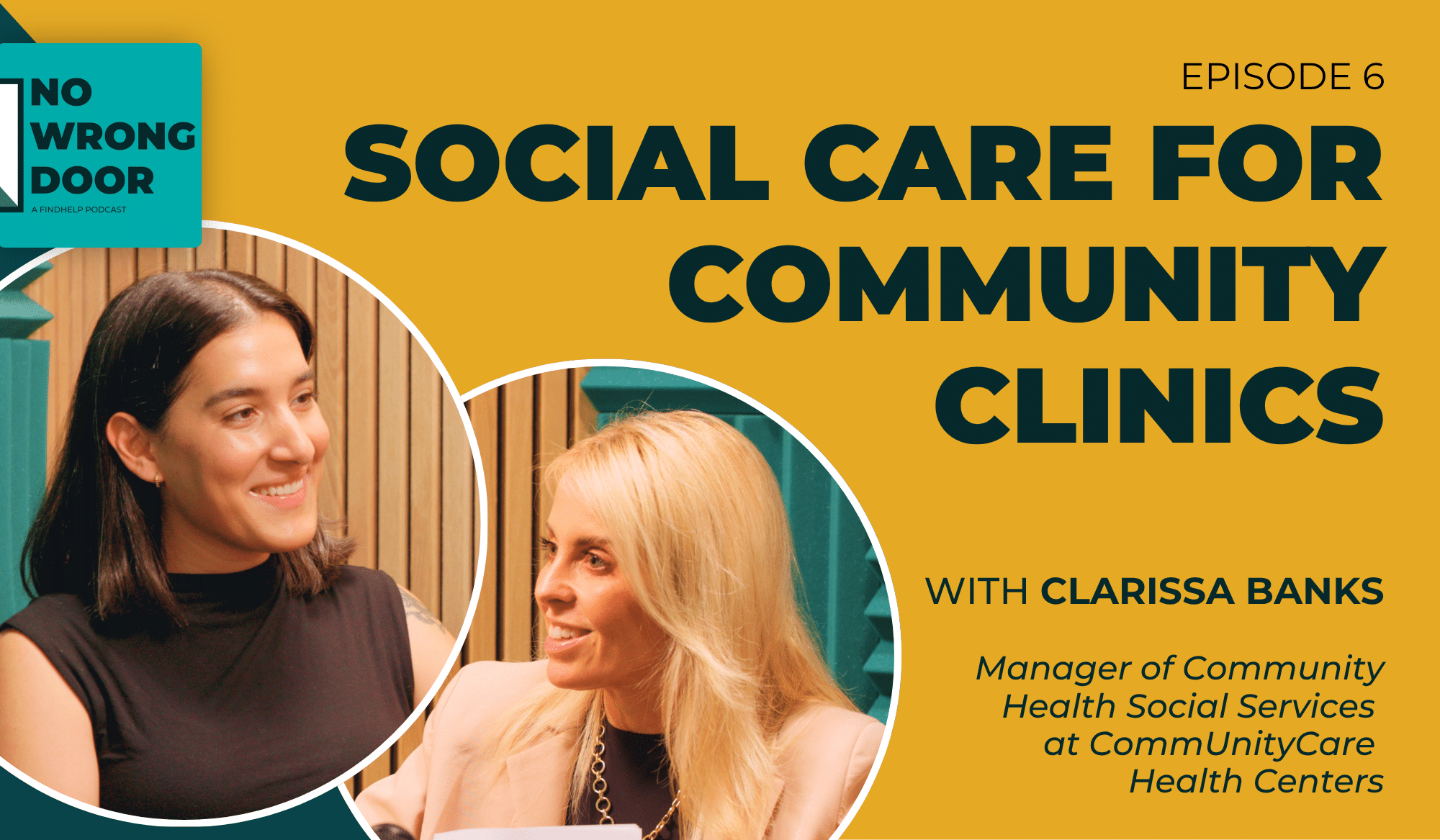
Powering Massachusetts ACOs’ HRSN Service Delivery 

As the Massachusetts state department of health, MassHealth’s 1115 Medicaid Waiver unlocked $150 million to address health-related social needs (HRSN)—funding essential food and housing services for eligible Medicaid members. For accountable care organizations (ACOs), hospitals, and payers, this presented a significant opportunity, but also a complex operational challenge: how to efficiently identify eligible members, coordinate a diverse network of services, ensure providers were paid, and demonstrate measurable impact.

Findhelp played a critical role in MassHealth’s Flexible Services program, supporting ACOs with seamless referrals, provider payments, and service tracking.

Participating ACOs used the Findhelp platform to identify eligible members, manage referrals, and track outcomes.

Studies confirmed that addressing HRSN led to fewer hospital and ED visits and better health.

Findhelp is adapting to support new billing and compliance rules for the program’s next phase.


Proactive intervention to lower total cost of care

Findhelp functionality was instrumental for ACOs to meet Flexible Services requirements. Through our platform, ACOs sent contracted social service organizations (SSOs) reimbursable “orders” and SSOs shared back detailed outcomes. 

  • Automated Member Identification – Accelerated program enrollment by helping ACOs quickly find and confirm eligibility for Medicaid members.
  • Streamlined Social Care Referrals – Improved member access to care by connecting them to trusted SSOs with ease.
  • Payment & Compliance Support – Simplified financial operations and ensured adherence through accurate provider reimbursement and regulatory alignment.
  • Data & Reporting Capabilities – Provided real-time insights to track program effectiveness and cost savings.


Findhelp’s efficient and collaborative Flexible Services workflow

  • ACO care managers and CHWs accessed one platform for all social care-related referrals, on behalf of both Flexible Services participants and their general patient population
  • SSOs recorded detailed referral outcomes (e.g., how many and types of meals provided) and shared this information with the ACOs, directly via the platform
  • ACOs accessed real-time reporting dashboards to monitor service utilization across multiple Flexible Services programs and share required data to the State, at both individual and population levels.
  • SSOs used a free reporting suite to track services provided and to invoice the ACO
Findhelp's platform provides forms for CBOs to track detailed referral outcomes under MassHealth's 1115 Medicaid Waiver


Impactful results, backed by research

The data speaks for itself—two reports from different evaluators both showed significant results for healthcare savings and improved health.

University of Massachusetts: Significant reductions

An April 2025 study by the University of Massachusetts and MassHealth (published in HealthAffairs.org) analyzed 20,000 MassHealth Medicaid members who received nutrition-related CBO services via Flexible Services.

The study showed “significant reductions in hospitalization and emergency department visits“.

$2,502

total cost of care savings

23%

reduction in hospitalizations

13%

reduction in ED visits

A study of Medicaid members receiving services under MassHealth's 1115 Medicaid Waiver showed significant reductions in hospitalizations and emergency department visits.

United States Dept. of Agriculture (USDA): Significantly improved health

Similarly, a 2023 evaluation by the USDA and Project Bread of 491 individuals showed that participation in the Flexible Services pilot program significantly improved their diet and health:

25%

became food secure

3.5

more fruit and vegetable servings consumed weekly

12.4%

increase in SNAP enrollment

99%

of participants reported improved health


Customer stories: Successfully addressing Medicaid member needs

These studies underscore the significant positive impact that addressing HRSNs through programs like Flexible Services can have on member health and healthcare utilization. However, to translate this potential into tangible results for their specific member populations, ACOs require robust tools and streamlined workflows. This is where Findhelp becomes essential, providing the infrastructure to efficiently connect members to these vital services, track outcomes, and manage the complexities of such initiatives. Leading Massachusetts ACOs have leveraged Findhelp to do just that:


Mass General Brigham

A Findhelp customer since 2019, Mass General Brigham (MGB), a nonprofit integrated health system, used their Findhelp platform to send Flexible Services referrals to 17 contracted housing and nutrition SSO partners across the state.

Findhelp helped Mass General Brigham meet the requirements of MassHealth's 1115 Medicaid Waiver
  • MGB focused on supporting pediatric members with complex care needs and high-risk behavioral health members.
  • In support of the demonstration, MGB created an HRSN Central Team who triaged patients with positive screenings and referred them to the appropriate SSO.
  • Findhelp served as the central hub to navigate all stakeholders through the referral process.

MGB’s results over the course of the demonstration pilot:

members were referred to SSO partners

of pediatric members were connected to services

“Got Help” rate for nutrition-related Flexible Services referrals

Community Care Cooperative

Community Care Cooperative (C3), an FQHC-led ACO, partnered with more than 20 social services organizations across Massachusetts to provide services for members with complex health needs. 
Findhelp helped Community Care Cooperative (C3) meet the requirements of MassHealth's 1115 Medicaid Waiver
  • C3 used Findhelp as a pathway for care coordinators to make Flexible Services referrals for nutrition and housing programs.
  • This created a streamlined workflow for care teams to access both partner SSO programs and other local community resources, all in one place. 

C3’s results over the course of the demonstration pilot:

members were referred to SSO partners

of eligible members were connected to services


The future of MassHealth’s 1115 Medicaid waiver

With the January 2025 transition from Flexible Services to a new HRSN services framework, community-based organizations (CBOs) face greater operational complexity—including the need to become MassHealth providers and submit claims for reimbursement. Managing eligibility, referrals, and compliance just got harder.

Findhelp is here to simplify it.

We’ve enhanced our platform to support ACOs, hospitals, and CBOs as they navigate these new requirements—ensuring seamless eligibility verification, data standardization, and claims management.


How Findhelp supports the new HRSN framework

  • Real-Time Eligibility Determination – We ingest member files or integrate with Medicaid Management Information Systems (MMIS) to enable instant member searches and eligibility checks.
  • Built-In HRSN Data Standards – Our platform automates coding and data capture, mapping LOINC codes, Z codes, and state-specific HRSN data fields—eliminating manual work for CBOs.
  • Claims Submission & Tracking – Reduce the steep learning curve and overhead for CBOs new to MassHealth billing. CBOs can document services, auto-generate claims, submit to health plans, and manage accounts receivable—all from a single platform.


Massachusetts ACOs & CBOs: Let’s work together

The future of HRSN service delivery demands technology that reduces administrative burden, ensures compliance, and accelerates reimbursements. Findhelp is already supporting ACOs and CBOs in navigating these changes to MassHealth’s 1115 Medicaid waiver—let’s talk about how we can help you, too.

Partner with Findhelp on your HRSN service delivery

Schedule a demo to learn how we can partner to meet the requirements of your state’s Medicaid 1115 waiver demonstration and other HRSN service delivery initiatives. 

Beyond the Obvious: Address Health-Related Social Needs and Boost Your Bottom Line

The well-being of individuals extends far beyond what’s immediately visible. When people in your communities face challenges like housing or food insecurity, the ripple effects are felt everywhere, from productivity and health outcomes to overall engagement. These unmet health-related social needs create significant barriers, preventing individuals from thriving and communities from flourishing.

But what if we could change that? By holistically addressing these social factors, you can not only transform your organization’s strategy but also make a real impact on your bottom line. Discover the vital link between health-related social needs and the success of your community.

The hidden costs of unmet social needs on your organization and community.

Why a holistic approach to well-being is crucial for improving health outcomes.

How addressing health-related social needs can boost economic stability and your bottom line.

Available tools to seamlessly connect people to the resources they need.


What are health-related social needs? 

These are the non-medical, social, and economic conditions that affect a person’s ability to be healthy. Think of them as the foundational blocks of well-being. They include challenges like a lack of stable and safe housing, food insecurity (not knowing where your next meal will come from), unreliable transportation to get to appointments or work, and utility shut-off notices—literally struggling to keep the lights on. 


The hidden costs of unmet social needs

Individuals struggling with health-related social needs are often caught in a cycle of instability that directly impacts their health and well-being. This can lead to:

These factors don’t just affect individuals; they have a tangible impact on families, organizations, and the wider community.


A holistic approach to a healthier community

Addressing health-related social needs requires a shift in perspective. Instead of treating problems in isolation, we need to see the whole person and the interconnectedness of their needs. By taking a holistic approach, we can:

Improve health outcomes

When people have access to stable housing, healthy food, and reliable transportation, they are better able to manage their health and well-being.

Boost economic stability

Addressing social needs can lead to a more stable and productive workforce, benefiting both individuals and employers.

Strengthen community ties

When we work together to support our most vulnerable community members, we create a stronger, more resilient community for everyone.


Trinity Health integrated Community Health Workers into care teams alongside nurse managers, social workers, and pharmacists, focusing on heart failure management—the leading driver of preventable hospitalizations.

In less than two years, Medicare Shared Savings Program Preventable Hospitalization rates dropped 6%, with a 14% reduction for dually-enrolled patients, narrowing the disparity by 30%.

Trinity Health partners with Findhelp to address health-related social needs.


The solution: A comprehensive social care strategy

At Findhelp, we believe that connecting people to the resources they need should be simple and seamless. Our social care platform makes it easy to:

  • Identify individuals with unmet social needs: Our tools help you understand the challenges people in your community are facing.

  • Connect people to local resources: With a comprehensive network of social care providers, we make it easy to find and connect people with the help they need.

  • Track outcomes and measure impact: Our platform allows you to see the real-world impact of your efforts, so you can continue to refine and improve your strategy.
Findhelp case studies: How customers successfully address health-related social needs

Social Care in Action

See how our customers address health-related social needs through their Findhelp platform.


Ready to make a difference?

By addressing health-related social needs , you can create a healthier, more equitable community and a stronger, more successful organization.

Connect with Findhelp today to learn more about how we can help you tailor a social care network to meet the unique needs of your community.

Let’s work together to build a healthier future for everyone.

Live from Tennessee: MCOs Complete 13,000 Screenings & 4,000 Referrals in First 3 Months

Findhelp successfully went live across the state of Tennessee with a digital infrastructure designed to modernize care coordination and reduce inefficiencies while improving health outcomes for over 1.4 million TennCare Medicaid members. The Tennessee Community Compass, powered by Findhelp, connects TennCare, its managed care organizations (MCOs), healthcare providers, and community-based organizations (CBOs) through a centralized system that supports referrals, service authorizations, data exchange, and CBO payments.

In just three months, the MCOs and their providers have cumulatively completed 13,000 screenings and made 4,000 referrals on behalf of Tennessee Medicaid members.

Tackling fragmentation with technology that enhances, not replaces

Building a practical model for government efficiency

Creating a collaborative, scalable blueprint for public sector workflows


From disconnected systems to a statewide solution—powered by Findhelp

Government health programs like Medicaid often face the dual challenge of managing high-need populations while navigating outdated processes and disconnected systems. Care managers are expected to coordinate across medical and social sectors, and inefficiencies don’t just slow down service delivery: they can create real risks for the people depending on them.

After a competitive bidding process in 2023, TennCare chose Findhelp to be its statewide partner and platform. The Rural Health Association of Tennessee helped lead early implementation efforts to engage CBOs in the initiative by addressing the non-medical risk factors of the TennCare population.

TennCare partners with Findhelp to support Tennessee Community Compass.

As Tennessee’s managed care Medicaid program, TennCare provides health insurance coverage to 1.4 million low-income Tennesseans and operates with an annual budget of approximately $18.6 billion.

This partnership is a major step forward in digital transformation for public health systems, and a core component of TennCare’s Health Starts Initiative to improve operational efficiency across the Medicaid ecosystem while addressing the non-medical factors that influence health outcomes. 


Replacing manual, fragmented workflows

Tennessee Community Compass enables TennCare and its MCOs—BlueCare, Wellpoint (Elevance Health), and UnitedHealthcare—to build a standardized, replicable, and accountable model for integrating social care into existing workflows. 

Founder & CEO, Findhelp


Early success: Addressing the non-medical factors of health to improve outcomes

By removing social care barriers and increasing accessibility to quality, compassionate care in rural areas, this program is increasing positive health outcomes for TennCare members. 

Community Services Manager, Upper East Tennessee Human Development Agency

Upper East Tennessee Human Development Agency participates in Tennessee Community Compass via Findhelp..


Our Tennessee Community Compass MCO partners

Findhelp customer since 2016

Wellpoint Tennessee, formerly Amerigroup Tennessee and an affiliate of Elevance Health, is dedicated to providing comprehensive health solutions to Tennesseans through various government-sponsored programs. 

UnitedHealthcare participates in Tennessee Community Compass via Findhelp.

Findhelp customer since 2024

UnitedHealthcare Community Plan of Tennessee, an affiliate of UnitedHealth Group (a Findhelp customer since 2020) provides healthcare coverage to more than 414,000 TennCare members. 

Findhelp customer since 2024

BlueCare Tennessee is a subsidiary of BlueCross BlueShield of Tennessee (a Findhelp customer since 2021) and provides healthcare solutions for over 700,000 TennCare enrollees.


Collaborative, scalable, and built for the public sector 

To ensure coordination at scale, Findhelp established three coalitions, one for each MCO, to securely connect their networks of providers and service partners. The Tennessee Community Compass system integrates with TennCare’s existing case management and electronic health record platforms to automatically match members to eligible services, reducing administrative overhead and increasing reach.

CEO, Rural Health Association of Tennessee

Rural Health Association of Tennessee partners with Findhelp to support Tennessee Community Compass.


A blueprint for other states

As more state agencies seek to modernize service delivery, TennCare’s partnership with Findhelp offers a replicable model for closing gaps without expanding bureaucracy. By making internal processes faster and smarter, care teams spend less time filling out forms and more time supporting residents.


Next steps for Tennessee Community Compass

Throughout the next year, the TennCare and Findhelp teams are adding Phase 2 participants to the coalition of providers, with a plan to onboard 15+ new organizations as a part of the project. These additional healthcare, behavioral health, and mental health providers will join an ecosystem that is improving care coordination and health outcomes for TennCare members across the state.


Ready to support HRSN service delivery and reimbursement 

We’re ready to help. Connect with our team to explore how Findhelp can support social care service delivery.


Tailoring the Findhelp Social Care Network for Your Community: A How-To Guide

Every community has its own unique set of needs and resources—a one-size-fits-all approach to social care simply doesn’t work. That’s why the power to shape your resource network to the specific needs of your community is so important. With the right tools, you can tailor your social care network to be both comprehensive and easy to navigate, ensuring that everyone can find the help they need.

The benefits of creating a tailored network, including improved access to care, increased efficiency, and empowered communities

Findhelp’s tiered approach to network-building

How to customize the Findhelp platform to meet the specific needs of your community

Key features and tools for tailoring the network, such as program eligibility and reporting


The benefits of a tailored network

By tailoring the Findhelp network for your community, you can:

Improve access to care: A well-organized and easy-to-navigate network makes it easier for people to find the help they need.

Increase efficiency: By connecting people with the right resources from the start, you can save time and reduce the number of inappropriate referrals.

Empower your community: A tailored network gives people the information they need to make informed decisions about their health and well-being.

Strengthen community partnerships: By working with other organizations to build a comprehensive network, you can create a more coordinated and effective system of care.


A tiered approach: Build your ideal social care ecosystem

From highlighting your most trusted local providers to driving better outcomes through contracted partnerships, Findhelp’s tiered model lets you tailor your network to deliver what matters most: better support, better coordination, and better results. No matter your organization’s goals, together we’ll create a referral ecosystem that reflects your priorities, builds on existing relationships, and meets the real-world needs of the people you are serving.

  • 940,000+ program locations across every ZIP code, available to all 
  • Continuously maintained and collaboratively updated Included with every license and available publicly at findhelp.org 
  • Ensures no individual is left without access to help—whether or not they’re in your system
  • Elevate and prioritize key programs that are local, internal, or strategic 
  • Appear first in search results for staff and clients
  • Highlight what matters most to your population (e.g: culturally-competent services, nearby providers)
  • Spotlight programs you’ve built relationships with and rely on 
  • Organizations commit to follow-up, closed-loop referrals, and engagement 
  • Encourages warm handoffs and reduces referral drop-off
  • Prioritize formally contracted providers (e .g. for VABs, supplemental benefits) 
  • Enforce performance management and accountability 
  • Manage incentives, goods, or payments directly in-platform

*For both Trusted and Contracted Partners, you have the flexibility to incentivize engagement and performance with goods, payments, or capacity-based agreements.


Specialized solutions: Expand your network’s reach

Findhelp’s Fulfillment Marketplace

  • Enable the direct ordering and delivery of social care goods and services (e.g. food boxes, transportation vouchers, diapers and car seats, etc) 
  • Streamlines the provision of tangible support
  • Reduces logistical burdens by ensuring direct access and delivery of essential items

Specialty Networks

  • Access curated networks designed for specific social care needs (e.g. post-acute care transition services like AIDA, targeted behavioral health services, or other niche areas) 
  • Available as optional add-ons to complement your core Findhelp program 
  • Provides access to specialized expertise and closed-loop referral pathways to address complex social care challenges 
  • Can extend beyond the traditional free and reduced-cost services in our core network


Tools to build a social care network that works for you

Our platform offers a suite of tools that allow you to customize your network:


Track, evolve, and improve your Findhelp network

Our platform helps you gain critical insights to continuously refine your network. With Findhelp, you’ll be able to make smart, data-driven decisions that enhance performance and align with your strategic goals.

Actionable reporting 

Get data on referral success rates, provider performance, and network gaps

Data-informed decisions 

Make data-informed decisions on where to invest or adjust your network

Strategic alignment 

Align with value-based care, Medicaid waivers, and non-medical needs  goals


You don’t need to build a social care network from scratch

Findhelp gives you the scale, flexibility, and infrastructure to customize what already works. Whether you’re improving outcomes, meeting compliance, or driving systemic change, we make it easy to connect your population with the right help, every time.

Ready to start building a better network for your community? Contact Findhelp today to learn more about how you can tailor our network to meet your specific needs.


Funding Schools: Reimbursement for School-Delivered Medical Services

In an environment of shrinking budgets and diminishing grant funding, school districts are constantly searching for new ways to support their students and staff. For districts, a significant (and often overlooked) revenue stream has just become more accessible. Thanks to the recent school Medicaid expansion, districts can now easily tap into new funding for school-based nursing services by using Findhelp’s SchoolCare platform and its integrated Medicaid billing solution.

Why the new Medicaid expansion is an important opportunity for school districts.

How SchoolCare’s integrated software streamlines the Medicaid billing process for school nurses.

The unique, no-risk pricing model that helps districts maximize reimbursement without any upfront costs.


The opportunity: Expanded Medicaid eligibility

Traditionally, Medicaid billing for school health services was limited to a small subset of students, typically those with Individualized Education Programs (IEPs) or 504 plans. This meant that districts were missing out on potential reimbursement for a large portion of the nursing services they were already providing. This limited scope meant that many districts didn’t bother pursuing this funding.

However, 25+ states are updating their programs to cover services outside of an IEP, drastically expanding the eligible population and providing an exciting opportunity for districts. These expansions vary state-to-state, encompassing students with IEPs, 504s, Individualized Healthcare Plans (IHPs), and, in some states, all Medicaid-enrolled students. Districts can now bill for a significantly larger number of students and finally receive reimbursement for the charting their nurses are already doing.

Explore Findhelp's SchoolCare platform and Medicaid billing solution.

Findhelp’s free student health management platform reduces administrative burdens through intuitive tools and integrations that help school districts maximize efficiency, improve student care, and secure funding.


Our unique approach: Maximum revenue, minimal risk

SchoolCare’s new functionality simplifies the billing process for schools. Our software allows nurses to efficiently track encounters within their existing student health record. From there, the system summarizes qualifying visits, generates eligibility and claim files, and manages remittance responses to ensure accurate reimbursements and minimize rejections.

Fully integrated Medicaid billing in SchoolCare’s free platform

No add-ons. No new systems. Just more value from the platform your team already uses.

Explore Findhelp's SchoolCare platform and Medicaid billing solution.
SchoolCare, Findhelp’s free student health management platform


The SchoolCare advantage

What truly sets SchoolCare apart is our unique, low-risk approach. Unlike other solutions that require substantial upfront implementation and training fees, we have eliminated these financial barriers. We operate on a simple, transparent, and low-risk model:


Get started with SchoolCare and start getting paid

SchoolCare helps your district secure vital Medicaid funding for eligible services. It’s a no-risk, no-burden solution to ensure you’re not leaving money behind.

By leveraging the charting your nurses are already doing in our platform, SchoolCare helps districts tap into this much-needed funding, maximizing the amount of reimbursement received and providing a vital resource.


Choose with Confidence: Your Social Care Platform Guide

The social care landscape is changing, with technology playing an increasingly pivotal role in connecting individuals with the resources they need. For organizations dedicated to improving health outcomes and addressing social needs, selecting the right platform is critical. This social care platform guide offers key considerations to help you find a partner that can amplify your impact. 

Network of social service providers and community-based organizations

Access for individuals to self-navigate

Interoperability & system integration capabilities

Analytics and reporting to drive informed decisionmaking

Security, privacy, and data ethics

Independent, peer-reviewed rankings from KLAS Research


The network: The foundation of your impact

An open, accurate, and active network of organizations ensures your referrals are successful and individuals get the help they need efficiently. Social care platform effectiveness hinges on its network quality, accuracy, and engagement. A powerful network is a dynamic ecosystem built on trust and partnership, driving successful referrals and positive outcomes. When evaluating a platform, consider the network’s structure and the vendor’s commitment to its quality.

  • Flexibility and depth: A strong network combines a nationwide scope with deep, local relationships. Inquire if the vendor partners with a broad spectrum of organizations, as well as their relationships with trusted mainstays like 211s and United Ways. Also, look for specialty networks and fulfillment partners that address complex needs.
  • Data accuracy and curation: Inaccurate information leads to failed referrals and erodes trust. Be cautious of vendors who rely solely on AI for this task, as automation without human oversight can lead to outdated or inaccurate program information. Look for a platform with dedicated curation that actively verifies information. The highest accuracy comes from vendors with direct organizational partnerships that manage program data at the source.
  • Provider engagement: Leading vendors invest in their partners. The best platforms offer a suite of free tools to CBOs, including intake, reporting, closed-loop referral, and case management. This commitment transforms the relationship from simple listings to robust, collaborative partnerships. 


Self-navigation: Build trust via your brand

A public-facing, self-service portal is a powerful way to promote social care service delivery, offering an accessible front door for individuals to find help on their own terms. This approach builds community-wide trust and provides invaluable insight into local needs.

Explore Findhelp's seamless integrations that support efficient workflows.
  • The branded experience: To build trust, individuals should feel they are interacting with your organization, not an unfamiliar vendor. The gold standard is a fully customizable technology with your brand. A branded portal reinforces your role as a trusted community resource and encourages people to seek help.
  • Dignity through anonymity: A leading platform champions dignity by allowing individuals to search for resources completely anonymously, without requiring an account or personal information. This gives people the agency to explore their options privately and safely, reducing stigma and promoting empowerment. 
  • Turn searches into strategic insight: Aggregated data from anonymous searches can be a strategic asset. Inquire about the platform’s ability to provide anonymized analytics that illuminate community needs, broken down by service type or ZIP Code. These insights help you identify and address service gaps, turning your portal into a strategic planning tool.


Interoperability: Integrating social care

Your platform must seamlessly connect with your system of record to eliminate data silos and enable coordinated, whole-person care. Prioritize vendors with bi-directional integrations using modern standards like FHIR. Interoperability seamlessly integrates social care into the existing clinical workflow, creating a single, unified view of an individual’s journey. Seek deep, workflow-native integration to enable a whole-person approach to health.

  • Embedding into the clinical workflow: A leading platform should be accessible directly within your EHR. Ask vendors if they offer solutions like SMART on FHIR applications that embed the platform into the EHR interface, allowing staff to work without switching systems, and dramatically increasing efficiency and usage.
  • Bi-directional data exchange: One-way data flow is no longer sufficient. The platform must not only send referral information out but also bring data outcomes and assessment data back into the EHR. This bi-directional loop provides the care team with full visibility from diagnosis to resolution.
  • Adherence to modern standards: Secure data exchange requires modern technical standards. A forward-thinking vendor will prioritize FHIR (Fast Healthcare Interoperability Resources) APIs, which enable the advanced, app-based integrations needed for a seamless workflow. 


Data: From information to insight

A social care platform should transform collected data into a strategic asset, providing quantifiable evidence of your impact. It allows you to understand community needs, optimize operations, and demonstrate the value of your work to key stakeholders and funders. Focus on a vendor’s ability to make your data accessible, understandable, and actionable.

  • Comprehensive reporting and analytics: Look for a platform with robust, configurable dashboards that track key performance indicators, like referral volumes, outcomes, network utilization, and resolution times. 
  • Measuring impact and demonstrating ROI: Securing funding requires concrete evidence of success. Ask how the platform measures outcomes and demonstrates return on investment (ROI). A leading platform should provide tools to track progress for individuals and for whole populations. 
  • Data ownership and control: Before entering into any partnership, clarify the terms of data ownership. Scrutinize the vendor’s policies to ensure you retain unambiguous control over your information.


Upholding trust: Security, privacy, & ethics

Social care data is profoundly personal. Protecting it demands technical security alongside unwavering ethical principles. A trustworthy partner must defend your data against theft while guaranteeing it will never be commodified or sold to companies that would profit from it.

  • Foundational security measures: Confirm that a vendor’s platform meets non-negotiable standards like full HIPAA compliance, end-to-end data encryption, and granular, role-based access controls. 
  • No sale of data: Some vendors monetize data by selling it to marketing firms and data brokers. In social care, this practice is an exploitation of vulnerable information. Demand an explicit, contractual guarantee that the vendor will never sell, rent, or otherwise transfer personally identifiable information. 
  • Transparent business practices: A trustworthy partner operates with transparency. A vendor should be open and forthcoming about their security protocols and privacy policies. Hesitancy to discuss these details is a major red flag.


KLAS Research: The industry benchmark

A vendor’s claims should always be verified by the unbiased voice of their customers. KLAS Research provides this crucial perspective by interviewing thousands of healthcare professionals to measure real-world performance and satisfaction. This third-party validation provides the confidence that you are choosing a partner who is technologically sound AND deeply committed to their clients’ success. 

Findhelp wins 2025 Best in KLAS for SDoH Networks
  • A holistic view of performance: KLAS rankings assess the entire customer experience, evaluating vendors on product quality, implementation support, and overall customer satisfaction. This gives you insight into what it’s actually like to partner with a specific vendor, from the initial sale to day-to-day operations.
  • The “Best in KLAS” distinction: This prestigious award signifies a true market leader.  For social care platforms, the most relevant category is “Social Determinants of Health (SDoH) Networks.” The vendor with this top honor has been rigorously vetted by their own customers as the best-performing solution. 
  • Confident, data-backed decisions: Use the KLAS reports to build your shortlist and validate sales claims. High KLAS rankings demonstrate a proven track record of delivering on their promises and supporting customers. 


The next step: From information to action

Choosing a social care platform is a significant decision that will have a lasting impact on your organization and the individuals you serve. By carefully considering these key factors, you can make an informed choice that empowers your team and enhances your ability to deliver high-quality, whole-person care.

Ready to see how a leading social care platform can transform your work? Schedule a personalized demo today and take the first step towards a more connected and impactful future.


The Power of Seamless Integrations: Reduce Burnout and Streamline Social Care Referrals

In the complex healthcare world, the last thing providers need is another login or system to navigate. At Findhelp, we believe that technology should simplify, not complicate. That’s why our commitment to advanced interoperability is central to our mission. Our seamless integrations empower healthcare and social service professionals to connect people with the help they need, all from within the systems they use every day.

What integration means and how the underlying technology works (in simple terms).

How a connected workflow eliminates duplicate efforts and reduces staff burnout.

Why integrated data is crucial for demonstrating ROI and succeeding in value-based care.

How one health system saved over $23,500 annually while dramatically improving staff satisfaction.


Defining integration

Integration lets different software systems “talk” to each other. For Findhelp users, this means our platform becomes an extension of your existing technology, whether it’s an electronic health record (EHR) like Epic or Oracle Health (Cerner), a care management platform, or another system of record.

With 50+ standard and custom options, our seamless integrations capability allows you to:

Find and connect people to social care programs without ever leaving your primary system.

Securely send referrals and track their outcomes in real-time.

Access social care information in the EHR for a complete view of an individual’s care.


The building blocks of connection: How we integrate

Technology integration isn’t a one-size-fits-all solution. To provide the most cohesive experience possible, we use a variety of modern, secure methods to connect with our partners’ systems. While the names sound technical, the concepts are simple:


By using the right tool for the job, we ensure the connection is secure, reliable, and practically invisible to the end user.


The benefits of an integrated workflow

By embedding social care referrals directly into existing workflows, we help organizations achieve two critical goals: improving efficiency and supporting their staff.

Eliminate double work and boost efficiency

Without integration, the process of making a social care referral is manual and disjointed. A staff member might find a program for an individual, then have to manually enter that information into their primary system. It’s a recipe for duplicate data entry and potential errors.

Seamless integrations eliminate this redundancy. By connecting disparate systems, we create a single, streamlined process. This means your team can avoid jumping from system to system, saving valuable time that can be refocused on the people they serve.

Reduce staff burnout

When technology feels like a hurdle instead of a help, it adds to the cognitive load of already-strained teams. A seamless, integrated workflow reduces this friction. Staff can stay in their familiar digital environment, leading to a more intuitive and less stressful experience.

See how Findhelp customer Trinity Health drove a 14% drop in preventable hospitalizations by integrating clinical & social care → Register today.


The impact of seamless integrations: A customer success story

The impact of this integrated approach is clear for a leading Pennsylvania health system that uses Findhelp. They tracked a dramatic improvement in efficiency when they moved from a manual process involving multiple systems and templates to a single, integrated workflow. 

Based on a staff survey and analysis, they achieved: 

Over $23,500 in annual cost savings due to improved staff efficiency.

59% reduction in the time needed to complete a transportation request (from 8.5 to 3.5 minutes).

67% decrease in monthly administrative emails.

100% staff agreement that it was harder to omit key information, leading to more complete referrals.

90% of staff reported fewer errors in requests.

77% of staff preferred the new, integrated process over the previous one.


From smoother workflows to smarter strategy

The benefits of integration extend beyond individual efficiency. With connected systems, your data becomes a clear guide for making strategic decisions that benefit your entire organization.

Unlock strategic insights with high-quality data

Enhance security and build trust


Beyond workflows: Build a connected system of care

Our interoperability approach establishes the standard for integrated health and social care through: 

By connecting systems and streamlining workflows, we can move towards a future of truly integrated care—one that is more efficient, effective, and sustainable for everyone involved.


Ready to build a more connected system of care?

Integrating your social care referrals isn’t just about adding a technical feature—it’s about fundamentally improving how care is delivered. It empowers your staff, provides the strategic data needed to prove impact, and creates a more connected, responsive experience for the people you serve. By eliminating the friction of today’s disconnected systems, you can free your organization to focus on what matters.

If you’re ready to move beyond fragmented workflows, explore our seamless integrations with leading systems like Epic, Oracle Health (Cerner), and MHK, contact us today for a personalized demo.

A Strategic Guide to the Rural Health Transformation Fund

Established by H.R.1, the Rural Health Transformation Fund allocates $50 billion over five years to support rural healthcare providers. While this funding is part of a complex financial landscape for many states, it represents a dedicated resource for technology adoption and service model transformation.

For state and hospital leaders, the immediate task is to develop a clear strategy for directing these available dollars toward initiatives that can create lasting stability and improved health outcomes.

The core details of the new $50 billion Rural Health Transformation Fund, including its purpose and key deadlines

A three-pillar framework for developing an effective strategy focused on infrastructure, workforce empowerment, and data

How integrated technology can help states meet the fund’s requirements and drive sustainable community health outcomes


Understanding the fund’s mechanics

Administered by the Centers for Medicare & Medicaid Services (CMS), the program provides financing to states to support their rural providers. The primary goal is to help facilities remain viable and adapt their services to meet community needs.

The legislation requires that state applications prioritize the use of data-driven technologies for prevention, chronic disease management, and care delivery improvement.

With the application window now open, preparation is essential.

  • Funder: Centers for Medicare & Medicaid Services (CMS)
  • Total Allocation: $50 billion ($10B per year)
  • Key Deadlines:
    • Sept. 15, 2025: Applications opened
    • Nov. 5, 2025: Applications close
    • Dec. 31, 2025: CMS identifies funding recipients


A framework for an effective strategy

The Rural Health Transformation Fund requires rapid implementation, making a tactical approach essential. The framework that follows outlines three pillars for a state plan that prioritizes immediate action and long-term, data-driven results.

Deploy reliable infrastructure for immediate impact
  • States must turn to proven, scalable solutions to meet the fund’s tight implementation timelines. This approach leverages the Findhelp platform’s existing, nationwide network, which covers every community and ensures no rural area is left behind.
  • We provide the immediate ability to send and receive closed-loop referrals and generate actionable data, satisfying core requirements of the fund from day one.
Empower your workforce
  • With the network infrastructure in place, the next step is to equip the rural healthcare workforce—including newly funded care coordinators and community health workers—to be effective instantly.
  • Findhelp integrates directly into existing systems like electronic health records (EHRs) or care management tools, allowing staff to work within their existing workflows. This allows them to immediately increase their efficiency and begin connecting residents to care without a long ramp-up period.
Use data to actively expand your partner network
  • A traditional, time-consuming needs assessment isn’t feasible when projects are required to move this quickly. A more agile approach is to generate data through action.
  • As your network uses Findhelp, it reveals precisely where residents are searching for help but finding no available services—identifying true “service deserts.” This is more than a report: It’s a roadmap for innovation.
  • This data can be used to build a compelling business case to recruit new partners—such as telehealth providers, transportation services, or mobile food pantries—to expand into these underserved areas. You can then strategically invite these new organizations to join your digital network, ensuring they are responsive and capable of receiving closed-loop referrals from day one. This transforms data from a passive analytical tool into an active engine for building a more robust and modern social care ecosystem.


Findhelp: The foundation for your strategy

Our commitment to connecting people to the help they need has been our driving force long before this fund was created. For us, this is not about chasing a new funding opportunity. It’s about providing sustainable, cost-effective infrastructure for the crucial work our partners do every day.

That’s why the Findhelp platform serves as the ideal foundation for this work, underpinning all three pillars of an effective strategy. It provides real-time community data, workforce empowerment tools, and an integrated infrastructure that supports true closed-loop referrals to track outcomes. Our open network architecture ensures comprehensive social care coverage in all communities and the flexibility to work with diverse partners, including health plans and hospital systems. This is all delivered through a cost-effective partnership model with transparent, flat pricing, ensuring there are no surprises as you work to maximize the impact of every dollar.


Let our experience work for you

Our approach is informed by deep, practical experience. Our partnerships in states like Tennessee, Pennsylvania, New Mexico, West Virginia, and Oklahoma have given us the on-the-ground expertise to build the infrastructure that makes integrated care possible for large rural populations.

Preparing a successful application for the Rural Health Transformation Fund requires a clear, strategic plan. Let’s build it together.

If you’re exploring how to integrate social care technology to improve health outcomes and financial stability, our team is here to help. To learn how the Findhelp platform can be a cornerstone of your plan, connect with our team today.


Building the Backbone for Compliance: Using a CLRS for the New Medicaid Community Engagement Mandate

A federal “community engagement” mandate is on the horizon for State Medicaid agencies. Beginning January 1, 2027, the One Big Beautiful Bill Act requires states to implement new requirements for their Medicaid expansion populations. This introduces a complex framework for verifying activities, managing a long list of exemptions, and ensuring compliance without creating undue burdens on beneficiaries or state staff.

While the operational challenge is significant, the solution doesn’t require building expensive, custom IT systems. States can meet this mandate efficiently and effectively by leveraging a proven technology already at the heart of social care: the closed-loop referral system (CLRS).


The implementation challenge: Understanding the new federal law

The statute creates a detailed and prescriptive framework. For states, the complexities involve:


The solution: A navigator-powered CLRS workflow

Findhelp’s platform provides the ideal infrastructure to manage these requirements. While the state must retain final authority on eligibility determinations, it can delegate the functions of support, navigation, and data collection to trusted partners like MCOs, health systems, and community-based navigators.

This approach leverages existing care coordination expertise and technology, creating an efficient workflow that fully adheres to the law’s conflict-of-interest provision.


Key benefits for state regulators

Adopting a CLRS-based strategy is the most direct path to successfully implementing the new federal community engagement mandate.

Meet deadlines and ensure compliance: By leveraging existing, proven technology and established community networks, you can meet the January 1, 2027 deadline with confidence.

Maximize federal funding: This strategy allows states to allocate their share of federal grants toward vital support services and community capacity building, rather than divert them to expensive and time-consuming IT development.

Reduce administrative burden: Automating the complex tracking of hours, exemptions, and verifications through a single system frees up state personnel from manual data entry and follow-up, allowing them to focus on oversight and complex cases.

Enhance program integrity and audibility: The CLRS creates a secure, time-stamped, and auditable record for every assessment, referral, and completed community engagement activity. This provides an unparalleled level of transparency, simplifies federal reporting, and makes auditing for fraud, waste, and abuse straightforward.

Effectively support beneficiaries: This model gives individuals a simple, navigated process to meet requirements through trusted community partners. By addressing social barriers like childcare and transportation, it increases their likelihood of success and creates genuine pathways to self-sufficiency.


The path to readiness for 2027

The complexity of the federal Medicaid community engagement mandate requires a smarter implementation strategy. 

As states and their partners prepare, they can build upon proven, existing infrastructure. The Findhelp platform powers social care networks for State Medicaid Programs, health systems, and MCOs across the country. Tapping into these established systems provides a ready-made solution, ensuring states can meet the mandate efficiently, responsibly, and on time.

To learn how Findhelp’s platform can be a cornerstone of your state’s implementation strategy, contact our team for a personalized discussion.