


Findhelp + AIDA: Streamline Post-Acute Care Referrals

We’re proud to announce a new partnership with AIDA Healthcare. The Findhelp + AIDA integration is a powerful solution that bridges the gap between healthcare organizations and post-acute care (PAC).

Together, we support seamless referral workflows to a comprehensive network of PAC providers, including skilled nursing facilities, home health agencies, hospice agencies, and more.
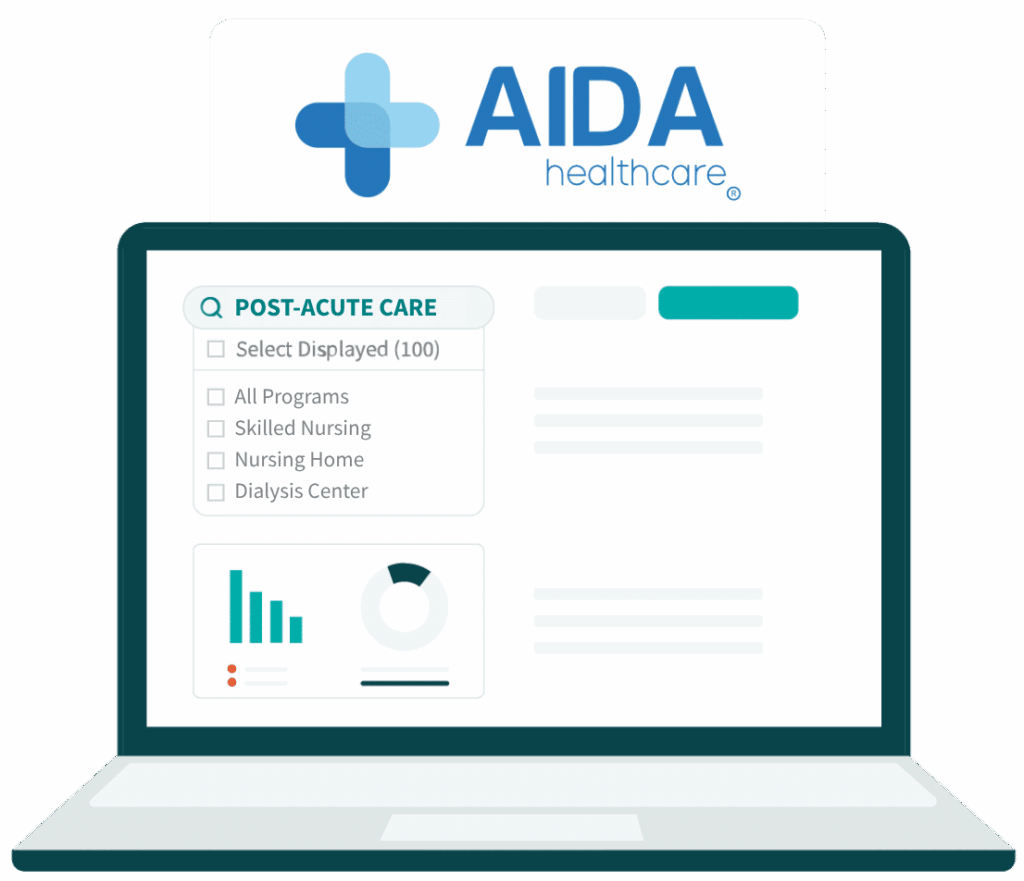
Introducing the Findhelp + AIDA partnership.


How Findhelp + AIDA can reduce administrative burden and costs

Improving care transitions with Findhelp + AIDA 

Ways to implement this seamless integration


Power seamless post-acute care transitions

AIDA simplifies the complexity of patient placement so that case managers and patients clearly know the next step—driving better decisions that ultimately lead to better outcomes for the patient. 

Data-driven decisions like these are the backbone of value-based care. AIDA facilitates informed decisionmaking by providing important details about downstream providers and a technology-driven approach to communicating with them.

The Findhelp + AIDA integration simplifies processes, lessens administrative work, and ensures the efficient flow of necessary information, enabling timely placements and supporting informed patient choice – a key regulatory and satisfaction driver.

Erine Gray announces the new Findhelp + AIDA partnership.

Founder and CEO, Findhelp 


Costly, inefficient post-acute referrals & prolonged hospital stays

Manually sharing patient data for PAC referrals is time-consuming and inefficient, often involving outdated methods like faxing. These delays not only increase administrative overhead for both hospitals and PACs but also contribute to increased length of stay, potentially hindering access for other patients and increasing ED wait times.


Unlock efficiency and reduce length of stay

The Findhelp + AIDA integration provides an automated solution for sharing required patient information with PAC providers. Leveraging the AIDA app, Findhelp Launch users will be able to send applicable records to PACs. This streamlined process empowers hospitals to expedite referrals, facilitating quicker transitions to the appropriate level of care and significantly reducing the length of stay for patients. 

The platform is also designed to support informed patient choice by ensuring PAC providers have the necessary information to engage patients and their families in the decision-making process.


Drive positive outcomes: Organizational benefits

  • Reduced Administrative Labor
    • Eliminate the manual steps involved in selecting, processing, and sharing patient records for each referral.

  • Improved Efficiency
    • Streamline referral workflows, allowing your staff to focus on core responsibilities rather than administrative tasks.

  • Enhanced Data Accuracy
    • Ensure PAC providers receive the complete and up-to-date information they need for informed decision-making.

  • Faster Referral Processing
    • Enable PACs to quickly access necessary records, leading to quicker acceptance and smoother transitions for patients.

  • Reduced Readmissions
    • Facilitating more informed and appropriate PAC placements through comprehensive data sharing contributes to fewer readmissions, further improving the overall care transition process.


Julian Paraschiv celebrates the new Findhelp + AIDA partnership.

Founder and CEO, AIDA Healthcare 


Watch: Findhelp + AIDA in action

See AIDA in action—watch the recording of our joint session at the 2025 Connect Summit social care conference, “Unlock Seamless Post-Acute Referrals: The Power of Findhelp + AIDA”.


Partnering for Better Care Transitions

Findhelp’s partnership with AIDA Healthcare underscores our commitment to providing innovative solutions that simplify complex healthcare processes and improve patient outcomes. By easily connecting referring organizations with post-acute care providers through integrated data sharing, we’re facilitating smoother transitions and enhancing the quality of care.


Is Findhelp + AIDA right for you?

This powerful integration is ideal for healthcare organizations that:

  • Prioritize the accuracy and security of patient data during referrals
  • Routinely refer patients to post-acute care facilities
  • Are seeking to reduce the administrative burden on case management teams.


Get started

Findhelp and AIDA Healthcare are rolling out new capabilities and integrations designed to accelerate care transitions and improve both operational and clinical outcomes. Interested providers, health systems, and payers can schedule a demo to explore how this partnership can transform their post‑acute referral workflows.

Connect with your Findhelp account representative or chat with a Findhelp team member to learn more about enabling Findhelp + AIDA and customizing it to your organization’s specific needs.

Northern California Social Care Summit: Highlights from the Golden State

We were thrilled to bring together so many dedicated leaders from healthcare systems, community-based organizations (CBOs), and public health departments for our Northern California Social Care Summit. The day was filled with energy, candid conversations, and a powerful, shared commitment to building a more connected social care ecosystem for all Californians.

A special thank you to all our attendees and incredible speakers for sharing their insights. The path to navigating complex policies like CalAIM and addressing statewide needs is built through the collaboration and innovation we saw on display.

Sutter Health shared its successful pilot that integrated social needs screening in mental health care by leveraging EHR data and staff training.

A CalAIM panel stressed breaking down silos, forming true CBO partnerships, and using Community Health Workers (CHWs) to build trust.

Another panel highlighted essential CBOs, like Rosarium Health and Mom’s Meals, providing critical “boots on the ground” community services.


Highlights from the 2025 California Social Care Summit

This year’s Summit featured 32 participants from 22 organizations across Northern California, representing county government, health care, nonprofits, and more.

Attendees at Findhelp's 2025 California Social Care Summit.

A sincere thank you to all our speakers and attendees for a day filled with candid conversation and a shared commitment to strengthening the social safety net for every Californian. 

Below are some of the key themes and takeaways from a day of learning and sharing.


Our vision for a connected California

The California Social Care Summit kicked off with a look at Findhelp’s vision for an end-to-end social care ecosystem. We highlighted our full suite of tools—Findhelp, Kiip, SchoolCare, and our benefits eligibility platform, Uno—and how they work together to create a seamless social safety net.

We explored the expansion of our platform into a unified digital infrastructure, from identifying social needs, coordinating services, and managing benefits enrollment to service fulfillment and specialized networks for post-acute care and behavioral health. This allows partners to not only refer but also authorize, manage claims, and process reimbursements for services, all in one place—a critical function for 1115 Waiver work like CalAIM.

The impact in California is already immense:

We are actively supporting California’s landmark policies, including CalAIM, Governor Newsom’s Children and Youth Behavioral Health Initiative (CYBHI), and SB 660: California Health and Human Services Data Exchange Framework, to help build the integrated infrastructure the state needs.


From the ground up: Sutter Health’s patient-centered pilot

Juan Carlos Piña, Program Manager at Sutter Health, provided a transparent, on-the-ground look at how a major health system begins their social care journey. Grounding his presentation in the fact that 80% of health is tied to social needs, Juan Carlos detailed Sutter’s multi-year strategy to drive quality by building the right infrastructure.

Findhelp hosted a California Social Care Summit in 2025.


Sutter’s pilot at the Center for Psychiatry focused on a core goal: leveraging Findhelp to connect adult acute care patients with mental health diagnoses to the right community programs. This group is 2x less likely to be screened, but 2.5x more likely to screen positive, highlighting a major service gap.

Key successes and takeaways:


From policy to practice: Navigating CalAIM and CBO partnerships

Our next panel dove straight into one of California’s most significant and complex initiatives: CalAIM. We heard from leaders at the San Francisco Department of Public Health and San Francisco Health Plan (SFHP).

The discussion focused on the central challenge: breaking down historic silos to build a truly person-centered system.

Key themes:


Findhelp hosted a California Social Care Summit in 2025.


Community organization spotlight: Local partners leading social care innovation

This panel highlighted several CBOs who participate in CalAIM as service providers, partnering with MCOs and the state to meet the needs of Medicaid members. From providing cognitive support for the elderly, complex home modifications, culturally-competent cancer support for the LGBTQIA+ community, and medically-tailored meals for hard-to-reach (e.g., rural) individuals, these CBOs are making a difference in Northern California.

Key themes:


Findhelp hosted a California Social Care Summit in 2025.


Powering a smarter, more connected safety net

The California Social Care Summit concluded with a look at the technology that powers this ecosystem. We highlighted Kiip, our free case management platform for CBOs. We’ve full integrated Kiip into Findhelp, with features like a document locker and chat rooms so navigators can communicate with clients.

We also explored the tools that enable the complex work discussed all day:


Beyond the Summit: Our work in California

Our network spans the entire Golden State and individuals across the region use the Findhelp platform to find and connect to needed services and support. 

As of October 2025, Findhelp partners with more than 89 customers throughout the state to connect their patients, members, students, constituents, and clients to local resources. Our data and analytic tools can identify gaps in services and provide actionable insights to inform strategy and public policy. 

Growth in searches in California on Findhelp platforms, Q1 2021 through Q3 2025.
Growth in searches in California on Findhelp platforms, Q1 2021 through Q3 2025


Building a better future for Californians, together

The Northern California Social Care Summit was a powerful reminder that while the policies are complex, the mission is simple: to connect people to the help they need.

The conversation doesn’t end here. To learn more about how Findhelp can support your CalAIM strategy and community, connect with our team.

Findhelp Acquires Uno Health and Is the First Social Care Platform with Benefit Enrollment

Big news: We’re thrilled to announce that Findhelp has acquired Uno Health, a top-tier digital platform for government benefit enrollment. The goal: make it dramatically easier for people to get the benefits they deserve and help our partners—states, payers, and providers—manage the process more efficiently.

This move creates the first-ever full-stack social care platform.

Findhelp will now provide end-to-end enrollment and redetermination for programs like Medicaid and SNAP.

We’re closing the gap between finding help and getting help, making it easier for people to enroll and stay enrolled.


Benefit eligibility, enrollment, & redetermination made easy

As a digital enrollment platform for government benefits, Uno Health simplifies the end-to-end eligibility, enrollment, and redetermination process for programs like Medicaid, SNAP, TANF, and other key income and employment-based benefits.

Founder & CEO, Findhelp 

Why this, why now?

Enrolling in benefits is difficult. Every year, billions of available dollars go unused because the system is too complex, fragmented, and intimidating. On average, 30% of Americans who are eligible for these programs don’t get enrolled, leaving a staggering $80B on the table annually. People simply get lost in the paperwork. 

Add to that new Medicaid community engagement requirements and redetermination policies, which are challenging states, payers, and providers to innovate. To manage these changes, stakeholders need modern solutions that are sustainable and transparent.

We’re directly addressing this national challenge by offering an integrated digital solution to help people check eligibility, apply for benefits, submit documents, and stay enrolled in critical programs. When folks can access the support they qualify for, their health outcomes and economic stability improve.


A “full-stack” solution: What’s included?

Adding these new capabilities to Findhelp’s technology creates the first true full-stack social care platform. It streamlines every step of the journey: eligibility checks, document collection, application submission, and redetermination across 10 core income-based programs.

Here’s a look at what makes our platform so different:


How this helps everyone

Our solution is designed to solve real problems for our partners and customers:


Connecting the dots: From a referral to real stability

Every day, millions of people use Findhelp to search for support with food, housing, and utilities. A large percentage of those daily referrals are for income-based programs like Medicaid and SNAP. But too often, that’s where the journey gets stuck—a person gets a referral but gets lost in the complex enrollment paperwork.

By embedding benefit enrollment and redetermination workflows directly into the Findhelp ecosystem, we can finally close that gap. The result is a single, unified experience that helps people not only find help but stay connected to it with dignity and ease.

Co-Founder, Uno Health 

See our benefits enrollment options in action

With a proven platform, thriving network, and tailored solutions, Findhelp is powering the foundation for a better social safety net—schedule your demo today and see for yourself.


Amplify Your Impact: Become Findhelp Certified

Your organization works tirelessly to support your community. Findhelp is your partner in this mission, connecting people in need to the critical services you provide.

Ready to maximize your program’s reach and showcase your commitment? The Findhelp Certification program is your next step. It’s a professional credential that validates your expertise and boosts your visibility on the nation’s leading social care network.

Get Recognized: Earn a free professional credential that validates your expertise in using the Findhelp platform to connect people with social care.

Increase Visibility: Showcase your skills as an individual navigator and boost your programs’ visibility on Findhelp.

Become Navigator Certified: Attend two free virtual trainings and pass a short quiz.


We’re excited to offer two paths to certification, designed to empower both the dedicated individuals working to connect people to resources and the organizations they represent. Certification isn’t just another training—it’s a free tool to help you serve more people, more effectively.

Available Now: Navigator Certification

Getting certified as an individual navigator is easy! This credential highlights your Findhelp expertise to your professional network and shows your dedication to connecting people to the help they need.

Benefits for navigators

You may have seen some of your colleagues sharing their Findhelp Certification and wondered, ‘what’s in it for me?’.

Easy as 1-2-3

Your simple path to certification:

Monthly, 3rd Tuesdays | Register

Whenever you’re ready

That’s it! After passing the quiz, you’ll be an official Findhelp Certified Navigator 🎉

We’ll email you the Findhelp Certified badge to add to your website. You’ll also receive a link to add the ‘Findhelp Certified’ credential to your LinkedIn profile, highlighting your expertise and dedication to your professional network.

Get started: Attend the training

Sign up for the free 101 and 201 trainings to start  your certification journey.


Coming Soon: Program Certification

Program Certification is for programs claimed by Certified Navigators. These programs will feature a special certification badge on their Findhelp listings, signaling to those seeking help that your program is a verified and highly-committed resource. Stay tuned!

Benefits for programs

Example of the certification icon on a program’s Findhelp listing

Get started: Claim your program(s)

While you wait for the launch of Program Certification, take 30 seconds to become a Claimer for your program(s).

Program already claimed? Go ahead and re-claim it so that you’re registered as a Claimer in our system.


Frequently Asked Questions (FAQs)

Learn More

Stay in the loop with Findhelp updates and support:


Minnesota Social Care Summit: Highlights from the North Star State

Last week we gathered in Minnesota for our Regional Summit—a day dedicated to building stronger connections between healthcare providers, community-based organizations (CBOs), and social care leaders. Together, we explored what it takes to create a more integrated, sustainable network of support for Minnesotans.

Throughout the day, speakers and attendees shared both the challenges and the innovations shaping their work. From addressing behavioral health gaps in rural communities to experimenting with new referral workflows, the summit highlighted the creativity and collaboration driving Minnesota’s social care landscape forward.

How Essentia Health is tackling the behavioral health crisis in rural Minnesota, achieving a 94% closed-loop referral rate

Practical strategies from both a health system and a CBO on using data and process improvements to strengthen their collaborative network

The critical steps Minnesota leaders are taking to address CBO capacity


Highlights from the 2025 Minnesota Social Care Summit

This year’s Summit featured 27 participants from 16 organizations across Minnesota, representing health plans, health care providers, nonprofits, and more.

Findhelp hosted a Minnesota Social Care Summit.


A sincere thank you to all our speakers and attendees for a day filled with candid conversation and a shared commitment to strengthening the social safety net for every Minnesotan. It’s clear that the spirit of collaboration is strong in the North Star State.

Below are some of the key themes and takeaways from a day of learning and discussion.


A vision for trust and integration

The day began by addressing a foundational element of any connected network: trust. In a discussion about data privacy, participants expressed concern about how they can ensure people’s information is safe.

Findhelp’s coalition model offers one answer. Already in use across eight states, it allows individuals to choose exactly which organizations can view their referrals—contrasting with “all-in” consent models used elsewhere. This approach puts control in the hands of the individual, ensuring privacy while still fostering collaboration among partners.

Findhelp hosted a Minnesota Social Care Summit.


Closing the loop on behavioral health: Essentia Health’s blueprint

One of the most pressing topics of the day was the significant gap in behavioral health (BH) access, especially across northern and rural Minnesota, where wait times for an appointment can stretch to six months. Our partners at Essentia Health shared their innovative and determined approach to closing this gap.

Facing challenges of long wait times, shifting provider networks, and capacity constraints, Essentia took action.

They built a comprehensive directory on their platform that includes all available BH resources to ensure their care coordinators had a complete view of available services.

Find Help Minnesota, a behavioral health program locator.

Findhelp partnered with the Minnesota Department of Human Services (DHS) to roll out a statewide behavioral health program locator—Find Help Minnesota—enabling organizations to seamlessly coordinate referrals and expand access to critical mental and behavioral health resources.

With more than 3,500 employees placing referrals through their Findhelp platform, Essentia has worked to ensure behavioral health resources are visible and accessible—even in rural and northern Minnesota, where a simple appointment can mean a six-month wait.

Attendees were eager to learn how these workflows played out in practice, asking questions about integrating screeners directly into Epic and managing duplication across systems. The discussion underscored both the complexity and the promise of making behavioral health referrals smarter and more effective.

Key successes and takeaways:

Findhelp hosted a Minnesota Social Care Summit.


Building a collaborative network: Strategies from Fairview Health Services and The Food Group

Our next session focused on the strategies behind building and sustaining strong partnerships, featuring perspectives from both a major health system and a vital CBO.

Fairview Health Services detailed their thoughtful approach to integrating Findhelp. By tailoring workflows to different roles—clinicians, care coordinators, and inpatient/outpatient teams—they’ve created a system that balances efficiency with depth. For example:

Fairview also emphasized the importance of accountability to drive programmatic success: 

Using Findhelp’s analytics dashboard, Fairview is already tracking referrals, claimed programs, and baseline data to shape their 2026 goals, strategically focusing on building CBO partnerships where the need is greatest.


A critical theme emerged from this discussion: as health systems get better at screening and referring, how do we support the CBOs now facing increased demand, especially as grants and other funding sources tighten?

The group engaged in a transparent conversation about creative solutions, from Essentia’s model of directly paying CBO partners for their work through an Incentivized Trusted Network to an exciting discussion between Essentia and Fairview about pooling resources to jointly build CBO capacity.

From a CBO perspective, The Food Group shared how they measure success and adapt to growing demand, as healthcare partnerships have doubled their referrals in the past year.

To manage this influx, they analyzed their outreach process. By simply adding a fourth attempt to follow-up with individuals (text, call, call, email), they boosted their connection rate by 15%, ensuring more people received the help they needed.

Findhelp hosted a Minnesota Social Care Summit.


A more connected future

The day wrapped up with a forward-looking discussion about the tools and features that will continue to power this work:

Findhelp hosted a Minnesota Social Care Summit.


Beyond the Summit: Our work in Minnesota

Our network spans the entire North Star State and individuals across the region use the Findhelp platform to find and connect to needed services and support. 

As of October 2025, Findhelp partners with more than 16 customers throughout the state. They use our platform to connect their patients, members, students, constituents, and clients to local resources. Our data and analytic tools can identify gaps in services and provide actionable insights to inform strategy and public policy.

Growth in searches in Minnesota on Findhelp platforms, Q1 2021 through Q3 2025.
Growth in searches in Minnesota on Findhelp platforms, Q1 2021 through Q3 2025


Building a better future for Minnesotans, together

The Minnesota Social Care Summit was a powerful reminder of what’s possible when healthcare systems, community organizations, and technology partners come together. Themes of privacy, accountability, and sustainability ran throughout the day, underscoring the shared responsibility to build a stronger, more connected social care network.

The conversation doesn’t end here; to learn more about how Findhelp can support your work in Minnesota, connect with our team.


How Denton County Created a Community-Wide Solution for Social Care

Connecting residents to the right social services at the right time is a critical challenge facing every growing community. In Denton County, Texas, community-based organizations and government leaders recognized the need for a shared digital infrastructure to connect the public with available services. In response, the City of Denton and Denton County Public Health acted as conveners, funding and facilitating a community-wide solution. Since its launch, the FindHelp Denton County platform has been used by thousands of residents to connect with vital services. 

This case study details how this partnership, and collaboration with community service providers, led to the creation of a centralized resource hub that strengthens the entire network of care.

County and City came together to implement a centralized, community-wide system for connecting residents with social services

This partnership created a methodical approach that included government facilitation, a phased implementation plan, and broad community collaboration

In the first year, 18,000 residents used the platform to connect to resources


The challenge: Binders, sticky notes and spreadsheets

Denton County’s dedicated community-based organizations (CBOs) worked tirelessly to support residents. However, without a shared, centralized system, each organization maintained its own information. For social service professionals, this often meant relying on individual expertise, hefty printed binders, or sticky notes to make referrals—a diligent but decentralized approach.

This structure created systemic issues:

  • Residents faced a complex landscape with no clear starting point to find help.
  • CBO staff found it difficult to connect people to services outside their own agency.
  • The lack of a unified directory with closed-loop capabilities made it challenging to track referral outcomes.
  • The high cost of referral technology and the need for ongoing technical support placed such a solution outside the reach of most individual organizations.
Denton County and the City of Denton partnered with Findhelp to create a community-wide solution to connect residents to social services.

Located in North Central Texas, Denton County is a fast-growing region that recently surpassed a population of one million. This rapid growth has led to challenges in areas like housing affordability and has shifted the needs of the community. This case study highlights a partnership between two key local government entities: the City of Denton’s Community Services Department and Denton County Public Health. Their shared history, originating from work with the local United Way, fueled a long-standing goal to overhaul the community’s information and referral process.

The community recognized the need for a modern, shared infrastructure, and came together, with support from the City and County, to better connect the entire network of care. 


The solution: A unified and methodical approach

Recognizing an opportunity to support community members in efficiently accessing information about services available, the City and County collaborated to support a multisector, foundational infrastructure to support referrals and connectivity to care. Their approach was guided by several key principles:

Denton County and the City of Denton partnered with Findhelp to create a community-wide solution to connect residents to social services.


Real world impact: Key strategies for success

With the platform built, the Denton County team employed several key strategies to ensure its successful integration into the community fabric.


Sustainable funding and partner buy-in

The team’s approach went beyond just launching a tool; they deliberately built community-wide solution and the foundation for long-term success:


Building a trusted, community-focused brand

Rather than using an official government brand, the team intentionally created a unique and neutral identity: “FindHelp Denton County.”

Denton County and the City of Denton partnered with Findhelp to create a community-wide solution to connect residents to social services.


Fostering deep CBO engagement

The team actively works to help CBOs use the platform to its highest potential. This includes:

By helping CBOs become platform experts, the team is replacing inefficient workflows and building a more coordinated system of care.


Using data to inform strategy

The team leverages platform analytics to guide outreach and resource allocation, focused on usership trends and topic-specific searches:


An award-winning model for other counties

The National Association of County and City Health Officials (NACCHO), the representative body for over 3,300 local health departments nationwide, selected Denton County Public Health as one of the winners of its 2025 Model Practice Awards. This annual program recognizes exceptional local public health initiatives, chosen through a competitive, peer-reviewed process. Denton County was one of 19 local health departments to receive the Model Practices award in 2025.

As a Model Practice Award winner, Denton County Public Health made this short video outlining their strategy and approach to building a community-wide solution. Hosted on NACCHO’s website, the video will serve as guide for other counties who want to replicate Denton’s success.


Measurable results and future vision

These strategies translated directly into significant, measurable outcomes, establishing the platform as the backbone of Denton County’s social care strategy.


Denton County has successfully laid the groundwork. Their year-two vision is focused on deepening their impact by expanding CBO usership, prioritizing access in asset-limited areas, and enhancing their closed-loop referral network. They are proving that with the right strategy and tools, any community can move from a fragmented system to a resilient, connected network of care.


Bring a new standard of care for your community

Let’s build your community-wide solution together! Findhelp has a history of partnership with county governments to increase efficiency, improve public health, and support their staff and residents. Schedule a conversation with our team to get started.


New Jersey Social Care Summit: Highlights from the Garden State

Findhelp recently hosted an in-person New Jersey Social Care Summit on the Rutgers University campus with a dynamic group of leaders from community-based organizations (CBOs), healthcare systems, government, and more. The day was filled with insightful conversations about building a more connected social care ecosystem, leveraging technology to meet complex needs, and the power of partnership in creating lasting change across the Garden State.

How leading New Jersey health systems are effectively integrating social needs screenings directly into their EHRs and patient portals.

Creative, community-based strategies for reaching vulnerable populations.

Key lessons from New York’s 1115 Waiver on how to build a scalable infrastructure.


Highlights from the 2025 New Jersey Social Care Summit

This year’s summit featured 37 participants from 21 organizations across New Jersey, representing local and county government, health care, nonprofits, schools, and more.

Attendees at Findhelp's 2025 New Jersey Social Care Summit.


We want to extend a heartfelt thank you to all our attendees and speakers for sharing their expertise and passion. It’s clear that by working together, we can build a stronger, more accessible social safety net for all New Jerseyans.

Below are some of the key themes and takeaways from a day of learning and sharing.


Our vision for a digitized social safety net

Our keynote session kicked off the day by exploring Findhelp’s vision for a connected, end-to-end social care ecosystem. We reviewed our comprehensive suite of solutions designed to support every step of the social care journey:

Our core platform, connecting people to the services they need in every U.S. ZIP Code.

Findhelp's acquisition of Kiip will enhance its existing CBO technology.

Case management tool, free for CBOs, nonprofits, and their clients.

Explore Findhelp's SchoolCare platform and Medicaid billing solution.

Health record used by school nurses to support student well-being.

Benefits eligibility tool that simplifies finding and applying for state & federal programs


We also shared a glimpse into the future with Personalized Search and Member Verification Workflows, which use data and insights to connect people to the right services more quickly and efficiently.

The impact in New Jersey is clear: with nearly 2 million users and over 2,200 claimed programs in the state, the network is robust and growing. This strong foundation is crucial as the state moves forward with initiatives like the NJ 1115 Waiver, which will leverage Medicaid to address social needs like housing and nutrition through collaboration between managed care organizations (MCOs), health systems, and CBOs.

Attendees at Findhelp's 2025 New Jersey Social Care Summit.


In practice: How New Jersey’s health systems are integrating social care

Our first panel, “The Power of We,” featured leaders from across the state who shared how they are embedding social care into their clinical workflows. Speakers Christine Young of Englewood Health, Max Kursh of Cooper University Health Care, and Victoria Gregoria and Abby Erasmus of Children’s Specialized Hospital discussed their journey from manual resource lists to integrated, technology-driven solutions.

A common thread was the powerful integration of Findhelp with Epic, their electronic health record (EHR). This has enabled them to seamlessly screen patients for social determinants of health (SDoH).

Key successes:

Attendees at Findhelp's 2025 New Jersey Social Care Summit.


Community at the core: Innovative approaches to engagement

Our second panel, “A Simplified Approach to Meeting New Jersey Requirements,” highlighted how organizations are using technology and community engagement to reach people where they are. Morgan Newcomb from Family Health Initiatives, Diana Belle and Selina Holmes from Choose Healthy Life, and Austen Williams from The Medi showcased their unique and effective strategies.

Connection stories:

Attendees at Findhelp's 2025 New Jersey Social Care Summit.


Lessons from New York’s 1115 waivers: Paving the way for sustainable social care

Looking at a large-scale model of social care in action, we welcomed Indiana Lopez and Katherine Morillo from SOMOS Community Care, a physician-led health system in New York, to close out the customer-led sessions at the 2025 New Jersey Social Care Summit. They shared their experience leading social care efforts for the NY 1115 Waiver in the Bronx, with the ambitious goal of screening all 800,000 Medicaid members.

Their journey underscored the vital role technology plays in managing complex, large-scale initiatives. As Indiana, a physician herself, noted, “IT and data is the foundation for accountability.” Their success hinges on strong CBO partnerships, a flexible approach, and keeping processes simple for everyone involved. Indiana and Katherine highlighted how Findhelp technology bridges the gap between healthcare providers and community-based organizations to create a more resilient, flexible, and integrated social care system.


Beyond the Summit: Our work in New Jersey

Our network spans the entire Garden State and individuals across the region use the Findhelp platform to find and connect to needed services and support. 

As of September 2025, Findhelp partners with more than 28 customers throughout the state to connect their patients, members, students, constituents, and clients to local resources. Our data and analytic tools can identify gaps in services and provide actionable insights to inform strategy and public policy.

Growth in searches in New Jersey on Findhelp platforms, Q1 2021 through Q3 2025


Building the future, together

The day wrapped up with a look at our product roadmap, where we reaffirmed our commitment to building the infrastructure for a unified social care network. By providing CBOs free tools like Kiip and prioritizing interoperability, we aim to create a single source of truth that allows all sectors to work together seamlessly.

The discussions at the New Jersey Social Care Summit were a powerful reminder of the incredible work being done across the state. The path forward is built on the partnerships, innovations, and shared dedication we witnessed throughout the day.

The conversation doesn’t end here. To learn more about how Findhelp can support your work in New Jersey and beyond, connect with our team.


Our Pricing Philosophy: Consistent and Transparent

When organizations buy software, pricing is often the most frustrating part of the process. Hidden fees, confusing licenses, and endless negotiations have become the norm. But when the work is about helping people—feeding families, connecting them to housing, or providing access to care—pricing shouldn’t be a game. Findhelp’s pricing philosophy is different: We’re committed to fair and transparent pricing.

We reject hidden fees and complex contracts by publishing all prices directly on our website

We ensure access for all budgets through simple, affordable subscription fees

By prioritizing trust, we can ensure money is spent on helping people, not on inflated technology costs


Why pricing matters in social care technology

At Findhelp, we believe pricing should be straightforward, transparent, and fair. No nickel-and-dimeing. No seat licenses. No hidden fees. Just clarity about what you get, what it costs, and why we price the way we do.

We built this philosophy not as a marketing tactic, but because of lived experience. We spent years inside government programs, watching inefficient systems  waste money that could have gone directly to communities. 

We are people-first. That principle guides how we serve our customers and how we set our prices.


The challenges with technology procurement 

To understand our pricing philosophy, it helps to know where we came from. Our founder worked on a large government project. The goal was noble: make it easier for Texans to apply for benefits like Medicaid, SNAP, TANF, and CHIP using technology. The promise was simple: a single integrated application process.

The reality was different.

Massive contracts, some worth hundreds of millions of dollars, were awarded to large consulting firms. Armies of consultants filled offices, billing hourly rates that soared past $200 or more. These firms then subcontracted to smaller firms, who subcontracted again. 

The project eventually collapsed, consultants left, and teams scrambled to rebuild. Meanwhile, people who needed food or health insurance waited in long lines or on hold for hours.


The way companies price technology creates challenges


‘People-first’ pricing principles

This experience of watching inefficiencies undermine critical public programs created a conviction: Technology companies serving government, healthcare, and social care must be people-first. That is why we made a commitment: Our pricing practices will set a new industry standard.

The answer was clear:

We knew this approach might not always maximize revenue, but it would maximize trust. And, trust is worth more than a bloated contract. So, we solidified our pricing philosophy around those three core principles:


Transparent pricing

We believe software pricing should be as clear as buying a t-shirt or a streaming subscription. That’s why in 2017, we became the first company in our space to publish pricing on our website. You don’t need to sit through demos to get a ballpark figure. What you see is what you get. Transparency is not only the fair thing to do, it’s also efficient. Customers spend less time negotiating and more time serving people.


Fair and reasonable pricing

Findhelp.org, the nation’s largest social network, is always free to the public. Anyone can search for food, housing, transportation, or other support without cost. That principle will never change.

For organizations that employ social workers, care managers, or community health workers, we offer flexible subscription models with advanced features. Customers can upgrade or downgrade depending on their needs.

When custom work or training is required, we charge a single transparent hourly rate. No inflated consulting contracts. No surprise fees.


Mission-driven pricing

Our infrastructure is already built, covering all 50 states. That means we don’t need to inflate prices to cover overhead. We believe customers trying to help their patients, members, residents, or clients should always be able to afford the tools they need to serve their communities, despite operating under tight budgets. 

We also believe that pricing reflects values. If our customers are paying inflated technology costs, that money comes from somewhere: from government budgets, from hospital margins, from community grants. Every unnecessary dollar spent on technology is a dollar that isn’t used for its intended purpose: helping people. 


A partner you can trust

The world of government and health care technology is complicated. The needs are urgent and the budgets are tight. But one thing should not be complicated: Pricing.

At Findhelp we are people-first. That means we put transparency, fairness, and mission at the heart of everything we do—including our pricing. 

We know our customers face hard decisions every day. We want to make at least one of those decisions easier: choosing a technology partner you can trust.


Watch | How Trinity Health Reduced Preventable Hospitalizations by 16%

In the modern healthcare landscape, it’s increasingly clear that the majority of health-related activities happen outside the doctor’s office. Factors like access to food, housing, and social support—health-related social needs (HRSN)—can have a greater impact on well-being than clinical care alone. In a recent webinar with Becker’s Healthcare, Maureen Pike from Trinity Health and Carla Nelson from Findhelp discussed how embracing this reality helped Trinity Health achieve a 16% drop in preventable hospitalizations for its most vulnerable patients.

Trinity Health embedded Community Health Workers (CHWs) directly into its clinical care teams to bridge the gap between healthcare and a patient’s daily life.

The program focused on reducing preventable hospitalizations, specifically for high-cost, high-need patients dually enrolled in Medicare and Medicaid.

Trinity integrated Findhelp into Epic, their electronic health record, to streamline referrals and navigation.

This initiative led to a 16% reduction in preventable hospitalizations for the target population.


The challenge: Preventable hospitalizations

Trinity Health focused on preventable hospitalizations—admissions for conditions like heart failure or diabetes that could have been managed in an outpatient setting—as a key metric. They discovered that patients dually enrolled in Medicare and Medicaid, had an avoidable hospitalization rate more than double that of the general population.

Trinity Health reduced preventable hospitalizations by integration social care (Findhelp and community health workers) with clinical care.

Director, Clinical and Social Care Integration at Trinity Health


The strategy: Integrating social care into clinical teams

Trinity Health integrated social care  directly into its care model. To address their preventable hospitalizations disparity, the system invested in an internal workforce of Community Health Workers (CHWs):

Director, Clinical and Social Care Integration at Trinity Health


Empowering staff with the right tools

To maximize the CHWs’ impact, Trinity Health provided them with a powerful tool: the Findhelp platform. This online network of community resources helps patients and providers find up-to-date, free, or low-cost social services by need and ZIP code.

Director, Clinical and Social Care Integration at Trinity Health

Findhelp’s integration with Trinity’s Epic EHR streamlines the referral process. When a patient’s social needs are identified during a screening, a care team member can immediately pull up a list of relevant resources and add them directly to the patient’s after-visit summary. This approach not only supports the CHWs but also enables patients to self-navigate, broadening the program’s reach.


The results: 16% decrease in preventable hospitalizations

The success of this integrated approach is visible in both the data and individual patient stories. In a four-year analysis, from July 2021 to July 2024, Trinity Health achieved a 16% decrease in preventable hospitalizations for dually-enrolled patients and a 45% reduction in health disparities between duals and the overall patient population.

Success in South Bend

Select Health and St. Joseph Health System, part of Trinity’s accountable care organization (ACO) in South Bend, Indiana, saw extraordinary results during the same four-year period:

Trinity Health reduced preventable hospitalizations by integration social care (Findhelp and community health workers) with clinical care.

One patient’s story: The impact of CHWs

The numbers are brought to life by stories like that of Miguel, a 49-year-old Trinity Health patient with heart failure.


Watch: Trinity Health’s strategy & lessons learned

In a webinar with Becker’s Healthcare, Maureen Pike (Trinity Health’s Director of Social & Clinical Care Integration) and Carla Nelson (Findhelp’s Sr. Director of Healthcare and Public Policy) discussed key insights from Trinity’s approach to reducing preventable hospitalizations and health disparities:


The Road Ahead

While Trinity Health has seen significant success, the work isn’t without its challenges. Funding the CHW workforce and integrating their efforts seamlessly with existing clinical workflows remain key hurdles. The system is also working to navigate the complexities of billing for CHW services to ensure the program’s long-term sustainability.

For other healthcare organizations looking to replicate this success, the advice is simple: don’t put CHWs in a silo. By intentionally integrating them into the care team and leveraging technology to empower their work, health systems can address the full spectrum of patient needs. Make a measurable impact on health outcomes while lowering cost of care with Findhelp.