










Michigan Social Care Summit: Highlights from the Great Lake State
At Findhelp, we’re dedicated to simplifying the complicated process of connecting people with help. But we know that technology is only one piece of the puzzle—true social care integration requires local expertise, deep community trust, and cross-sector collaboration. That’s why we were thrilled to bring together healthcare leaders, state officials, and community-based organizations (CBOs) for our recent Michigan State Social Care Summit.
The energy in the room was a powerful reminder of what’s possible when we break down data silos and design workflows around the human beings who need them. Across Michigan, our network has grown to support 2.6 million users and coordinate over 7.2 million searches for resources. Throughout the day, speakers from across the state shared how they’re leveraging this infrastructure to move from simple resource lists to active, connected networks that improve lives.
Read on for key takeaways:

How strategic clinical-community partnerships are scaling health-related social needs (HRSN) screenings and resolutions across Michigan.
The power of performance-based incentive models to supercharge community engagement and closed-loop referral tracking.
Why building an equitable, interoperable social care infrastructure requires centering community voices and ensuring financial liquidity for local partners.
A special thank you to everyone who joined us and to our fantastic speakers for sharing their insight, experiences, and vision.
Highlights from the 2026 Michigan Social Care Summit
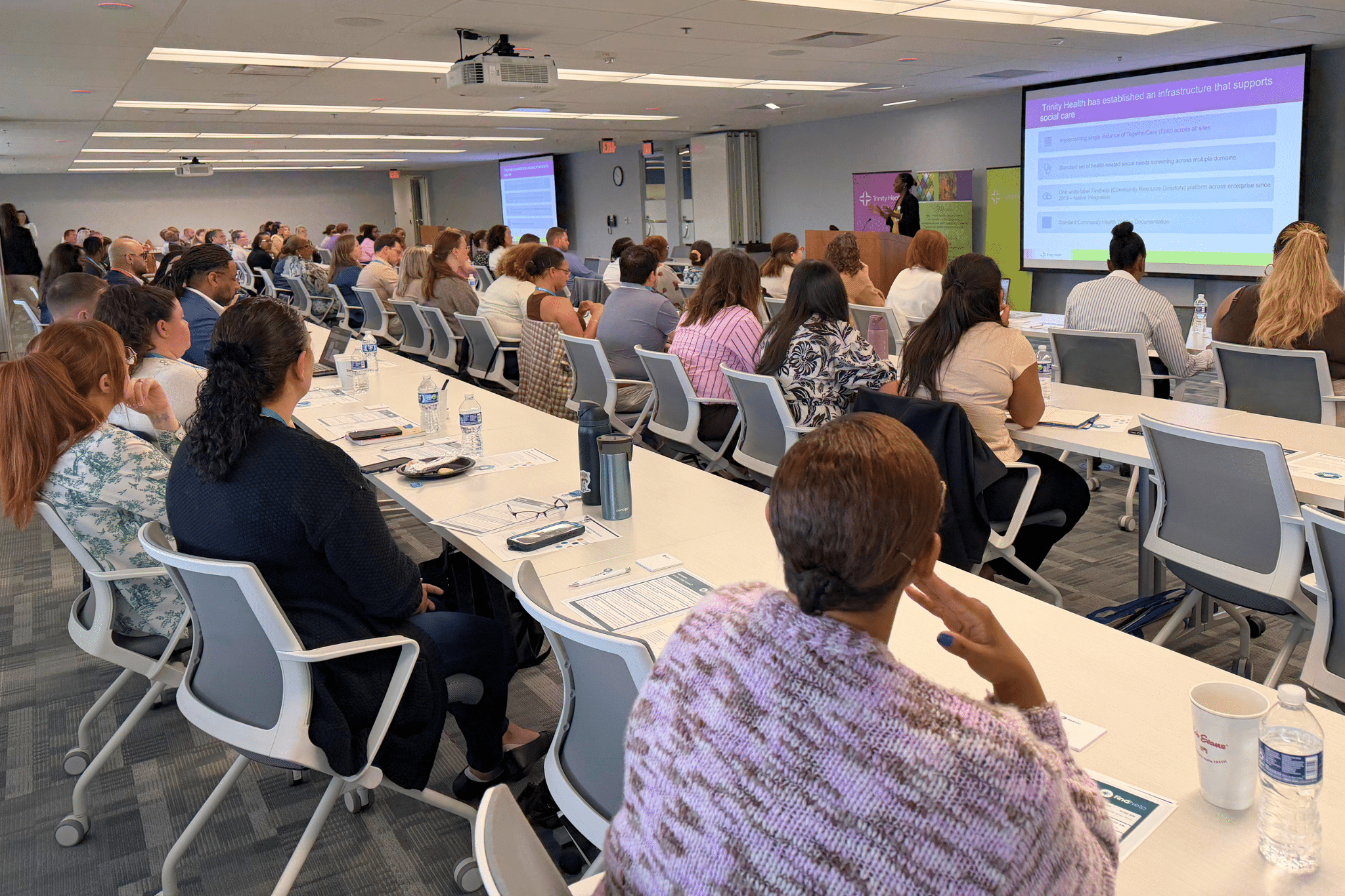
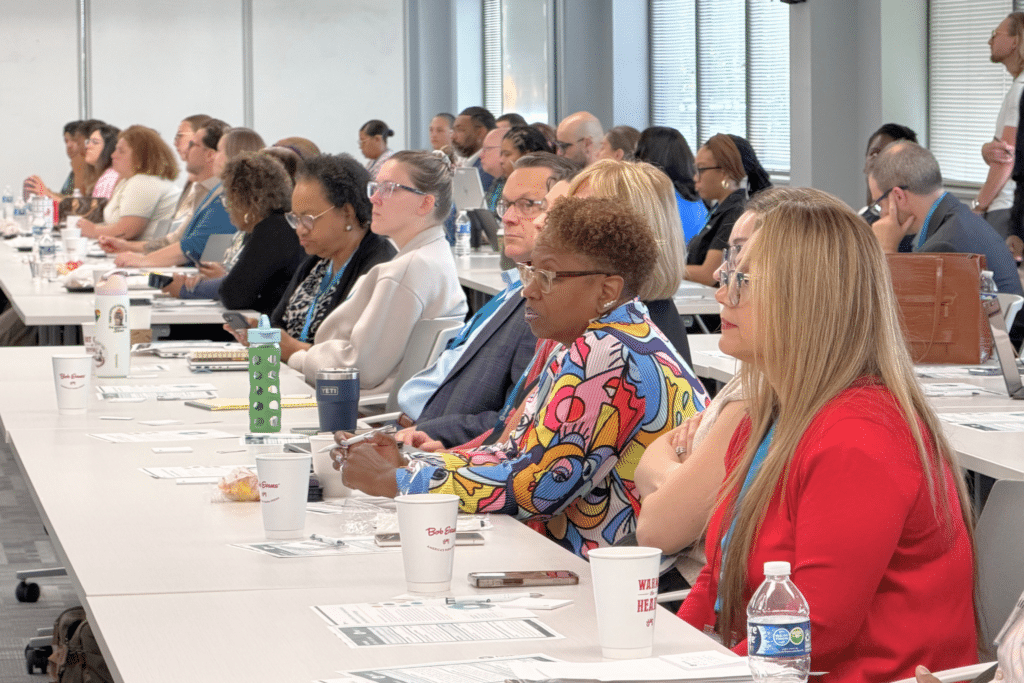
This year’s Summit featured 92 participants representing government agencies, healthcare providers, community organizations, and more:
Below are some of the key themes and takeaways from a day of learning and sharing.
Bridging clinical and social care through local partnerships
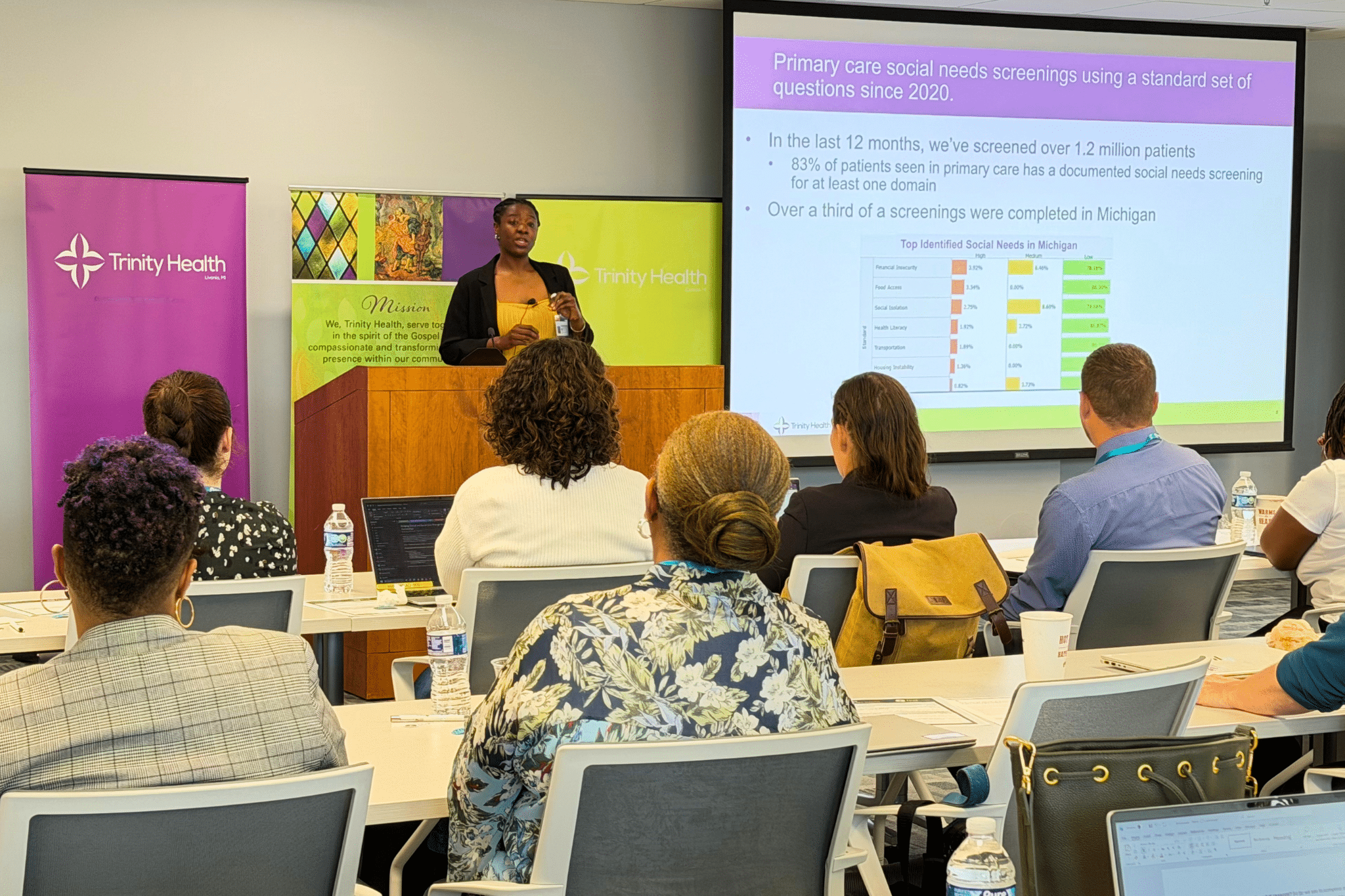
Our first session kicked off with Zakiya Sulieman, Senior Program Consultant, and Michael Ramsey, Community Health Improvement Coordinator, from Trinity Health. They shared how implementing a standard set of health-related social need screenings across ambulatory, inpatient, and emergency department settings has served as a massive catalyst for change. In the last 12 months alone, Trinity Health screened over 1.2 million patients across their national system. Over a third of those screenings were completed in Michigan, which stands as the largest regional health ministry in the Trinity system.
The results of this focused effort are staggering: Trinity Health has seen a 428% increase in their inpatient social need screening rate over the past two and a half years.
More importantly, their Community Health Workers (CHWs) are actively turning those screenings into solutions, resolving nearly 73% of patients’ documented social needs in fiscal year 2025.
Michael highlighted the deeply collaborative reality of this work. As he put it, when people are facing a crisis, “If someone is walking out of our doors, they are likely walking into one of yours.”
He emphasized that local faith-based organizations are often where people feel the most at home and safe, meaning large health systems must show up as humble partners. He defined their operational philosophy directly: “Trinity’s promise: We listen, we partner, and we make it easy.”
Scaling community engagement through innovative incentive models
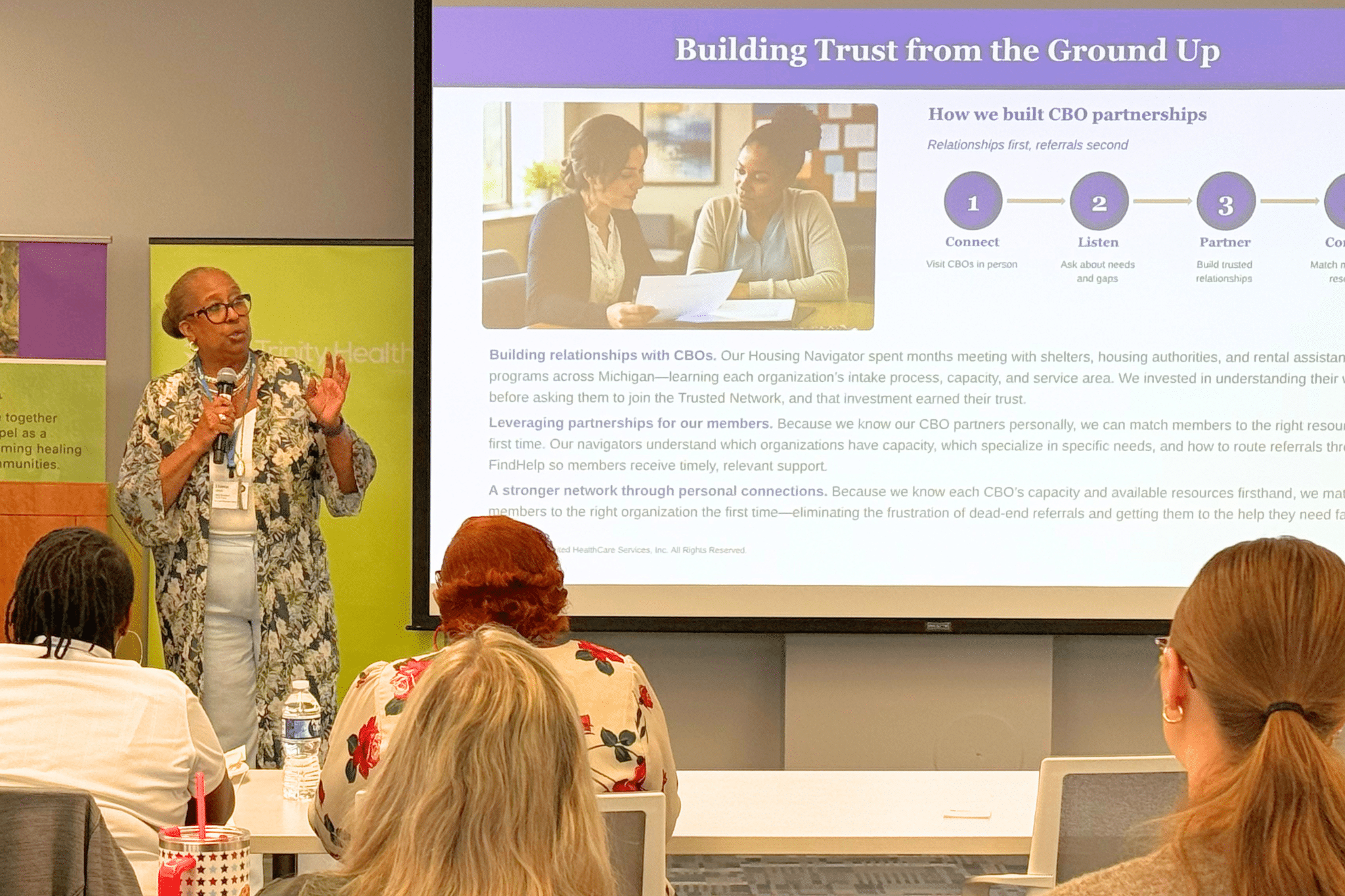
Next, we heard from Chereka Moore, Population Health Director, and L’Tayna George, Housing Navigator, at UnitedHealthcare Community Plan of Michigan. They gave the audience an inside look at how they designed a high-performing Trusted Network of curated CBOs to support their 270,000 Medicaid members across the state.
To move the needle on closed-loop referral rates, UnitedHealthcare launched a Year 1 Incentive Model utilizing a Findhelp central escrow account. This performance-based structure offered a $500 startup payment to CBOs, alongside a tiered system of $50 for every successful “Got Help” outcome and $10 for other resolved closed-loop statuses.
The results speak for themselves. In just one year, the program onboarded 66 Trusted programs, achieved a near-universal 98% CBO response rate, and elevated their closed-loop referral tracking to 72%—a massive 10x improvement over their baseline.
L’Tayna reflected on how this approach completely transformed her daily navigation work:
“Having a Trusted Network gave us the opportunity to truly understand what the CBOs do, what capacity they have… Findhelp has opened doors for us to work with CBOs and form good collaboration.”
L’Tayna George
Housing Navigator
UnitedHealthcare Community Plan of Michigan
Balancing demand, supply, and sustainable funding
As the conversation shifted to statewide policy and building out Michigan’s broader social determinants of health (SDOH) infrastructure, Joshua Traylor, Executive Director of the Center for Health and Research Transformation (CHRT), injected a vital dose of reality into the room. He spoke passionately about the heavy operational burdens placed on frontline organizations.
He argued that data tracking must never outpace a community’s actual capacity to serve, explaining:
“Data liquidity needs to come with financial liquidity. The challenge for CBOs has never been that they don’t have enough people to serve. Referrals, especially from health systems, must come with the realization that additional requests for help come with additional financial challenges for CBOs”.
Joshua Traylor
Executive Director
Center for Health and Research Transformation (CHRT)
He cautioned the audience that we must be careful not to create an extracting system: “Asking patients deeply private screening questions about their social needs without the capability to provide follow-up assistance or intervention is distressing for patients and providers”.
To sustainably manage regional traffic, Joshua pointed to the rollout of regional Michigan Hubs, which are designed to act as vital local intermediaries.
He summarized: “Hubs do not take over the CBOs; they are the ‘care traffic controllers’ for the existing network”.
This model directly aligns with the Michigan Department of Health and Human Services (MDHHS) strategy presented by Shannon Patrick and Laura Drayton, who highlighted the expansion of 10 core social care hub sites across the state to scale infrastructure and target health equity.
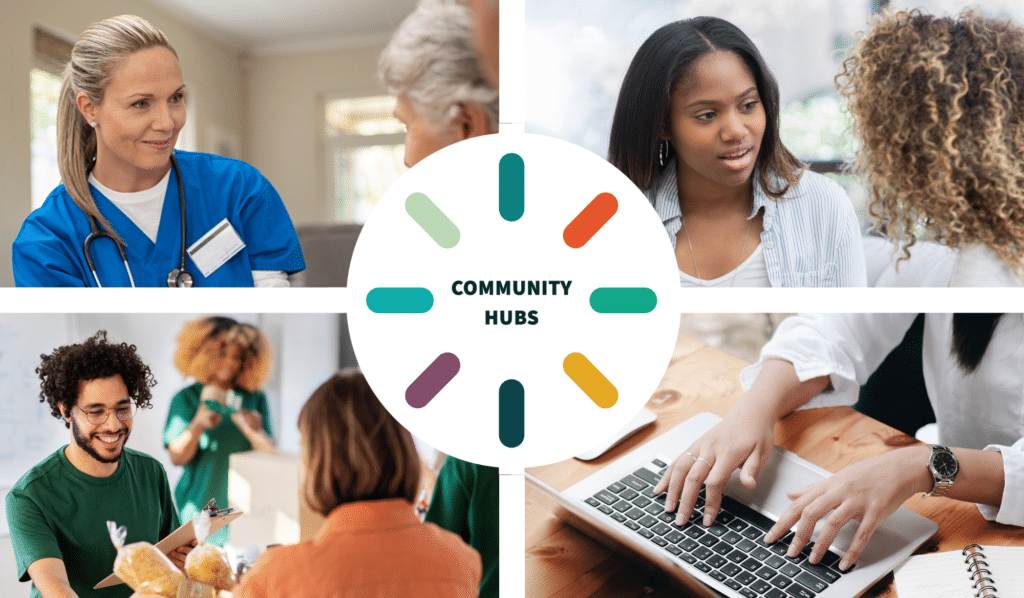
Powering Community Care Hubs
Defining return on investment through change management
Our final panel brought together Abby Leonard from Bronson Healthcare, Ewa Panetta from Michigan Health & Hospital Association, and Shakina Russell from Henry Ford Health to discuss the long-term return on investment (ROI) for integrated social care networks.
The panelists agreed that standardizing language and mapping SDoH screening data into the electronic health record (EHR) is foundational. However, Abby Leonard reminded the audience that true health equity cannot merely be an administrative goal passed down from corporate executives:
“You can not have equity in the outcome if you do not have equity in the process”.
Abby Leonard, MSN CPHQ
Patient Safety & Quality Coordinator
Bronson Healthcare
Abby noted that to earn buy-in, social care champions must directly tie social interventions to the specific financial metrics leadership and physicians are measured against, like readmissions and appointment no-shows.
Ewa Panetta beautifully reframed how we should measure value and success in this work. She noted that the path forward requires an active shift in how large healthcare entities position themselves within the community: “It’s not about how to build trust with people, it’s about how we can be trustworthy”.
“Helping people early on—before social care challenges lead to healthcare issues—is the ROI for the work we do.”
Ewa Panetta
Director, Community Health Impact and Policy
Michigan Health & Hospital Association
Beyond the Summit: Our work in Michigan
While the Summit provided a rich day of insight and connection, the real work continues — in homes, clinics, schools, and community hubs across the state.
- 8.9 thousand listed programs serving Michigan
- 3.25 million users across the state
- 8.9 million searches for resources
- 100% of counties have claimed programs
As of July 2026, we partner with more than 25 customers throughout the state. They use the Findhelp platform to connect their patients, members, students, constituents, and clients to local resources, and use our data and analytic tools to identify gaps in services and provide actionable insights to inform strategy and public policy.
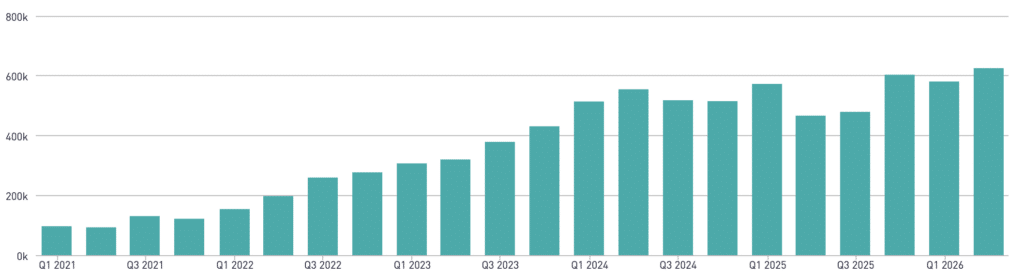
Searches in Michigan on Findhelp platforms, Q1-2020 through Q2-2026
Moving Michigan forward, together
We’re proud to stand alongside our partners in Michigan as they construct a thoughtful, equitable, and highly efficient safety net. By uniting technology with local relationships, we aren’t just saving clicks for care teams—we’re making sure that when a neighbor reaches out for help, a real solution is waiting on the other side.
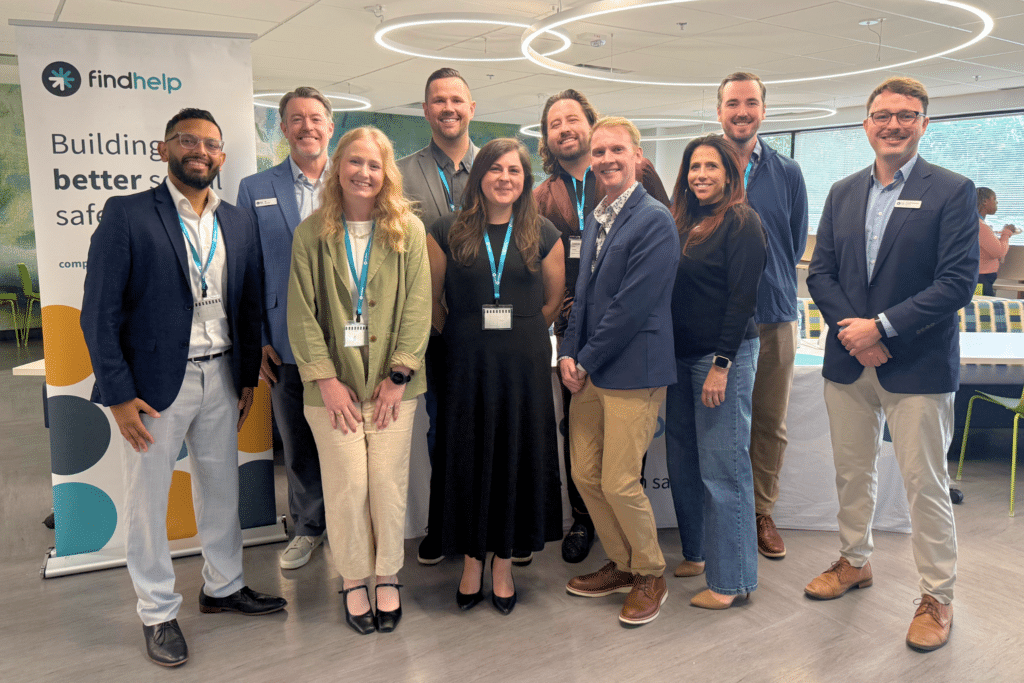
We want to extend a thank you to our hosts at Trinity Health, our speakers, and everyone who attended the Michigan Social Care Summit. Let’s keep listening, partnering, and making it easy. If you’re interested in how Findhelp can support your work — whether you’re a health system, community-based organization, payer, or state agency — we’d love to chat.