












Whole Person Care is Working: New California Data Proves the Value of Addressing HSRN
What is the value of addressing HRSN? Last year, we shared how California Managed Care Plans (MCPs) were preparing for the July 1, 2025 Closed-Loop Referral System deadline under CalAIM. The state set out with a big goal: to better coordinate care for individuals with complex needs by directly connecting healthcare systems with local social services.
Now, the results are in. Fresh data released in June 2026 by the California Department of Health Care Services (DHCS) shows that this whole-person care model is growing fast and is saving money. By focusing on health-related social needs (HRSN), California is improving member well-being and reducing the need for costly emergency care—proving the value of the state’s investments.
At Findhelp, we’ve been on the ground from the start. We help health plans, care managers, and community organizations work together seamlessly. This new data confirms what we’ve always believed: when you put people first and make it easy to get help, everyone wins.
In this post, you’ll learn:

How California is scaling whole person care: The latest enrollment and growth trends for the CalAIM Medicaid initiative
The clear financial impact of social care: Verified data showing the value of addressing HRSN and how it reduces net healthcare costs.
How Findhelp powers these outcomes: Ways our platform helps plans simplify workflows, stay compliant, and deliver meaningful care.
Record growth in enrollment and service delivery
California’s multi-year journey to transform Medi-Cal is reaching record numbers of people. According to the latest DHCS quarterly report, nearly 453,000 Medi-Cal members have received Enhanced Care Management services since the CalAIM initiative launched in 2022. In the third quarter of 2025 alone:

- Nearly 227,500 members were served—a 59% increase from the same period in 2024.
- Growth was especially strong among children and youth, whose participation jumped 90%.
Community Supports—15 different free, non-medical services provided through Medi-Cal MCPs—are seeing similar success. More than 528,000 members have received 1.5 million services to help address their complex health or social needs. As of June 2026:
- 94% of Medi-Cal members have access to at least 10 of the Community Supports
- 78% have access to all 15
The cost-effectiveness and value of addressing HRSN
We know that social care improves lives, but the latest data shows it also positively impacts healthcare budgets. The DHCS In Lieu of Services (ILOS) annual report studied healthcare costs and usage before and after members received Community Supports.
The findings show that 10 of the 12 studied services are already proving to be cost-effective by helping members avoid expensive emergency department visits, hospital stays, and nursing facilities.
Substantial savings across core services
When we look at the specific net cost reductions across Medicaid categories, the financial value of these social interventions is undeniable:

–51.4%
Environmental Accessibility Adaptations

–19.9%
Respite Services

–15.2%
Housing Deposits

–10.5%
Medically Tailored Meals / Supportive Food

–9.7%
Assisted Living Facility Transitions

–9.1%
Community or Home Transition Services
These numbers prove that investing in home modifications, stable housing, and nutritious food directly reduces downstream healthcare costs. When we address social drivers early, we help members stay healthier at home and out of the hospital.
How Findhelp simplifies the path to whole person care
Managing these complex benefit networks requires the right technology and workflows. Findhelp partners with more than 80 health plans, hospital systems, and government agencies across California—including major plans like Health Net and Blue Shield of California’s Promise Health Plan—to turn these state mandates into smooth, everyday operations.
Connecting providers and closing the loop
Our infrastructure helps Enhanced Care Managers:
- Quickly screen members
- Confirm their eligibility based on state criteria
- Order from a network of over 550 different social services
We’re continuing to onboard and train even more community providers across the state so they can easily accept and respond to referrals.
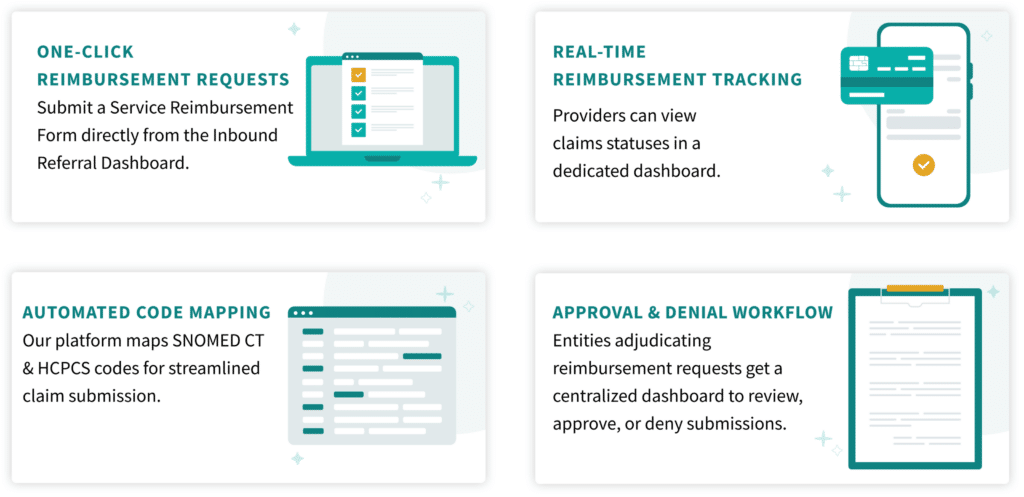
Findhelp’s social care coordination platform ensures that no member falls through the cracks. We handle the technical integration and provide ongoing training so that healthcare teams can focus on what they do best: taking care of people.
Powering a more connected California
The latest data from DHCS proves that California’s commitment to whole person care is working. We’re proud to support the health plans, care managers, and community organizations making this happen every single day. By continuing to combine compassionate care with reliable technology, we can make the social safety net stronger and more accessible for everyone. Chat with us to see how.