










Arkansas Social Care Summit: Highlights from the Natural State
We recently convened leaders from state government, health systems, social service organizations, and community-based partners at the Arkansas Social Care Summit. The day was packed with candid conversations, forward-thinking strategies, and a collective commitment to building a truly connected social care network for Arkansas.
Read on for key takeaways:

Arkansas leaders aligned on a shared vision: stronger policy, data, and community partnerships to increase connections.
Panelists highlighted practical lessons from health systems, CHWs, and CBOs working together to meet complex needs.
New integrations, HIE partnerships, and tools like Kiip are powering a more interoperable and coordinated social care ecosystem.
A special thank you to everyone who joined us and to our fantastic speakers for sharing their insight, experiences, and vision. The Summit reminded us that while policies and systems are complex, the mission is simple: connecting people to the help they need.
Highlights from the 2025 Arkansas Social Care Summit
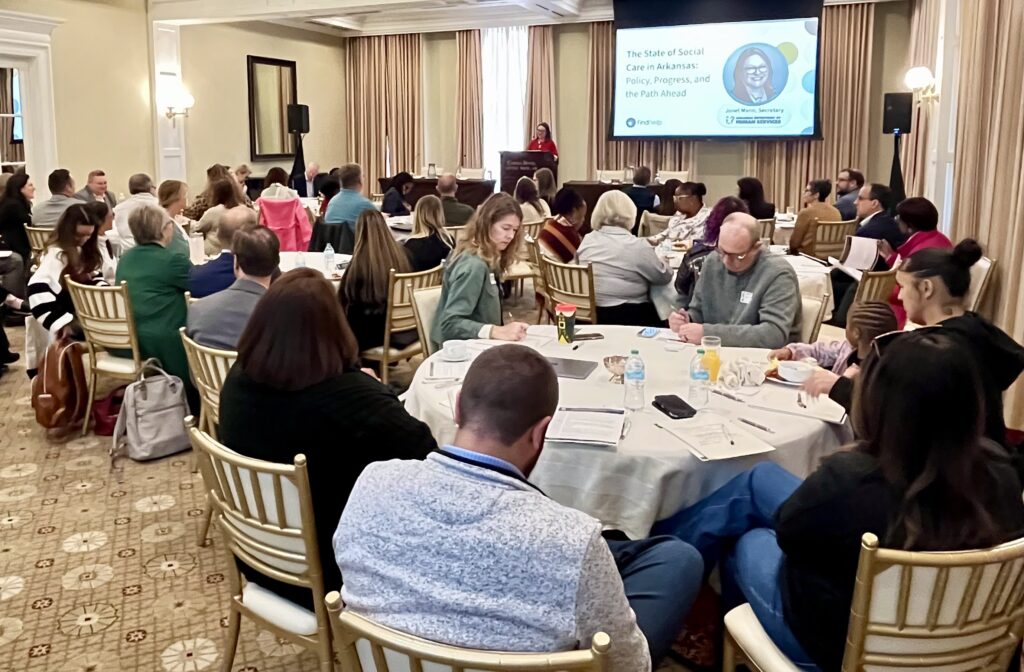
This year’s Summit featured 60 participants representing government agencies, healthcare providers, community organizations, and more:

Below are some of the key themes and takeaways from a day of learning and sharing.
Policy and progress: The path to Medicaid Community Engagement (work) requirements
Arkansas Department of Human Services Secretary Janet Mann set the tone for the Summit: strengthening the state’s social care infrastructure by aligning policy, data, and community action. She discussed the State’s adaptive and innovative approach to meeting the federal community engagement mandate for Medicaid recipients.
Our vision for a connected Arkansas
Under the banner of “Arkansas’ Connected Future,” our team described how even simple data elements — first/last name, phone, email — feed into a broader system of matching and integration across social care and health-care systems. Our focus? Collecting only what’s necessary, aligning data standards, and investing in partnerships that allow social care and healthcare systems to speak the same language.
“We kept it simple …The way we think about it is ‘how do we get insights, using the least amount of information necessary?’. If we can do that accurately, you will see referrals and healthcare activity tied together.”
Erine Gray
Founder & CEO, Findhelp
By working with health information exchanges (HIEs) like SHARE, we’re building the interoperable infrastructure that helps referrals, claims, and care activity connect — securely and meaningfully. We also shared about early steps in scheduling and behavioral health workflows: For example, our newly-signed partnership with MiResource is a step toward connecting individuals, providers, and scheduling systems.
To stay ahead of the curve, we actively monitor state and federal policies that affect our customers and CBO partners, including Arkansas’ Medicaid 1115 Waiver and proposed Pathway to Prosperity Amendment that provides for Success Coaches to help with screenings, education, job training, and the Transforming Maternal and Infant Health grant program.
Local leaders, real relationships
In the “Community Collaboration: Local Partners Building Arkansas’s Connected Care Network” session, local organizations Restore Hope and Arkansas Foundation for Medical Care (AFMC) shared their on-the-ground work supporting families with complex needs. These organizations operate amid multiple challenges—housing instability, mental-health and recovery gaps, rural service capacity—and their stories offered powerful insight.
They closed by reflecting on geographic differences across Arkansas: resource availability varies, but creative approaches and local partnerships allow adaptation to diverse community contexts.
Their message was clear: technology is essential for social care, but relationships make it real.
Key themes:
- Prioritizing among multiple needs: “We always say, ‘We need to get a bed and get them fed.’” — Dana Barker (Restore Hope)
- Home health in rural areas remains a major gap for Medicaid beneficiaries with complex needs.
- County coordinators are essential: one-per-county model, embedded in schools, churches, crisis entry points, with a clear mission to connect families across all 13 assessed need areas.
- Technology supports relationships—but relationships drive the work: “It’s the people on the ground building relationships with CBOs and following up with individuals. … It comes down to relationships.”

Data, tech, & trust
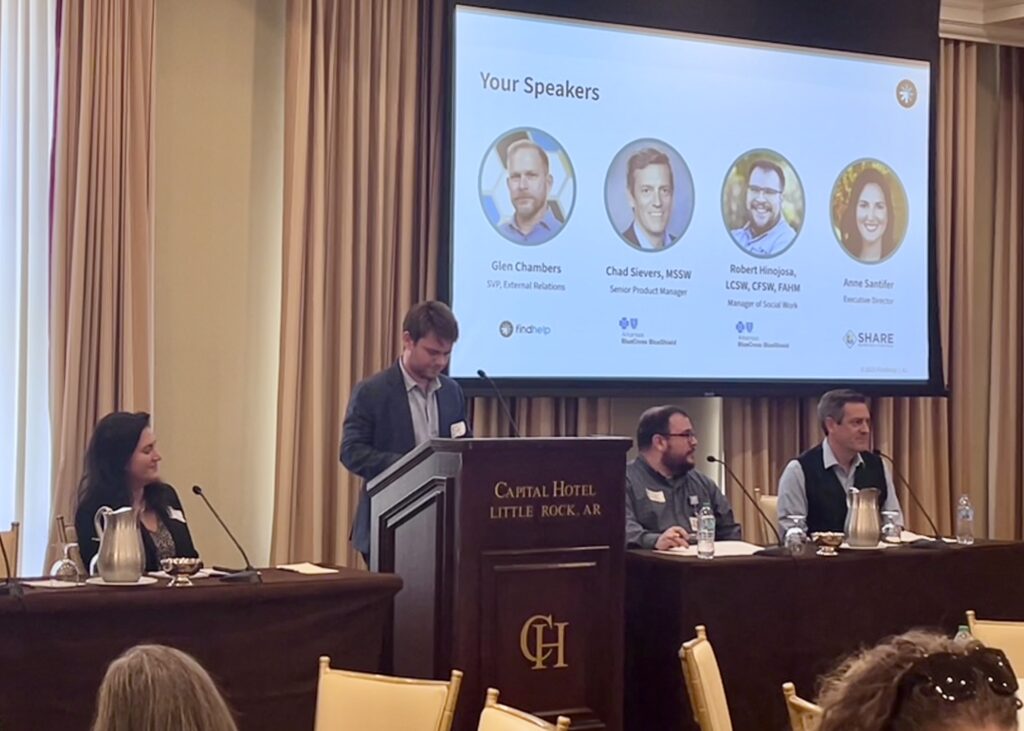
In the “Bridging Health and Community: Advancing Social Care Through Partnership” panel, experts from Arkansas Blue Cross Blue Shield (BCBS) and SHARE HIE outlined how payers, exchanges and social care platforms collaborate to address social drivers of health (SDoH) at scale. They explored how data and compassion work hand in hand: By combining claims data, social risk information, and Findhelp’s community resource network, their teams are identifying members’ needs earlier — and closing the loop on care.
The discussion also tackled the challenge of aggregating data from multiple systems, the importance of closed-loop referrals, and the growing demand for measurable ROI in social care programs
Key themes:
- Use of claims data and screening results to identify high-risk members (e.g., substance use disorder focusing on alcohol) and proactively connect them to social support systems.
- Transition from manual Googling of resources to integrated tools: “Because of our work with Findhelp, we’ve been able to focus less on resource brokering and more on actual social work and advocacy.” — Robert Hinojosa (BCBS)
- Patient-matching, consent workflows, and data quality remain major challenges: “Understanding workflows helps with better data quality.” — Anne Santifer (SHARE)
- Closed-loop referrals and ROI measurement are becoming non-negotiable: “We need to be able to see and quantify the impact on people’s lives and the business bottom line.” — Robert Hinojosa (BCBS)
- Legal considerations, behavioral health data, and Z codes remain terrain to navigate in interoperability and documentation.
Powering a smarter, more connected safety net
The final session looked toward the next phase: using platforms and partnerships to shift from reactive to proactive social care. We looked at the technology that powers this ecosystem. We highlighted Kiip, our free case management platform for CBOs, which is fully integrated with Findhelp and includes features like a document locker and multi-chat to communicate with clients.
We discussed how Findhelp, in partnership with Arkansas stakeholders, is supporting:
- Simplified referral workflows
- Connections between healthcare and social care providers
- Behavioral-health provider scheduling integration
- County-level coordination + technology infrastructure
At Findhelp, we believe that conversations — one person, one partner, one connection at a time — are how we build a stronger, smarter safety net for everyone in Arkansas.
Restore Hope’s Dana Barker best summed up the day: “It takes 100 cups of coffee to form a real relationship.”
Beyond the Summit: Our work in Arkansas
While the Summit provided a rich day of insight and connection, the real work continues — in homes, clinics, schools, and community hubs across Arkansas.
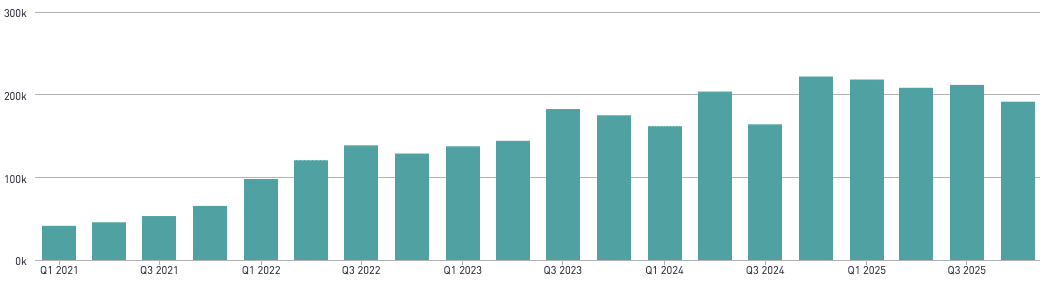
Some of the numbers that show the scale and momentum:
- 4,268 listed programs serving Arkansas
- 700,000 users across the state
- 2.7 million searches for resources
- 10,000 social needs assessments completed
- 100% of counties have claimed programs
As of December 2025, we partner with more than 17 customers throughout the state to connect their patients, members, students, constituents, and clients to local resources. Our data and analytic tools can identify gaps in services and provide actionable insights to inform strategy and public policy.
Together, with our Arkansas partners, we’re building toward a future where social care is not an afterthought — but a foundational part of how health, housing, and human services work together.
Let’s keep the conversation going
The Arkansas Social Care Summit was a powerful reminder of what’s possible when purpose, people, and technology converge. If you’re interested in how Findhelp can support your work in Arkansas — whether you’re a health system, community-based organization, payer, or state agency — we’d love to chat.