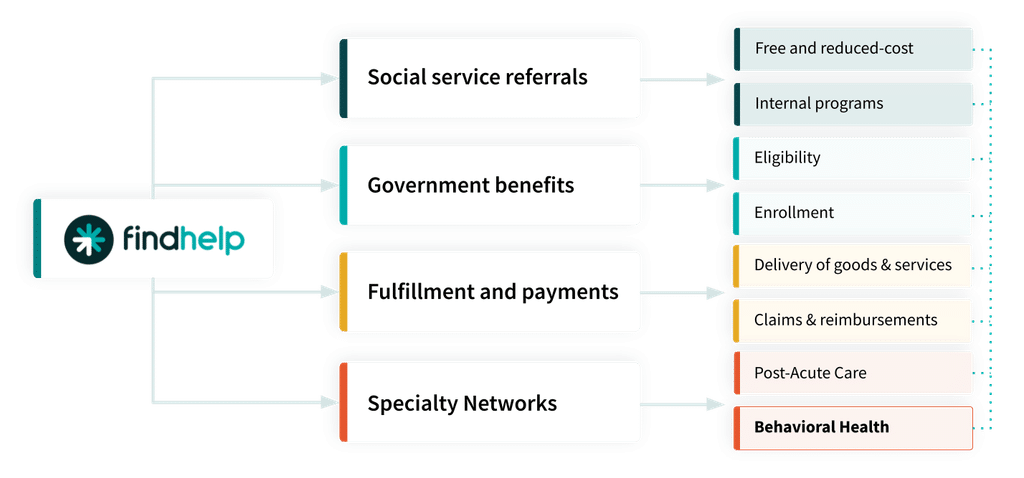
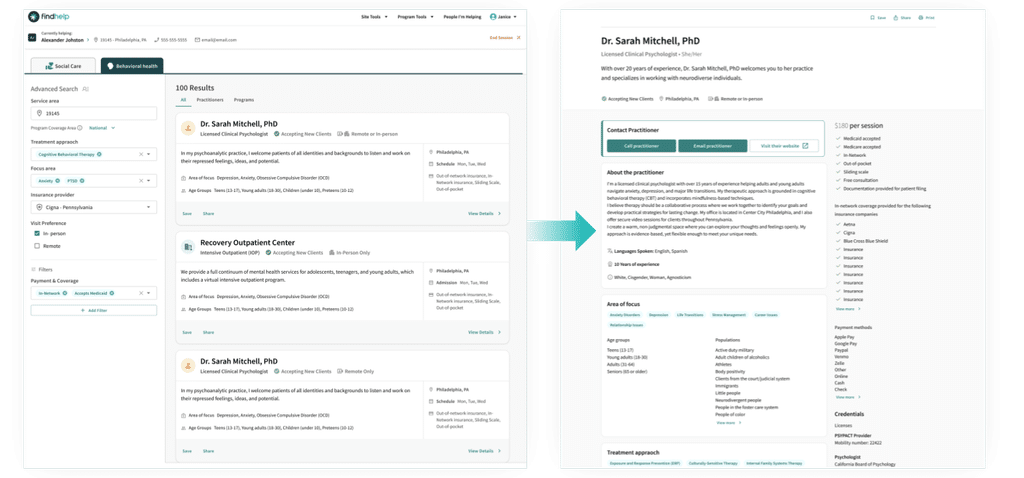
Hello, everyone, and welcome to today’s webinar where behavior… Behavioral health meets social care, a new model for access. I’m gonna give people just one more minute, and then we will get started. Alright. We are gonna get started. Thank you everyone for joining, and welcome to today’s webinar. Before we dive in, I’m gonna run through a few housekeeping items. So as always, this webinar is being recorded, and we will be sending out a copy either later today or tomorrow morning. And we have a couple ways to engage. It looks like some of you have already popping into the chat, which is great. We love to see that. We also have a q and a panel. So at the end, we’re gonna open it up for q and a, and we would love it if you would put those questions in the q and a tab. It keeps it really organized, and we can try to get through all of those. And if we’re unable to get to something, then we can follow-up with you personally afterwards. So it is my pleasure today to welcome Delaney and Rachel to the stage. I’m gonna pass it over to them for intros, and they will take it away. Hello. Welcome, everyone. Super excited today to talk to you about our behavioral health specialty network. My name is Delaney Boldman, and I’m a business solution architect at Find Help who has helped led this initiative this year. Awesome. And hey, y’all. I’m Rachel Frock. I am a director of engineering here at Findhelp, and I led the implementation team that built the behavioral health network that we’re gonna demo today. Amazing. So what you all can expect today in this thirty minute webinar is learning a little bit more as to why Find Help is really choosing to invest in behavioral health, What the behavioral health specialty network means for you, all of our customers. Rachel’s gonna give a live demo of the product that we have launched. I’m gonna talk a little bit more about the vision and the future that we see for our behavioral health specialty network, and we’re gonna land it with a q and a as well as Ali had mentioned. So to really kick us off, I wanna kind of zoom out a little bit to talk about specialty networks as a concept within Find Help. For years, Findhelp has been that place where social care referrals and social care fulfillment has been a place to find those resources that are free or reduced cost. Your seekers, your members, your patients are oftentimes going to your public sites to find resources. Your staff is going in to help them with food pantry, utility assistance, transportation, and so on. Later this year, we are also launching our government benefit enrollment. So that is the ability to actually make sure that people are enrolled in things like SNAP and WIC. Now the specialty network itself has really come from this vision and this question that we’ve been answering of what are other networks beyond social care that makes sense to bring into find help. Where are other domains where the discharge planners, the care planners, the care managers, where… What domains are they also looking at when trying to find care for an individual? So we have launched the specialty network for behavioral health, which is a licensed add on network that can be available within Find Help. A little bit about why we’ve started with behavioral health. For one, access is continuously growing in The United States. One in five adults experience mental illness, and, unfortunately, the rates in youth are rising even more. Oftentimes, we know that availability of behavioral health providers is often the most important thing. Are they accepting new patients or not? And so what we have kind of guided our makeup of the specialty network is really ensuring that we have current data. A lot of times, there are ghost networks out there where the data around the behavioral health providers is not actually accurate. And then finally, a lot of the research and design work that we’ve done to create this behavioral health network is around being able to find the right match. We know that behavioral health is extremely relational and personal, and so we have designed it around that concept as well. So what does the behavioral health specialty network really mean for you all as customers who are using our platform, for the navigators who are using FindHelp every day, and the seekers that are getting help? Like I said, for a long time, Find Help has been that place for food pantries, transportation, housing support, and more. All of that is still available, of course, in our free and reduced cost network. On the right hand side of this diagram, though, is really where the behavioral health is stepping into even more and where we’re investing even more. It’s providing that whole person support for who people are helping, including therapy and counseling, substance abuse support, mental health programs and providers, peer support and recovery, and more. Ultimately, this means that people are going to find help to resolve even more problems than before. So a little bit about how we’ve built the behavioral health network. In social care, there’s particular questions that you need to answer when finding the right listing or the right program for someone or for yourself. Oftentimes, this is about when they… When their hours are open, how close they are to you. In social care, there’s a list of questions that’s going on. For behavioral health, those questions look a little bit different. Is the therapist going to speak my language? Do they offer virtual or telehealth options? Are they accepting new patients right now? Do they even accept my insurance? And then beyond that, are they a good fit for my values and identify… An identity that I have and to specialize in the needs that I have? All of these questions have been in our minds as we have built out the behavioral health specialty network. So I’m gonna give you all a little glimpse before Rachel gets into the full demo, but you will see that our behavioral health listings look different than what you’re used to in social care. They are truly meant to support that precision matching and that relational and personal needs that come in the behavioral health space. All of this is making sure that we are, making sure that there’s the right signals in place so that you can confidently find the right match. And then in addition to this, like I’ve said, this is really alongside our social care search. So Rachel’s gonna walk into a demo where she will actually be able to search for both social care needs and behavioral health at the same time. We’ve really thought about the navigators and people who are helping individuals, how much time they spend potentially going to different platforms, different spreadsheets to find what they’re looking for. The specialty network is really all about bringing the access into one place. So with that, I will hand it off to Rachel. Awesome. And I am so excited to get into this demo, to show off to y’all everything that we’ve been working on the past several months. And so today, I’m gonna be walking through what we’re calling the advanced search workflow, which highlights the new behavioral health network that we’ve added alongside social care. So where we’re gonna start is, here at the search prompt, and the way we… You get into the advanced search workflow is through the Seeker profile page. So you can see I’ve launched here from Jane’s profile. I’ll enter a ZIP code, which should look familiar, and then you can choose a search area. So today, I’m gonna focus on statewide, just looking for resources in that, that area. I talked to Jane, and I asked what insurance she has, if any. And she shares that she has Aetna. You can do type ahead here, and this will give many different insurance options. And then this is factored into the results, which we’ll see later in the demo. So I’m gonna search for both social care and behavioral health needs for Jane today. And Jane tells me specifically she’s looking for food assistance, and she’s also looking for support for transportation. So I’m gonna go down and select some needs here as well. And then I’m gonna go into what behavioral health needs is she looking for. So I’m gonna search for counseling. As you can see in this drop down, there are many different treatment approaches that I could choose from, and so you can select any number of those. And to get even more granular, you can choose area of focus. So Jane tells me that she wants to look for resources around anxiety and get support for anxiety she’s been facing. And then I’m gonna submit this search. And on the results page, we’re gonna see side by side, as Delaney mentioned, there’s social care and behavioral health. For social care, a few things that are a little different from the classic search that we have today. We have food options. We have transit options that are separated by tabs that you can see all in one results page. I can filter these down by going to the filters that were just shown, and I’m gonna filter by age and try to get a little more granular results here. And then jumping over to behavioral health, I’m gonna see what results for counseling can I find for Jane today? And there are many results here. So, again, going to the filters, I’m going to narrow this down. Jane said that she’s open to remote sessions, and so I’m gonna narrow down by remote sessions. She also said she’s interested in working with a female practitioner. So I will select female here and then look at the results that I have now. And then I find Natasha who’s a practitioner that does cater to the age group that Jane is in and has an area of focus around anxiety, which is what Jane is looking for support in. So I can go to the details page. Again, this will look a little different from social care, but we see here that the insurance accepted does match what Jane has. I can go through, look at areas of focus. I can look at the practice hours, and there’s contact information here on the details. So I can give Natasha a call, and I can connect with Natasha to set up an appointment for Jane. And then I will log a referral, which will show that I connected with Natasha and made an appointment. And this referral will then be stored on the seeker profile page so I can look back and have a stored record that this connection was made. After I’ve submitted that referral, I could continue searching, or I can go back to Jean’s profile and review the many resources that I’ve connected her to today. And so that’s the end of the full end to end for the new advanced search and behavioral health network, and excited to see the impact that it makes. Thank you so much, Rachel, for that overview. So I’m sure there is a question that a lot of you have right now is how does that network exist? How does that behavioral health options and those listings that Rachel just went through even exist? And we have different tailored options based on the goals that you guys… That you all as customers have. We know that there are customers out there that have their own robust behavioral health provider network. Perhaps you’re already keeping up to date insurance, the availability for them. For folks that already have a robust network in place, we have an option where you can actually surface that existing network through find help in the workflow that Rachel showed. We have APIs, and we can definitely discuss the different ingestion paths to get here. But, ultimately, this is going to create another access point to the network that you already have and just drive more utilization to that network. In the middle here, we have a bucket where maybe you don’t have a robust behavioral health behavioral health network at this time. Findhelp has partnered with several different behavioral health partners that have their own behavioral health network. We have been very, very specific with choosing these partners that we have to make sure that they are fitting the data quality that we want for freshness and availability shown in the behavioral health network. So there is an option where you can actually access an existing network that is out there today. And then finally, we have an option in the orange here that actually combines both. Perhaps you already have a network that is… Has a lot of options within the adult psychiatric perspective. Maybe you’re looking for additional substance abuse providers or perhaps even pediatric providers as well, we can essentially have both options to combine and fill care gaps along the way. So I’m going to launch a quick poll here real quick to understand a little bit more about you all and the type of that you may have in place today. Perfect. Seeing some of those results come through. Look likes… Looks like we have a mixed bag here. Perfect. Well, as we all get connected with you more on these opportunities, we can certainly walk through the option that makes most the most sense to you. I’m gonna continue on now to talk a little bit more about the future of what we are expecting in the development for the behavioral health network. As Rachel showed in her demo, right now, we have the option to log these types of referrals to the seeker profile. That logged interaction is making sure that people can follow-up and see if they’ve actually been able to get that connected care. Where we are looking to go next is actually supporting appointment booking within Findhelp. So when a provider is actually, is providing their availability, their scheduling availability, we will actually pull that in real time and allow individuals to book appointments directly within FindHelp. This request goes to the right partner and to the right provider to then get on their way to making sure that that book booking is solidified. So we’re really looking forward to this new feature. So this wraps kind of our our demo and what’s next and the vision that we have. We’re more than happy now to open it up to q and a for our attendees. I’m not seeing any in the q and a feeds. Ali, I believe you’re muted if you are talking. Thank you. Twenty twenty six. I’m still doing that. I was just saying, I’ve got some questions here in the q and a feed so I can read them out, and you can, provide some answers. So the first one I’m seeing is, is there an option for seekers to search themselves, or is it only by care manager referral? That’s a great question. The behavior health network will be available to both the staff, and navigators that are searching on behalf of someone. And we also have the option to make it a public, option as well, so for seekers as well. Awesome. Okay. Next. Is it up to providers to update their profiles? How will larger practices with multiple counselors, therapists, or psychs be listed? Yeah. So the availability and the updating of the listing itself is often done in our… Some of our partner networks. So that, the listing and the refreshness of that is taken, in the partner and where the provider is logging in themselves. Awesome. What level of detail in terms of insurance plans will Findhelp be able to access or share? So what Rachel was able to show was our carrier or payer list that we have. So on the provider side from the behavioral health standpoint, they can actually indicate what insurance is accepted at the carrier or payer level. There may be some more back and forth that’s needed between both the the person that’s trying to get the help and the person that’s providing it if there’s more plan granularity that needs to be decided upon as to whether or not that specific plan is accepted. So another one coming in. How does one get to the advanced search page to start the search? Great question. So what Rachel showed was through the seeker profile or through what we call the seeker context bar. So a lot of times when people are launching in from an EHR, they she… They see a secret context bar in the top. So there’s different access points for navigators to get to it. Additionally, within a week or so, we will also have an access from home pages as well. So there will be a button on home pages where you can actually launch advanced search as well. And kinda building on that, is there an option for seekers to search themselves, or is this only by care manager referral? Both. Both will have options too. Is it up to providers to update their profiles? How will larger practices with multiple counselors or therapists be listed? We already answered that one. Yes. Yep. You’re right. I’m trying to get through all of these. So five. Okay. How do you see a follow-up on a referral? So when providers are log… Or when a navigator or a seeker themself is logging a referral, it’s going to follow the same logged referral flow that we have today. So it really is kind of on the seeker or the care manager to reach out and understand whether or not they were able to get that help that they needed and update the referral at that time. When we get to the piece of scheduling, not only will they be able to see that appointments are booked on the profile, we also have webhooks and integrations with some of our partners where they will actually be able to tell whether or not that person went in for the appointment as well. Perfect. So a few more coming in. Let me sort through them and make sure I don’t reread what we’ve already answered. These are great questions, by the way. Yeah. These are good. We got a coming in. Love it. How often is credentialing updated? How, do we report if a provider is no longer in network or, with a specific MCO? Great question. Are the partners that we’ve specifically chosen, so in that that middle bucket of accessing a curated network, the partners that we’ve specifically chosen are regularly updating their licensure and their credentials. So we have data quality in place within Findhelp to make sure that everyone has a license that is not expired in a valid credential as well. When these become expired or need to be updated, it is on our partners and the providers themselves to ensure that that licensure is updated. What we can guarantee on our end within Find Help is that if there is not a valid licensure, then we won’t show that listing, and we make sure that the data quality is instilled for what people are actually able to see. Perfect. It looks looks like I have one more that I can see. What types of programs are in the network? Are practitioners or programs listed or both? Great question. So we we do actually have both. There’s gonna be what we call a practitioner. So this is gonna be an individual counselor or therapist, and then we also have programs. So peer support groups and other groups. Peer support groups, substance abuse groups, programs as well are all listed within the network. And based on kind of your needs, for what you’re really looking for as an organization, we’ll help steer you to what makes the most sense in terms of the different options that we have. Someone asked, is the platform of searching available now? So you all actually have access to advanced search social care today. That was released a couple weeks ago. So when Rachel went through and demoed the social care aspect of it where she put in the food transport… Food and transportation needs, that’s available today to all of our customers. The behavioral health portion, in particular, is a licensed add on. So if you are interested in, licensing the behavioral health network as well, definitely talk to your account team to get started on that. And the scheduling piece, also see on here, we are targeting the beginning of twenty twenty seven. So January 2027 is our target date for that integration for scheduling. Okay. I know that we have just a couple minutes left. If we did not get to your questions as I’m scrolling through, there’s quite a few on here. We are more than happy to follow-up with you directly about your question. We’ll make sure that those get saved, we reach out to you. Thank you so much, Ali, for for helping host all those questions. Like I said, if you have questions… Additional questions, we’ll definitely reach out, to make sure that those get answered. Otherwise, please talk to your CSM, your account director that you’re working with today to learn more about the behavioral health network. If you do not know, who your particular CSM is or account director or maybe you are a prospect and not even a Findhelp customer yet, please get in touch with Rachel Harris, our director from sales, to get started as well. Thank you all so much for attending. In the last four minutes or so, we actually are going to show the video that we’ve put together to represent our behavioral health network. So we will end with this short film. Rent, groceries, childcare, when someone is behind on the basics, everything else gets harder to face. And when they don’t even want to get out of bed in the morning, it’s that much harder to catch up. But when someone is ready to ask for help, having access to the right resources at that moment is crucial. Too often, finding them the right provider involves a scavenger hunt across directories, EHRs, spreadsheets, and phone calls. When behavioral health and social care are disconnected, people fall through the cracks. That’s why Find Help is changing the way people access care by including curated behavioral health providers, along with our existing social care programs, we’re building the most comprehensive health navigation network in The US. It’s all available in one efficient search experience. Quickly filter by each provider’s focus area, real time availability, language, accepted insurance, and more. All the information is verified and kept up to date, so you can trust every result and you won’t find dead ends when connecting people to support. And when providers share their appointment availability, you can schedule the visit right within the same workflow. Faster access to better care. Introducing our Behavioral Health Network. Talk to us today to get started.