








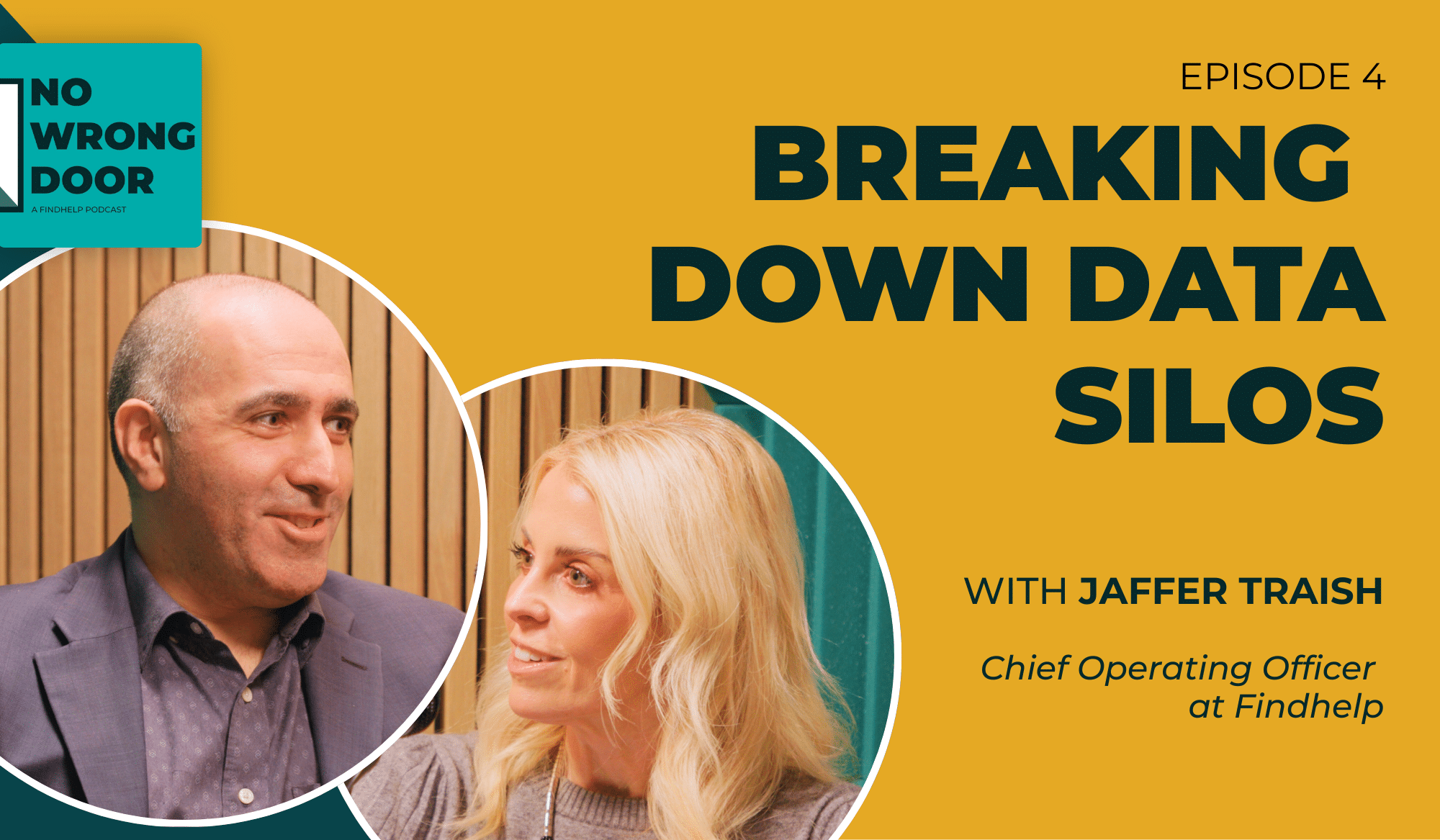


Breaking Down Data Silos: Ep. 4 of the ‘No Wrong Door’ Podcast
No Wrong Door is a podcast from Findhelp that explores how social care delivery is evolving to better support whole person care. Hosted by Findhelp VP of Marketing Amy Gordona, the series features conversations with social care experts, healthcare and government innovators, and Findhelp leaders who are shaping the future of access, coordination, and connected care.
Each episode offers an inside look at the systems, decisions, and ideas driving change—and what it takes to build a social safety net that works at scale.
Connecting people to the right support at the right time is at the heart of social care. But behind every successful connection is something less visible and far more complex: data.
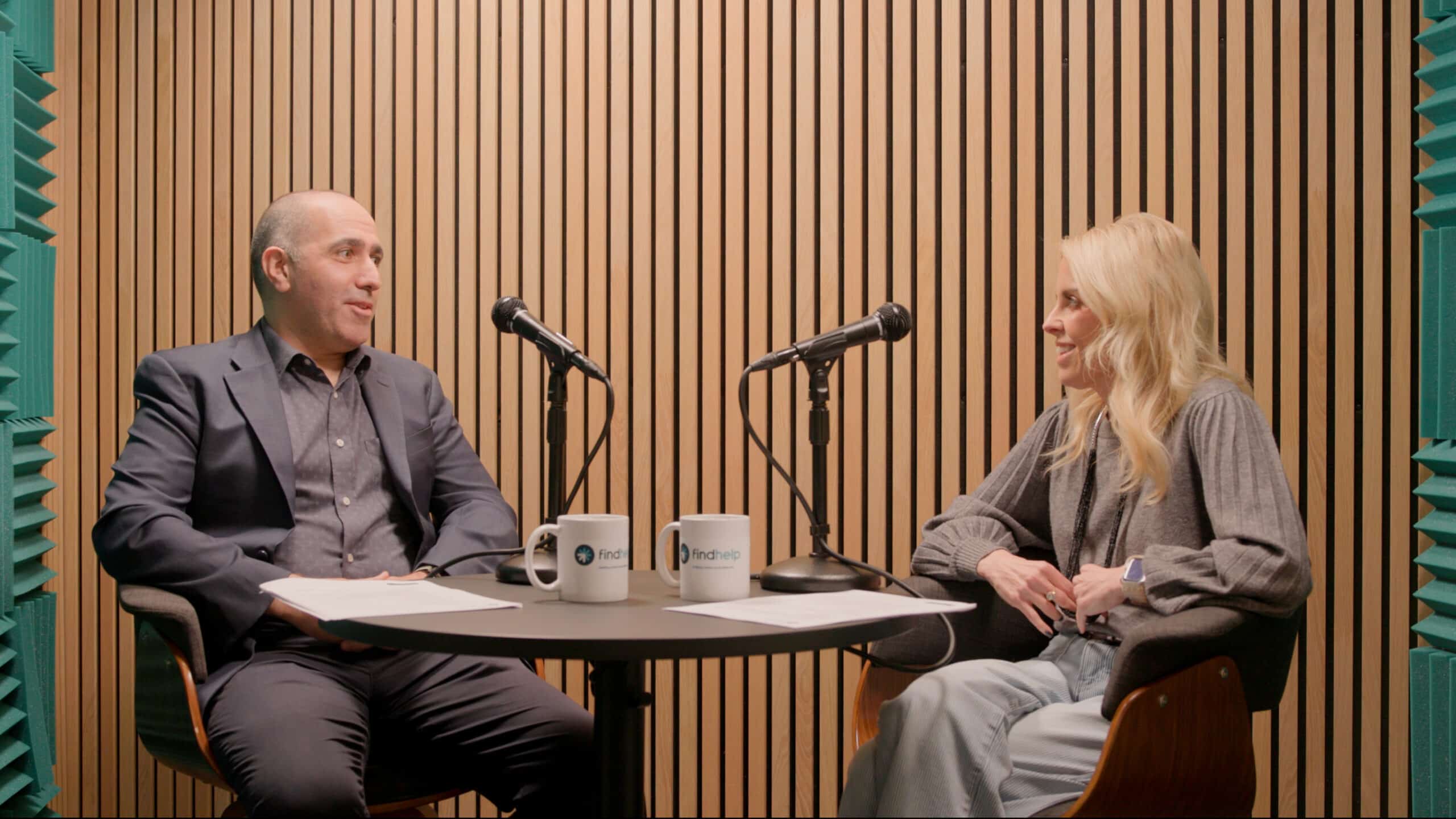
In Episode 4 of the No Wrong Door podcast, host Amy Gordona speaks with Findhelp Chief Operating Officer Jaffer Traish about why social care data exchange is essential to building a functional digital safety net. From interoperability and data standards to privacy and policy, their conversation explores what it will take to coordinate care across systems and ensure people don’t fall through the cracks.
In this episode, we explore:

How social care data often lives across many disconnected systems, limiting visibility into whether services actually happen.
Why interoperability, standards, and collaboration are essential to building a shared infrastructure for social care.
How consent and privacy must remain central, ensuring individuals control how their information is shared.
Watch episode 4: “Breaking Down Data Silos”
Key themes from the conversation
What is social care data exchange? Social care data exchange is the secure, consent-driven sharing of information about a person’s needs, referrals, and outcomes across healthcare providers, government agencies, and community organizations to improve care coordination and outcomes.
Fragmentation makes coordination harder
Why fragmented social care data leads to gaps in care
Information about a person’s needs, referrals, and outcomes is spread across health systems, government agencies, and community-based organizations, each operating on different technology platforms.
That fragmentation can make it difficult for providers to coordinate care or understand whether someone ultimately received the support they were referred to.
Without a shared view of a person’s needs and history, people risk repeating their story across systems or missing services entirely.
Building a digital safety net requires systems that can facilitate social care data exchange responsibly to create a clearer picture of the services people receive.
“Information about a person’s needs, the referrals we make on their behalf, and whether services actually happen often lives in different systems across different organizations with very limited visibility.”
Amy Gordona
VP of Marketing at Findhelp and Host of ‘No Wrong Door‘
Social care is following healthcare’s path to digitization
Healthcare went through its own transformation decades ago as medical records moved from paper files to digital systems capable of sharing information across providers.
Social care is now entering a similar transition. The sector is beginning to build the infrastructure necessary to move information between organizations so providers can coordinate support more effectively.
Lessons from healthcare’s digitization can help guide this process, including the importance of interoperability standards, shared governance, and cross-sector collaboration.
“What we’re doing at Findhelp is very similar to what healthcare went through decades ago when hospitals moved from paper and binders into the digital age.”
Jaffer Traish
COO at Findhelp
Standards are essential for meaningful data exchange
The role of data standards in social care interoperability
One challenge facing the social care ecosystem is the lack of standardized data. Even basic screening questions can vary widely across organizations.
Without common definitions and coding systems, data becomes difficult to interpret or share across platforms.
Initiatives like the Gravity Project are working to establish shared standards and taxonomies for social care data so organizations can exchange information with greater clarity and consistency.
“When one federal organization asked us to look at screening questions used across the country, we found more than 1,200 different questions.”
Jaffer Traish
COO at Findhelp
Consent and dignity must guide data sharing
What is consent-driven data sharing in social care?
While data exchange is critical for coordination, protecting individuals’ privacy and dignity remains paramount. Social care data can include deeply personal information about financial hardship, housing instability, or behavioral health.
Consent-driven data sharing frameworks can help strike the balance between improving coordination and ensuring individuals retain agency over their information.
“We believe in consumer-directed privacy. People should have the right to know where their information is going and how it will be used.”
Jaffer Traish
COO at Findhelp
Why the future of social care data exchange is promising
Across the country, health systems, community organizations, and state governments are beginning to evaluate the real-world impact of social care investments.
By measuring outcomes and documenting the lives touched through coordinated services, these leaders are building the case for long-term sustainability.
That focus on measurable results could help ensure that social care infrastructure continues to grow and mature in the years ahead.
“We believe in consumer-directed privacy. People should have the right to know where their information is going and how it will be used.”
Jaffer Traish
COO at Findhelp
What’s next for No Wrong Door?
“Breaking Down Data Silos” is available now—Episode 5 will be released on April 1 and features Dallas Mudd, Findhelp’s Sr. Director of Partnerships, talking about our new Call Center functionality.
Subscribe to No Wrong Door wherever you listen to podcasts to be notified when new episodes drop: