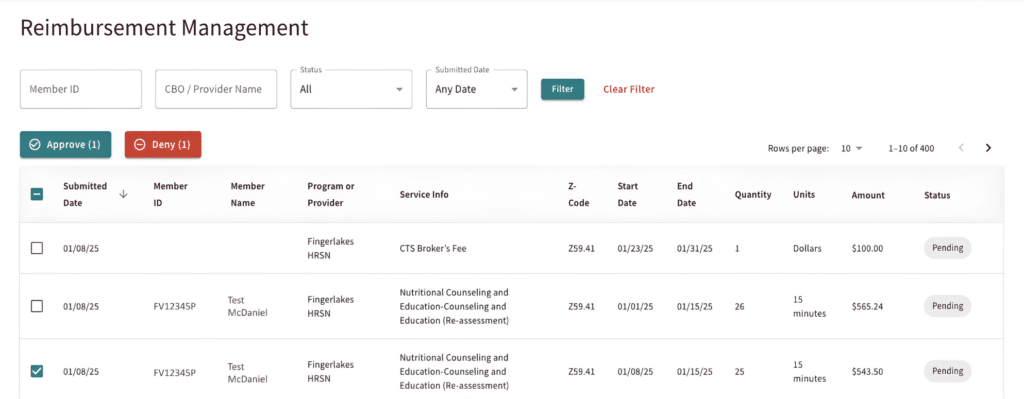
Hanging out with us today and for hopping on this session as we start to wind down day one of our two day social care summit. I’m Brandon Fiersted, and I serve as a find help account director. I’m joined today by Community Care Cooperative, also known as c three ACO’s very own Annie Pham and Lily Winn. Annie is the director of social health at c three ACO and is in is committed to improving the health and well-being of under resourced communities. She develops and executes large scale projects to address health related social needs for patients at federally qualified health centers across Massachusetts. Lily is the senior program coordinator of social health at c three and is committed to increasing capacity for those, for those social health services with partnered FQHCs and affiliated, partner clinics and practices. The sessions we’ll be covering with y’all today is called leveraging find help as a community care hub to connect Medicaid members to section eleven fifteen nutrition and housing services. I know what y’all are thinking. That is an exciting title and a good amount to unpack there. But before I pass it over to Annie and Lily to take us through the agenda and to get started, I do wanna cover a few housekeeping items really quick. Please note this session is being recorded, and it will be sent out to attendees this Friday, May ninth. You should have access to both chat and QA features available on the right hand side of the screen for questions. Please utilize QA exclusively if you could. We will do our best to respond to those live. And at the very end, we do have some dedicated time carved out for this as well. So thank you again, everyone. Please provide a warm welcome for Annie and Lily as I welcome them to the front of the stage. Annie and Lily, over to you. Thank you both. Great. Thanks so much, Brandon. Hi, everyone. I’m Annie Pham. I’m the director of social health at Community Care Cooperative. And as Brandon shared, I’m joined by my wonderful colleague, Lily Winn. Lily and I are here today representing a much larger team at c three, and across our health centers and our social service partners who we get to work with every day to address the health related social needs of our members. We wanna first say a big thank you to Brandon and the Find Help team for having us here today. We’re, really happy to be here and grateful for the opportunity to share our work. As for an agenda, we’ll start by giving you a brief overview of Community Care Cooperative and who we are. This session will be focused on our work within our Medicaid population and specifically how we leverage the Find Help platform to meet the requirements, and opportunities in Massachusetts section eleven fifteen waiver, that are specific to addressing the social drivers of health. And then I’ll turn it over to Lily who will really dive into the operations of the work, including how we plugged Find Help into our existing workflows to enhance our work with screening members for health related social needs and connecting members to our nutrition and housing programs. Here is a little bit about who we are. Community Care Cooperative or c three for short is a federally qualified health center led accountable care organization. Our mission is to leverage the collective strengths of our health centers to improve the health and wellness of the people we serve. We bring together FQHCs in Massachusetts and across eight other states to advance primary care, improve the financial performance of health centers, to advance, racial justice and health equity. Some of our services include our Medicaid accountable care organization in Massachusetts, which is what we’ll focus on today, but our work also expands beyond Medicaid and beyond just just being in Massachusetts. We support Medicare members nationally through, the ACO REACH and Medicare shared savings program contracts, and we also offer technical assistance and shared services to support health centers around telehealth, analytics, technology, and pharmacy. Shifting to our social health work specifically, our strategy is grounded in three pillars. Identifying needs through implementing screening for health related social needs. This is how we’re having conversations with members about their social circumstances and really understanding how social needs might be impacting their ability to achieve good health. The second is resource navigation and responding to unmet needs. In this domain, we provide training and capacity building to our health centers to ensure that staff who are on the front lines working directly with members feel equipped to respond to needs and refer members to community resources. And last, investment of dollars in new programs and partnerships to address social needs. In many areas, we know that community resources can be scarce. So here, we’re really thinking about how we can expand on existing community resources and create programs and new partnerships to be able to provide direct services to our members. The eleven sec the section eleven fifteen waiver that was approved in Massachusetts has a heavy focus on addressing health related social needs or initiatives to address the social drivers of health. For those of you who are not familiar with Section eleven fifteen waivers, these waivers are also known as Medicaid demonstration waivers. They allow individual states to test new approaches to Medicaid programs that differ from the standard federal rules. There are many aspects to our section eleven fifteen work in Massachusetts, including the work that shifted providers and payers into accountable care organizations, work to address behavioral health and so on. But the components that I want to call attention to as it relates to addressing health related social needs are listed right here on this slide. So first, the requirement to conduct health related social needs screening in primary care. And then second, a demonstration pilot that allowed us to utilize Medicaid funding to provide direct housing and nutrition services for high need populations. The requirement to conduct health related social needs screening is part of a quality and equity incentive program in Massachusetts, and the goal of this measure is to screen all Medicaid members on an annual basis. At c three, we are utilizing the accountable health communities tool to ask members about food security, housing instability, housing quality, and utilities, as well as transportation and digital access. Screening allows us to understand our members’ social circumstances and what barriers may be getting in the way of achieving good health. So collectively, the responses from these health related social needs screenings across our health centers give us valuable data to understand the needs of our population. But with the screening requirement, we feel a strong obligation and a commitment to making sure that staff asking the questions on the screening tool are ready to respond when a member tells us things like they’re worried about where their next meal will come from or they’re worried about losing housing or that they don’t have transportation to get to the grocery store or their medical appoint appointments. And then as I mentioned, the second component of the waiver gave us the ability to provide direct nutrition and housing services to eligible members. This work began as a five year pilot that kicked off in twenty nineteen and was called the flexible services program. The program focused on nutrition and housing interventions, and the overall goal was to improve members’ health outcomes and reduce total cost of care. We partnered with local social service organizations to co design programs. The services that we offered ranged from medically tailored meals to produce prescriptions, kitchen supplies, nutrition education. And then on the housing side, providing housing search support, case management, as well as household supplies to address environmental and mobility concerns. The authority and the funding for this program was available between twenty nineteen and twenty twenty four, and we wrapped this program up this past December of twenty twenty four. Over the five year pilot for flexible services, we are proud to have served over seventeen thousand members who had complex physical health and behavioral health needs who are also experiencing food insecurity and housing instability. This demonstration pilot, flexible services, transitioned to what is now called the health related social needs program or HRSN services. The new version of this program that launched just a few months ago in January of this year, really transitioned the demonstration pilot into, which operated as a grant funded program into our Medicaid managed care framework. So, the really, the two key changes to this transition include that the housing and the nutrition services that I mentioned, are now available as covered supplemental services under our Medicaid framework for eligible members. And then the second, piece is that social service organizations providing these services were required to enroll in credential as providers and also submit claims for service reimbursement. So that was a mouthful, and I’m happy to take questions in the chat about the waiver and these programs. But for now, I’m going to turn it to Lily who can introduce herself and talk through the fun part and really about how we leverage find help to operationalize all this work. Thanks, Annie. Hello, everyone. I am Lily, a senior program coordinator of social health at c three. Thank you for joining us in this late afternoon. I know you all must be tired, but we’re really excited to talk to you about our work with the section eleven fifteen waiver, which Annie just explained. But you may be wondering how exactly we’re implementing it and how members or patients are getting engaged with that care, at the health centers. And so, we have a little bit of our standard workflow here. It is a loop, but I’m gonna direct your attention to the top left. That is sort of our first step here in which a member will present to the health center for an appointment. This could be their annual primary care appointment, a follow-up appointment, really anything that’s getting them into the health center, in person and engaging with their care team. Whenever they’re engaging with their care team, they will be assigned a community health worker or CHW who will conduct the HRSN screening that Annie talked about a couple of slides back. And so, really, this screening is designed to, begin the conversation, with the member to understand their social circumstances. It’s also really the first step in building the relationship between the CHW and the member or just the care team and the member in general, to make sure that the member feels comfortable and is setting up the member for success in the future. And so they can share as little or as much as they want. Really, it’s the first step to getting members connected to resources in general, really understanding their circumstances and seeing what may be helpful. And so if we move on to the next arrow there, the connection to resources is the next step here where we ask CHWs to tap into their social health toolkit. That’s really what we say whenever we’re talking about an individual CHW supply of social health resources, which can be a social health resource from anywhere. It could be federal programs such as SNAP and WIC. It can be the programs that are housed within c three, like the HRSN program or flexible services program that Annie just talked about, or it could be the resources in their own localities like food banks and pantries. And so we really wanna make sure that during these conversations, whenever CHWs providing these resources to members, we’re taking into consideration on the member’s entire circumstance. So our health centers do serve a lot of different zip ZIP codes a lot of times, and so we wanna make sure, one, that the resource that the CHW is connecting the member to, is it able to be reached if we’re talking about a food bank or a pantry? Are they able to access it easily within, the range of their home? Right? Do they have to drive to it, or can they walk? How accessible is it? Does the member have a disability? Right? Are they feeding themselves, are they feeding their entire family? And so, really, the responses to members are going to change every time because a member’s circumstances are different, from appointment to appointment. And so whenever those resources are identified, the CHW is going ahead and making those connections to services, and then they’re going to close the loop. And so, what that means is a little bit different for every circumstance, specifically for HR and services. That means that we are making updates in our referral system as well as our HR and partners to make sure that the CHW and, by extension, the member really know where the referral’s at at any point in time. But in general, it’s really just making sure that all of the, needs that were, addressed in the, original appointment that the CHW was talking to the member and conducting the screening, that they’re addressed in the long term. If a member needs SNAP and the CHW helps them apply to it, but they get denied, they may reach out to us and say, hey. This person has food insecurity. They can’t get SNAP. Do you have any other resources? So it’s really tapping into all the connections and really extending to make sure the member feels like they’re being taken care of even if the resources for them don’t exact exactly exist in this moment in time. We really wanna make sure it’s an ongoing conversation to make sure that the member feels comfortable and is taken care of and that their social circumstances are improving and thereby their health afterwards. And so you can see here on the slide, it is a loop, and so it will go right back up to screening for HR sense again. And that’s really important because HR sense screenings, they there’s no limit to the amount of time that you can do them. We actually encourage CHWs to do them as much as possible given how many times or how often a member’s social circumstances can change. People have so many things happen in their lives, and it happens in the snap in a snap. And so we wanna make sure that we’re able to have those conversations, as easily as possible. And we also wanna make sure that the member is comfortable bringing up those circumstances themselves. If they already have a good working relationship with their care team, maybe they come into the health center themselves and say, hey. Some things have changed. I need your help identifying resources. And overall, that instills better trust and confidence in the health system overall, which is what we’re all trying to accomplish. Right? And so here, you can see that our CHWs and our health care staff are really the center of this entire cycle, so we really wanna make sure that they’re supported. And so here, I really wanna talk about how we are supporting them as a sort of centralized entity, First, starting with the HR sunscreener, obviously. And so at a baseline, we wanna make sure that these conversations are being had in a culturally competent and sensitive way. And so we are getting these screeners translated into the majority of languages spoken by our patient population because we understand sometimes the questions don’t make sense if they’re in your second language. Sometimes it’s easier to see them on a paper form where they’re written out in your native or primary language. And so it will help overall make sure that the answer questions are answered in a way that is most informed by the patient, but also more comfortable. Right? But we also wanna make sure that, in addition to asking these questions in the languages that are comfortable for our members, we wanna make sure that our staff themselves are comfortable having those hard and sensitive conversations. It’s not easy for either side of them. Right? So we wanna make sure that they have those trauma informed methods and approaches to making sure that they’re able to accomplish what they need to accomplish out of that screening. And so that that leads us to our second point in the middle there of building staff capacity. We really wanna make sure that they the capacity and the confidence to be able to conduct resource navigation, and we primarily do that through our trainings. And so we do have an annual training series called our social drivers of health training series, where we provide updates on major programs and skills on resource navigation. And so the topics do change every year based off of the relevancy and needs of our patient population, but they oftentimes include things like nutrition, housing. Last year, we actually held a session on find help to help with resource navigation. And so, really, just a variety of things. HR sunscreening is often a topic as well, really making sure that even though the topics may be repeated year to year, that the information is changed to where it is most valuable to our staff at the time that it’s being delivered. Right? And so lastly, we really wanna support staff with resources themselves, and so we can try and provide them as much resources as we can. But in the end, we want them to be able to find their own resources as well, especially in their own localities. And so a large part of that, obviously, is the Findhelp platform. We did, again, have a training last year to, demo the platform and teach them how to use it, how to make referrals. But we’re also going one step past that and making sure we’re providing analytics to our health centers and our affiliated partners because we want them to know how their staff are using it. And, also, out of those analytics, you can get how what members are looking up in the site as well, what are the needs that are most important to their specific region. And so really wanting, our staff to be able to navigate those things on their own, but also making sure that they’re able to keep a pulse on what’s happening in social health overall. And so, we do that by creating a social health resource hub, which is a web page that we more recently developed, sort of as a one stop shop for our staff to be able to address social health needs. So there, we have a lot of updates on key programs like SNAP, RAFT, HEAT, any of those things, which, our members are often getting referrals for. We also have a lot of information on our program. So any of the materials that we have for HR and goes on there. Also, the SDOH training series, whenever we start to post those yearly and also the recordings. But, also, we’re posting regular news articles on there. What’s happening in the federal government? What’s happening with immigration? We wanna make sure that the information, especially if it’s ever changing, is really updated and the, our staff are able to understand what’s going on so then they can communicate it to their members who oftentimes aren’t able to navigate and get this information themselves. And so that’s really important to us so that we make sure that our health centers feel equipped to talk to our members and then tell our members, and then they have better confidence in the health care system overall. And so what are the resources that we can exactly provide to our health centers? I’m glad you asked. Here are the partnerships that we actually have as part of our HRs and services program. And so, again, this is that medic Medicaid funded program that Annie talked about a few slides back. These are the organizations that we have specifically contracted with for HRs and services. But more importantly, these are partnerships that we’ve built up over the past five years starting with flexible services. And so you can see here on the left side, we have, nine nutrition partners, that provide services such as food vouchers, food boxes, which are essentially boxes of ingredients that include recipes that empower members to be able to cook on their own, home delivered meals, in addition to just the food resources, also providing food education, nutrition education, nutrition counseling, classes, but also kitchen items so that they can actually prepare meals, especially since most of our, all of our patient population are low incomes. We wanna make sure that they have the resources without tying up their money in other places. Right? And so we’re really proud of our nutrition program, how what we’ve been able to stand up for the past five years and the partnerships that we’ve built with our nutrition services. We also have six partners currently in our housing services program for HRSN. We have the six here that work across two different services we provide in housing. One is housing search, which is really targeted for members experiencing literal homelessness. So those are the people that are living in their car, living outside, places not meant for human habitation, but also those that are in transitional housing like shelters and whatnot. And so, through HR and our partners can get them connected to case management where that case manager can help them get documents like IDs, which will help them apply for different things, get them applied for housing lotteries, help them make it to apartment viewings. And then when they are able to locate a unit, if they are, then, setting them up with a system to make sure they can pay their rent on time, really making sure that they’re set up for success in the future because we want this we want this to be sustainable. Right? We want longevity in the program. And then, additionally, if a member is able to locate a unit, we have, a service called Transitional Goods, which is able to provide, funds for some of those startup costs that you may encounter whenever you are looking for an apartment. A lot of times, those act as a big obstacle for members being able to nail down a unit because, security deposit is very expensive. Sometimes people don’t have first and last month’s rent. It’s a lot of upfront capital, and so transitional goods can help to remove that barrier, as well as really make the home feel like a home. Right? We can actually access, or get furniture through transitional goods to make the member feel more confident in their place and make them wanna stay in it longer, obviously. And so, again, even though HR send services is technically a new program that was started this year, members are already familiar with these organizations, especially if they already work in flexible services, and so that makes them feel more comfortable and safe working with them in the long run. So in order for members to actually get access to these services, I wanna orient you to our referral pathway. This is very much a simplified version of our referral pathway, but you can see we have four referral sources on the left. I’m gonna first talk about the top box there, which is c three health centers and clinical program staff. This is what you may refer to as the standard workflow that I presented a few slides back. This is the workflow in which a member presents to the health center, talks to a CHW, where they’re able to assess their needs, and they say, oh, I need food resources. Then we’re like, great. We can get you food resources through the HR and services program. Let’s make a referral. And so from there, we’ll actually have our c three health center staff log in to our centralized system that’s called c three Engage. It’s actually on the Hyphen platform. We’re not gonna go into it really deep here, but it is our customized case management system where we’re able to track things like referrals, reimbursement, invoicing, case management, etcetera. But, really, it’s our source of truth. Everything goes in and out of there. And so referrals are placed within the c three Engage system where it comes to us, and then we send it over to our HR center provider. And the HR center provider also goes back in there and is constantly updating the referral with different activities that they’re doing. So, again, the CHW, and by extension, the member knows what’s going on. Right? Here now, I want to in introduce you to the three new referral workflows that we have introduced this year as part of HRSN services. So we’re going back to the left side, those three boxes at the bottom starting with members. Members now can make referrals for themselves. They don’t actually have to present into the health center to be connected to the program, which is really an exciting opportunity. Secondly, HR and SIM providers. So everyone that I listed on that last slide, they can make referrals for members. This is particularly helpful, for example, for our housing partners who, may have shelters, and so they have people present to them and say, hey. I need housing help. And then they can ask them, what’s your insurance? If they’re with c three, then they’re like, great. We can refer you to this case management program through HRs and services. But, also, if you don’t even have a partnership with us, if you’re just maybe working in a hospital and you don’t completely know anything that we do, but you do know that we are an ACO and then we offer these services, You can make a referral that way as well. And so really trying to emphasize a no wrong door approach. You can go to anybody. You can get these services eventually. Right? But because these are new referral sources and they are a little bit more public facing, we did have to incorporate a new middleman here, and that’s where Findhelp steps in. The workflow stays mostly the same. But for these three referral pathways, we ask people to submit an application through Findhelp. Then the responses are taken from Findhelp. They’re moved into our c three Engage system and, again, pushed through our HR SM provider. So the workflow stays mostly the same, but we do have that middleman of FindHelp now. And so how exactly are we doing it? What exactly is Findhelp doing, in the workflow work referral workflow. Sorry. But before we go into that, we wanna talk about why exactly we chose Findhelp as a referral platform in the first place. And so, three really big reasons here. We had a need for a centralized workflow. Right? We had three new referral streams. Our biggest barrier, obviously, was the member referrals. They’re not really in the back end of the health care system. They’re not talking to us directly. They don’t know how to make a referral unless they go into a health center and talk to somebody. Right? Also, because we have the centralized c three Engage system, which was really for our health center staff, it didn’t really make sense to try and add a whole bunch of people who may or may not make a referral, right, that will require a lot of training, a lot of special access. We really didn’t wanna do that. It didn’t make sense. And, again, we really wanted to emphasize a no wrong door approach. So we really needed one place that was a little bit more public facing but really could have all of these different people from these different work streams come and place a referral. Right? Secondly, we did want some screening capabilities. There are more eligibility criteria with the HR and services program as it transitioned over. And so we wanted something that took at least a little bit of the work of the screening, right, to kind of screen out some of the eligibility criteria and see whether members were eligible from the get go. Also, because of screening capabilities, we were hoping that we could also introduce the health related social needs screener in general just because we wanted to be able to gather that data in any capacity that we can because, again, as Amy said earlier, it is a requirement for us. So that was a consideration we were thinking of whenever we wanted to explore a different referral platform. And then connection to resources. HR send services, again, is just one tool in our social health toolbox, and we knew it was a little bit more limited with the additional eligibility criteria. Also, given everything that’s changing in the political landscape with resources, it’s a really trying time right now. Right? And so we wanted to have a centralized way for staff members to connect with other resources all at once outside of just HR send services. Right? And so because of all these reasons, we were able to locate Find Health. We already had a contract with them, but it was which was already great. And so once we identified them as a potential way forward, we really wanted to test how it would work in practice. That led us to launch our first small scale pilot project with our community partners program. This was a project that we we launched in, last fall in twenty twenty four with our community partners program. You don’t have to know a lot about the community partners except for they work with really complex members. So members with behavioral health conditions, physical disabilities, developmental disabilities, members with a lot of needs, and so they need a lot of resources understandably. Right? Community partners was already working with us for the flexible services program, which was the program that was there before HR and services was. And so they were already making referrals to us. There was already a workflow in put in place, but our workflow was just a Microsoft form that did fire manual, input into our c three Engage system. So it did have a little bit of people capital as well. Right? But because it was already a workflow, we didn’t have to introduce a new group to flexible services. We really only had to introduce a new platform. Right? And so by moving it into Findhelp, we were able to test out, one, the screening capabilities, which is great. Microsoft Form does not have screening capabilities. And so Find Help, we really wanted to be able to test that. But, also, because, again, these members are very complex members with a lot of needs, we were hoping that this could be helpful specifically for community partners coordinators, excuse me, because then we could get them into the Find Help platform, and then they can, by extension, use it as a tool to find other resources for their members on Find Help. Obviously, this is a new platform. It was something that we considered whenever we were wondering whether or not to, introduce this because they’re obviously already super busy. Do we wanna introduce another platform that they have to log on to and have to make a referral referral for? And so overall, that was the biggest, obstacle that we, anticipated. But overall, it ended up being very, very streamlined. There was a few questions in the beginning, but through internal communication with our CP team that oversees all of our partners, it allowed us to test the workflow on that small targeted population. It was overall very smooth, and it did turn out to be, a success in our eyes, which gave us the confidence to actually move HR in services into Findhelp. And so today, HR as in services has three referral pathways, that are in Findhelp now. It’s three of the four. But, again, having these referral pathways on a more public domain now gives us access or gives others access, and expands access to services overall. Right? They don’t have to go into the health center anymore to get access to social health services. It’s a particularly great opportunity for those members because sometimes people are intentionally not going into health centers, but, also, sometimes members can’t get into health centers because they have disabilities. They have accessibility needs. They need someone to help them, and that person’s not there. Right? And so there’s a variety of reasons that people don’t engage with the health care system, and this expands access to them. And so on members are able to navigate between the five program cards that are on there. They can go through, read the descriptions, see which one which service is most appropriate for them. We do have three nutrition cards on there and two housing cards, program cards. And they can go and look which one is most appropriate and also see the eligibility criteria, whether or not they’re able to, apply for the program. Sometimes with programs and members apply, sometimes they don’t know why they get denied. And so we’re really happy to have all of that out in the open so that members can really go through that and figure it out themselves, but they don’t have to. We can also help them. Right? Because Find Help already has some of that built in screening capability. Members can find out from the get go if they may or may not be eligible. But something that we also built up from the pilot project, was adding those HRs and screening questions to our screeners. This is a reason that we wanted the screening capability I cited in a few slides back. But because the programs are more public domain, again, members who may not be engaging with the health care system aren’t going into the health center, they may be applying though, which gives us an opportunity to interact with them and get that additional data that we may not get otherwise because they aren’t coming in person to the health center. And so one, it helps us to meet an organizational goal to hit that specific number of HRs and screenings that we need. But two, more importantly, it helps us to understand members’ needs better. When they submit this data, they can put whether or not they have this complex health need, and then we can connect on the back end to see if they’re engaging with the health care system in any way. If they’re saying that they have transportation needs that they can’t, to the point where they can’t get to the health center, we can maybe find ways to address that to get them in the health center. And if not, maybe we can bring someone to them. Right? Because in the end, it is about holistic and comprehensive care. And so if members are reaching out for social health needs, we wanna be able to help them with all their other health needs too. Alright. So now we are in month five of HR and services. How are things going? What are the outcomes? What are the opportunities? Before I talk to you exactly about that related to HR and I do wanna talk about how is working just as a social help tool in general. Whenever we first introduced Findhelp, we really wanted our staff to equip it as one of the tools in their toolbox again, but we wanted them to use it as effectively as possible. We didn’t want them to just use it as, a social health Google. Right? We wanted them to interact with, the program listings. We wanted them to make referrals so they can close loop on the referrals and interact with the other CBOs that are on the site. Right? And so if you take a look to the right, you see two graphs. The first one is a graph. The one on top is the graph of the usage on the site, and then the second one is about interactions. Right? And so if you take a look on the left end of that graph, that starts from July one twenty twenty four. So we’re back in last summer, almost a year ago, and you can see that, this is a weekly graph, so each of the bars are weeks. The first three bars there are under the hundred bar. So that means on a weekly basis, there was less than a hundred searches every week, which is, not a lot of usage at all. Right? And so, like I mentioned earlier, we did host a training because we wanted FindHelp to be a useful tool for all of our health center staff and affiliated partners. And so we held a training in which we conducted a demo where members or, or staff, the attendees of the training, were able to go in to find help and poke around themselves while following along with us. That’s what you see in that huge spike in late July. That is actually the interactions from that session, in the searches. And so it provided a really good benchmark for us to kinda see the division of a before and after. So what we found really interesting about this is everything that’s after that huge spike has consistently been up and over that one hundred search, hundred search threshold, right, which is really encouraging for us. It makes us really happy because that was the entire purpose of why we did that training. Right? We wanted to make sure that it was another resource for all of our staff to be able to use. If you look in the graph below that, that is for interactions. So outside of just making a search in the site, right, the interactions are seekers going in and actually clicking around in program cards, looking at contact information, looking at hours for, different businesses, right, or different organizations. And so overall, sort of follows the same trend line, where the usage has been up since July of last year. Something I did really wanna particularly point out, though, is if you look around the October to December or early January timeline, you can see there’s sort of a spike in certain areas of searches and interactions. That was particularly interesting for me because that’s around the time we were sunsetting flexible services. And so, we had to slow down services a bit to make sure that members were getting them in a very intentional way, but that did cause us to stop referrals at one point. We did have to put a pause on them. And so what that shows me in this bar graph here is that whenever our resources weren’t available, we had a lot of seekers, a lot of staff going into the find help site and looking for other resources, which was our end goal. Right? We wanted them to be able to look in different places instead of just relying on a select handful of resources that are even just our own. Right? And so, overall, we’re really happy with how the find help usage has gone. We were are still continuing to promote it as a tool, and we still have had a lot of engagement and are still trying to brainstorm best ways for people to use the site. And so how people how are people using the site for HR send services? Right? And so here we have the actual data. We have one hundred fifty one total referrals as of mid April. So it’s been about a month since we pulled this data, so the numbers are a little bit up. But that was over about four months of referrals. And so even though HRSN services was technically launched at the beginning of January, we didn’t officially promote and train the find help links until about mid January. And so that’s important to note because we only promoted the links with our CP staff, which were the same staff from that pilot project, and our HR and some providers and ad hoc to some other people who requested it. Right? The important thing is we did not share it with members. There’s no public facing link that says apply here for HR and services. And we did that very intentionally. We wanted to make sure that we are rolling out the program in a slow, intentional way as to work out any things because, again, these are, one, new referral workflows, but, two, they’re referrals from people that we never really receive referrals from. We’ve always kind of had, like, ad hoc or, different types of workflows that are kind of, I’m losing the word. They’re they’re they’re they’re kind of ad hoc workflows. Right? If someone asks for something, we’ll think of something on the spot, and kind of create something there. But, again, these were more streamlined, more centralized referrals, and so we wanted to make sure we weren’t doing it wrong. We didn’t wanna have a large influx of referrals, and then have to fix something, and then a whole bunch of people miss out on services, or we have to communicate with a whole bunch of people that something went wrong. Right? So that was very intentional. But even though it was only with a small select group of people, we are happy with where the referral numbers were at. If you look at the chart on the right, these are the responses from where members say they’re finding out about the program from. This is a question we ask on all of our screeners. Where are you finding out about the program? And the majority, as you can see, are from our community partners program. Again, these this is the people that, we held the pilot project with, and so they’re already familiar with this workflow, obviously, because they’re the ones that are making the most referrals. But outside of them, even though we haven’t done external promotion, there are referrals coming from different sources like care management, primary care provider, HR and some providers, other social service organizations, and even our c three information line, which is like our call center whenever members wanna get more information about services or what they’re entitled to. Right? And so, overall, we’re excited to see these numbers because regardless of whether or not a member is able to be eligible for HRs and services, it is driving traffic to the c three find help site in general, which means that members are likely getting connected to or at least finding out about other social health resources. Right? And so what exactly made this work, and where are we going from here? So I wanna take the last bit of time here to talk about some of the best practices that help us help us get to where we are today. And so the first one being that we launched the find help workflow through a small pilot project first. This allowed us to build confidence again in the workflow overall. We wanted to just make sure that it worked. Right? It also helped us to identify the gaps that we needed to fill when we scaled up the project. Again, the the first workflow was a workflow that was kind of already established, and we were just changing the platform. Right? And it was also with a very small select group of people. We needed to know how it was going to change with different audiences and different referral streams. And so we really wanted to identify those gaps, but also doing it with a small pilot project first helped us to get the referral numbers that we have now. If we didn’t test it with specifically flexible services or even with a clinical program that we had in house, then we likely would not see the numbers that we’re experiencing right now through HR and services because, again, the majority of our referrals are coming from the people who conducted that initial pilot project. And so another thing that also helped us within helped us overall was endorsing as an additional tool. It helped us position Findhelp as not just a site to log on to to make a referral, but something that would already be helpful in their existing workflows. All of our CHWs are having to do resource navigation. All of our CP coordinators are having to do resource navigation. And so whenever we’re asking people to go in and log in to find help to, to place HRs and services referrals, they’re able to do resource navigation there too. So overall, we’re hoping that it would be more helpful, to them and their workflows to be able to identify more resources for their members that they may not have known about before. Something that was particularly helpful with facilitating that whole process was conducting the training and doing a demo, also providing staff with additional resources from the Find site, so that way they are able to, go and make the best use of their site on their own time. And in the end, adding HRs and services into Findhelp helped us to accomplish mutual goals. Like, members, one, are able to get services. That’s a win on that side. But, two, we’re able to accomplish our own goals because we’re trying to funnel more traffic into the site in general. And so, one, we’re able to do that with HRs and services, but, two, just be able to get more people resource navigation and additional connections. Right? And so our last one here is, we aligned this new workflow with exist existing organizational goals and workflow gaps. And so by incorporating HRs and screening questions into our screeners on Find Help, We were, one, able to increase our data collection of HRs and screenings, which, again, is required by MassHealth, and we have a specific number that we have to hit. And so we’re able to gather that all in one fell soup. And two, more importantly, we’re able to connect members to other clinical programs like care management where they may not otherwise be engaged in care. Again, really trying to aim for that holistic and comprehensive care so that members are not having their social health needs siloed in one specific way, but really making sure that they are being able to get care in all realms of their life, especially since these are all things that they’re entitled to. Right? And so in the end, what we’re trying to accomplish is ensuring that there is access available out there and that there is no wrong door for members to look for social health need or social health resources. Sorry. And so by taking the responses and sharing them internally with our other clinical programs, they can be looped into the health care system, to make sure that they’re getting that care. Overall, we are very eager and excited to continue this work. We think the workflow is going great, and our next steps are likely to look for more opportunities for promotion directly for members. In the end, that will lead us, to getting our referral numbers up and our members connected to resources. So thank you all for joining us. You can contact Annie or myself via the emails on the screen here, and we’re happy to take questions in the q and a. Back to you, Brandon. Yeah. Perfect. Thank you, Annie, and thank you, Lily, for joining today. I’m gonna go ahead and stop sharing the slides. If you both wanted to drop maybe your emails into chat for a quicker and simpler, follow-up there, Appreciate the detailed overview of, you know, our partnership between c three ACO over the years and would find help and how you’ve really instituted our technology, our robust Rolodex of resources into the workflow. Your staff, your communities have been able to leverage it. I have a few questions that I was just gonna ask out there that may be leading for the audience and and that may help kind of generate some thought provoking questions for the group as well. I think you alluded a little bit to, you know, what are next steps, with c three? Where are we going with some of the flex work? Where are we going with partnership? And a lot of late has really been grounded into staff reeducation, staff rollout, integration of eleven fifteen workflows. Can you speak a little bit more to where do we evolve that solution and and where is c three really looking to position themselves in that space? Do you want me to take this one, Lily? I can start, and then please jump in. So one of the key themes here that Lily called out about, our work with adding our program with with utilizing the program listings and adding those, Medicaid HRSN services on Findhelp platform was really to create access, right, for our members and make it really, really easy, not only for members, but thinking about that social worker that’s working with one of our members in the emergency room, thinking about that primary care provider that may have missed that training that we did on the HRSN services program, giving them a really easy way to find more information about what is the service, who’s eligible, and how do I make a referral. So as Lily shared, we started with small pilot project. We haven’t done much promotion around that yet because we really wanted to feel confident about our workflows. And I would say that we’re we’re there. Right? So that’s one piece that I’m really looking forward to doing to increase more more traffic onto those listings to identify more members. And I think the other really exciting opportunity too is to really engage more of our community based organizations in Massachusetts to also, make referrals to these Medicaid services. Right? The the example that comes to mind or is top of mind for me that I should say is really working with our shelters. One of the services that we have available is our housing search service that helps, members who are between the ages of fifty four and sixty five who are, currently unhoused, experiencing homelessness, work with a case manager to find housing. So some of these members are accessing shelters, you know, typically day shelters and don’t have access to those case manage management services. So by working with these local shelters and giving them access to, you know, our find help site and be sharing the information on the program listings, we’re able to engage that population of members that would otherwise be really difficult to to reach. Yeah. Amy, that’s great. And appreciated where you kinda segue to that. Right? I think one of the big themes that we’re seeing across social care and certainly here with Find Help is the continued importance of an organization, I e c three, and really knowing its community. Right? Find Help hosts. It has that Rolodex of resources on there that your staff and and the communities can really do, you know, search, referral, closed loop aspect. But in terms of how do we engage deep in that interaction secure those those outcomes, right, it’s it’s really looking at from internally our buzzword, you know, trusted network development, contracted network development. And you’d spoke early on to, you know, a subset of HRSN service programs and partnerships that you’ve already, you know, collaboratively pulled together and that you lean really heavily on, like Project Bread, Eat Well, you know, food banks in your community. Can you speak a little bit more to the actual process in which you engaged those organizations and you selected those CBOs and those programs as part of your service renderings, I know those that are on the call are likely looking at this exact same thing right now. You know, how do we tease out some key partners, that we can really create, you know, dedicated relationships with and and have a a stronger, understanding of that that referral and ingestion and close loop, aspect. So can you speak to that a little bit? Yeah. Sure. And I’ll try to to keep it brief because there’s a lot to share here. Right? And you’re taking my memory back to twenty nineteen at this point. That’s when we really started having the conversations with community based organizations in Massachusetts as we were designing the flexible services program. So, again, that’s in the demonstration pilot that I had mentioned earlier. We did work with a consultant to help us identify organizations where we thought, had similar or aligned, mission, aligned vision, of course, and then really the capacity to take on this new work. Right? So being able to participate in flexible services, our community based organizations needed to be able to set financial and reimbursement structures, be able to bill for services in a way that’s very different from how community based organizations typically run programs off of grant dollars, for example. So we had those conversations early on, sat in person, when we could. So this is twenty nineteen before twenty twenty. Oh, yeah. Yeah. You know, went to these CBOs, instead of inviting them to our offices to really get to know their work, get to know their space, and see and really make sure that that the fit was there. Again, we have, you know, reports and, reports of our outlining our partnerships and really what we thought about when we codesigned these programs. But in the interest of time, I’ll stop there. But if anyone’s interested in learning more about that, I’m more than happy to to share. Yeah. No. That’s super helpful, Annie. Appreciate that. And I did see what we’re, working through that question. One did pop up in QA. We’ll go ahead and and take that one, and then we’ll probably start to kinda slow things down and and roll off for a session. So, you know, question that came in is, on average, how long are the CHWs working with members on their social needs? Also, when members make referrals themselves without the help of a CHW, how do you ensure it’s actually, the loop is getting closed? Yes. Maybe I can take the first question, and, Lily, if you wanna take the second one. We have some exciting work for the second question. So first, how long are CHWs working with members on their social needs? It depends, really. Right? What is the need? So we have community health workers embedded in, our health centers across primary care. As we shared, HRSN screening is being conducted. If a member shares they need assistance with food, that could look simply as at that appointment, the community health worker helps the member apply for the SNAP program. It could also look like they apply for a SNAP, and then there’s a follow-up call, which, you know, could be a month, two months. And then members who are eligible for the flexible services or the HRSN services, so those are the Medicaid funded programs. Typically, those interventions are about six months. We’ve had, you know, members also who are reenrolled into their program so they could be receiving services for longer. But I’ll say the CHW really engagement really ranges depending on what the member’s needs are and what services the member qualifies for and where the CHW needs to, follow-up to see if needs are being met and if the member needs, any other additional services. Yeah. And I can jump in for the second part there about, members applying for themselves without the help of a CHW. And so, really, there’s, two ways I wanna answer this question. The first one is really the one that’s kind of more applicable to our work right now, specifically with the CP program. Cps are the ones that are making the majority of referrals into our, system right now. They’re not technically CHWs, but they are CP coordinators that are making these referrals, and they don’t have the same access to us that some CHWs have or most of our CHWs have. Right? And so whenever they are making these referrals on behalf of the member or helping the member apply themselves, they are getting updates into the find help system. And so that’s where the find help capabilities really help. We are making sure that we’re going through each individual referral and using find help status updates to show, like, whether or not the member got help, whether or not, like, if a member applied for one service and they’re actually eligible for the other service, we’re putting that they were referred elsewhere. If they’re not eligible, we’re putting, that they’re not eligible. And so, in terms of closing the loop for CP coordinators, we actually do have a CP team within c three as an organization. That CP team actually, has access to our c three Engage system. They also have access to us. So that way, if they are looking for the specific reason why a member isn’t eligible, they are actually able to get that, information through us or through our system. For the members that don’t have access to that direct worker, so a CHW or a CP coordinator, they are still getting those updates within the find help system. So, again, when they put in their contact information, like a phone number or an email, we are updating that directly into the system. However, again, if a member gets marked as not eligible, they don’t technically know why, and they don’t really have that contact information to us. But that does not stop them from making another referral if they would like to. And so, really, again, they can try as much as they want. They can also call our information line. And if they’re like, hey. I keep getting marked as not eligible for this. Can you explain why? And then our c our c three call center staff are equipped with the right information to be able to give the member potential reasons why are they not are not eligible. Now I’ll also add, so as Lily mentioned, the find help referral pathway really allows us to engage with members who aren’t engaging in our other programs. Right? So although the members coming to our program listings and find help to say, oh, I want that HRSN nutrition program or that housing program. I really need help with food or housing. When we get that referral, we’re not only connecting members to those Medicaid nutrition or housing services, but also taking a look at their at their record, right, and seeing, oh, we tried to engage this member in care management, but weren’t able to. So now that they’re initiating requesting services, it’s a great time to outreach. So we’re also using, the referrals that come through the find help program listings and sending it over to our clinical programs so that they can outreach to members, to be able to support members also with, you know, medical and behavioral health services. Yeah. That’s great, Amy and Lily. Thank you both for the context and the thorough response to the question that came in. I think that about wraps up our session. And I just wanted to thank you both, for hopping on today as well as our attendees. We appreciated the discussion, the thoughtful questions that came through, and just hearing the amazing work that s c three ACO is doing to address health related social needs for its members. If attendees have additional questions, please feel free to reach out, I think, Annie and Lily to the to the emails that you had provided in the chat, certainly myself, and as for our for our existing customers, for your CSMs or contractors supporting your work as well. We’d be happy to offer a follow-up. Thank you again, and we hope to see you on for the closing remarks just after this call. Have a wonderful day, and we we look forward to seeing you back for day two as well. Thanks, everyone. Thank you, everybody.