












Modernizing Infrastructure for Medicaid Community Engagement Requirements
In Part 1 of this series we discussed the need for a connected infrastructure to meet Medicaid Community Engagement requirements. In Part 2 we defined the intelligent workflow required to operationalize those connections.
Now in Part 3, we look at the underlying architecture, arguing that meeting the 2027 mandate requires states to move past closed systems and embrace open APIs.

As the 2027 deadline for meeting Medicaid community engagement requirements approaches, states are making critical infrastructure decisions. For many Medicaid agencies, the logical starting point is their existing Eligibility and Enrollment (E&E) system. E&E systems are deeply embedded in state processes, and leveraging these existing investments is a practical way to approach a rapidly approaching federal deadline. However, Medicaid community engagement requirements introduce an operational challenge that E&E systems were not designed to solve.
In this post, you’ll learn:

Why traditional batch processing and closed Eligibility and Enrollment (E&E) systems are insufficient for the 2027 mandate and how they contribute to costly administrative bottlenecks.
Why it’s essential for authorized partners to access critical member data instantly, to ensure accurate enrollment and engagement tracking.
How implementing “Eligibility-at-Risk” flags can automate outreach to vulnerable members, reducing the high financial and clinical costs of coverage churn.
The path forward: Deep integration
New Medicaid community engagement mandates require:
- Coordinating unstructured data
- Managing localized workforce development networks, educational programs and volunteer opportunities
- Facilitating daily interactions between Managed Care Organizations (MCOs), care navigators, and community-based organizations (CBOs)
Attempting to manage this decentralized, community-wide effort entirely within a closed E&E environment, or simply bolting a proprietary portal onto the outside of it, creates a bottleneck. When systems cannot communicate securely with the outside world, the burden of proof falls entirely on the member, and costs and administrative burden on government agencies inflate.
To prevent this, states can use this mandate as a catalyst to modernize. In our recent policy recommendations to the Centers for Medicare & Medicaid Services (CMS), Findhelp outlined the critical interoperability standards required to turn siloed E&E systems into the engines of a connected ecosystem.
Here is why deep integration is the path forward.
The API imperative: An integration-first eligibility ecosystem
Historically, when states share member eligibility and enrollment rosters with MCOs or community partners, they have relied heavily on nightly or weekly batch files. But the rapid timelines of community engagement, including strict 30-day cure periods and 6-month renewal cycles, make manual data entry and batch processing financially unsustainable. A 48-hour delay in a batch file can easily translate into an inappropriate termination, followed by a costly appeals process that stresses limited state agency resources.
To solve this, E&E systems must be able to securely communicate in real time.
Findhelp has formally recommended that CMS enforce Conditions for Enhanced Funding (CEF). These federal rules dictate the standards states must meet to receive extra federal matching dollars for their Medicaid technology.
Under this authority, we recommend that CMS mandate State E&E systems to open up secure, real-time data channels (technically known as “Pull APIs”).
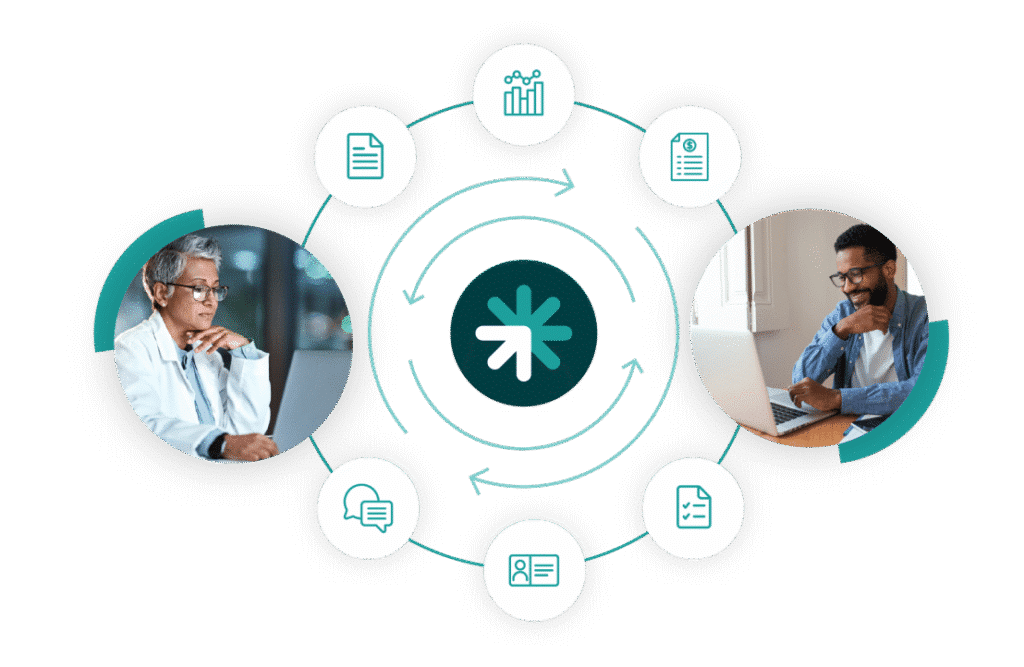
Rather than waiting days for an outdated batch file, these real-time connections allow authorized partners to securely request and retrieve a member’s exact status the very moment they are trying to help them. These channels must allow entities, including MCOs, health systems, and integrated platforms like Findhelp, to retrieve critical data, including:
- Member enrollment dates and redetermination windows
- Redetermination status (pending, complete, at-risk)
- Outstanding individual documentation requirements
- Community engagement status, including active exemptions and hardship waivers
By exposing these APIs securely to authorized partners, states allow the broader ecosystem to shoulder the administrative workload, ensuring that federal system investments deliver lasting public value.
Pushing the signal: “Eligibility-at-Risk” flags
When state caseworkers have to manually identify and reach out to at-risk members, administrative costs skyrocket. APIs allow partners to pull information, but a modernized, cost-efficient system must also be able to proactively push alerts.
In our CMS recommendations, we advocated for the mandatory transmission of “Eligibility-at-Risk” flags.
State E&E systems should automatically generate and transmit these flags when a member is approaching their redetermination deadline or has a demonstrated compliance deficit (e.g., fewer than 80 hours logged with less than 30 days remaining in the period).
Crucially, these flags must be routed to where the workforce already exists: Health Information Exchanges (HIEs), MCO care management platforms, and community workflow networks like Findhelp.
Avoiding the high cost of churn
Coverage loss is an expensive clinical event, not merely an administrative one.
When a member loses Medicaid due to a paperwork failure or missed volunteer hours, the state pays twice:
- Administrative cost of processing the termination and the potential re-enrollment (churn)
- Downstream medical costs generated when that member’s care is disrupted

Routing eligibility risk signals through interoperable platforms brings the relevant data directly to the providers and community health workers who are already engaging with the patient. It allows a navigator to see an “Eligibility-at-Risk” flag during a routine clinical follow-up and immediately help the member upload an exemption document or find a qualifying volunteer program.
This closes the gap before the state has to process a termination.
Conclusion: Modernization, not just compliance
Findhelp is built on the premise that you cannot solve a systemic, community-wide challenge with a siloed tool.
By demanding open APIs and proactive risk flags, states can transform their existing E&E investments into the foundation of a dynamic, supportive ecosystem. This approach reduces costs, protects members, and turns a complex federal mandate into an opportunity for true modernization.
What’s next?
If open APIs and deep integration are the architectural goals, what exactly does the data look like when it flows between these systems?
In Part 4, we will break down the Data Model, exploring the specific data elements and standards required to power this interoperable future.