











North Carolina Social Care Summit: Highlights from the Tar Heel State
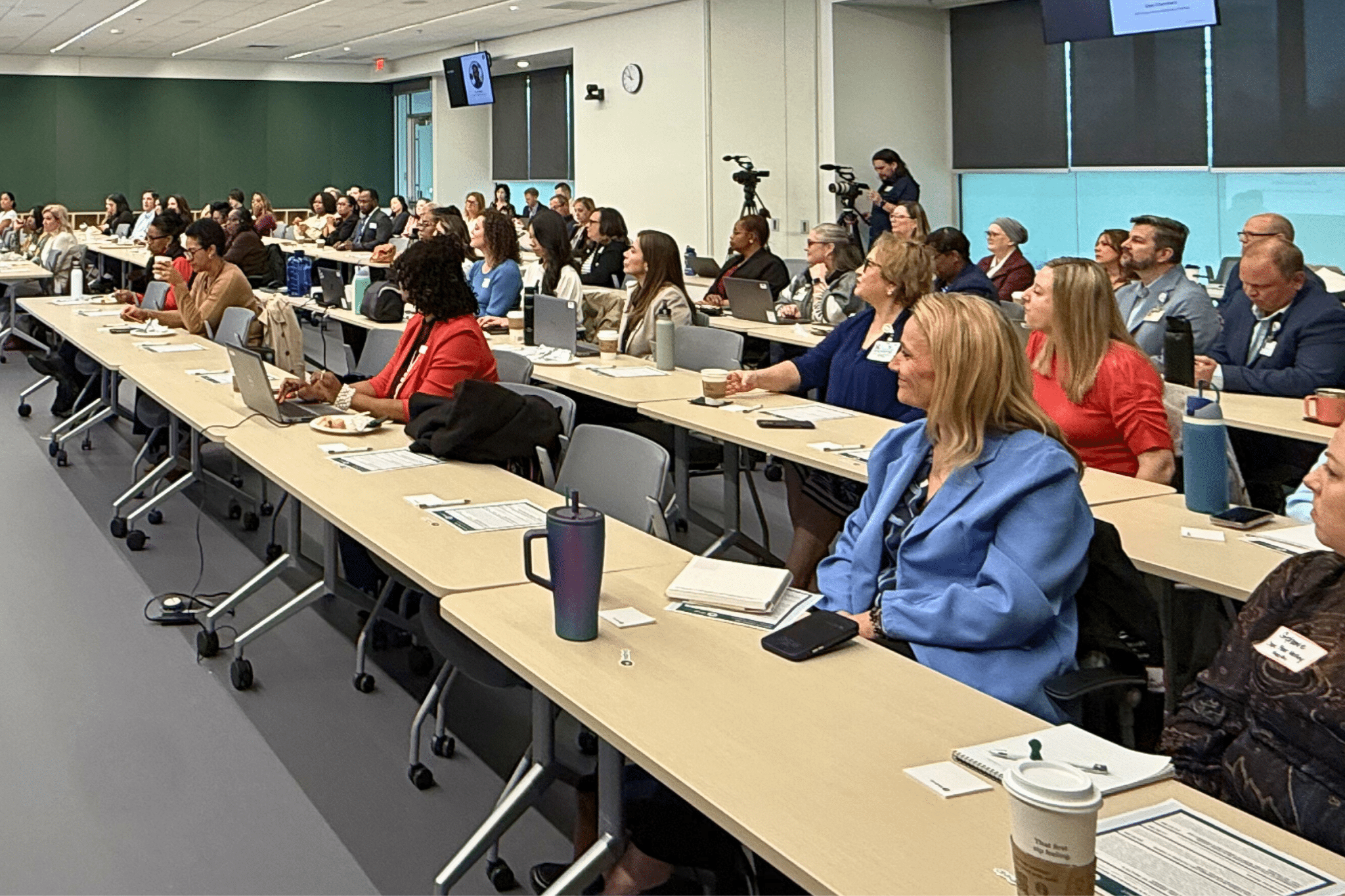
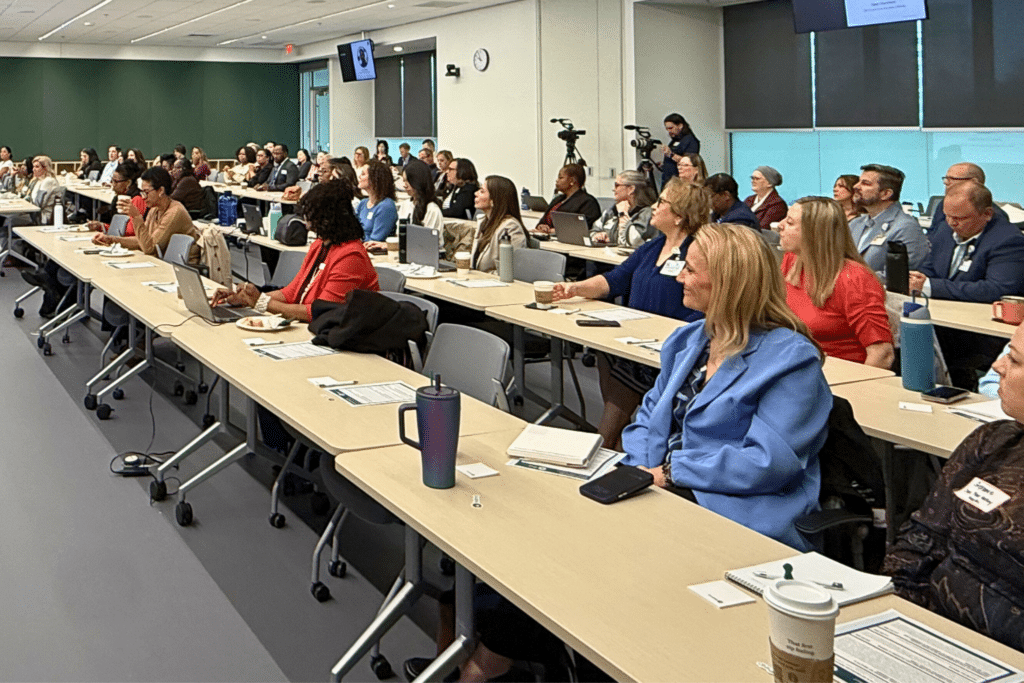
North Carolina social care leaders gathered for Findhelp’s State Summit with a shared purpose: strengthening the connections between healthcare systems, community organizations, and the technology that helps people access support. Across the state, organizations are working to bridge gaps between clinical care and the social factors that shape health outcomes. At the Summit, healthcare leaders, nonprofit partners, and community advocates explored how stronger partnerships, better data, and coordinated workflows can transform how people receive help.
The day’s theme? Building a connected safety net requires collaboration across sectors.
Read on for key takeaways:

Intentional partnerships allow healthcare and community partners to coordinate care and share information more effectively.
Investment in community partnerships is key, with health systems funding, training, and supporting CBOs to strengthen local networks.
New tools are enabling end-to-end social care, helping organizations meet state CalAIM requirements.
A special thank you to everyone who joined us and to our fantastic speakers for sharing their insight, experiences, and vision.
Highlights from the 2026 North Carolina Social Care Summit
This year’s Summit featured 65 participants representing government agencies, healthcare providers, community organizations, and more:
Below are some of the key themes and takeaways from a day of learning and sharing.
Scaling social health through data and partnerships
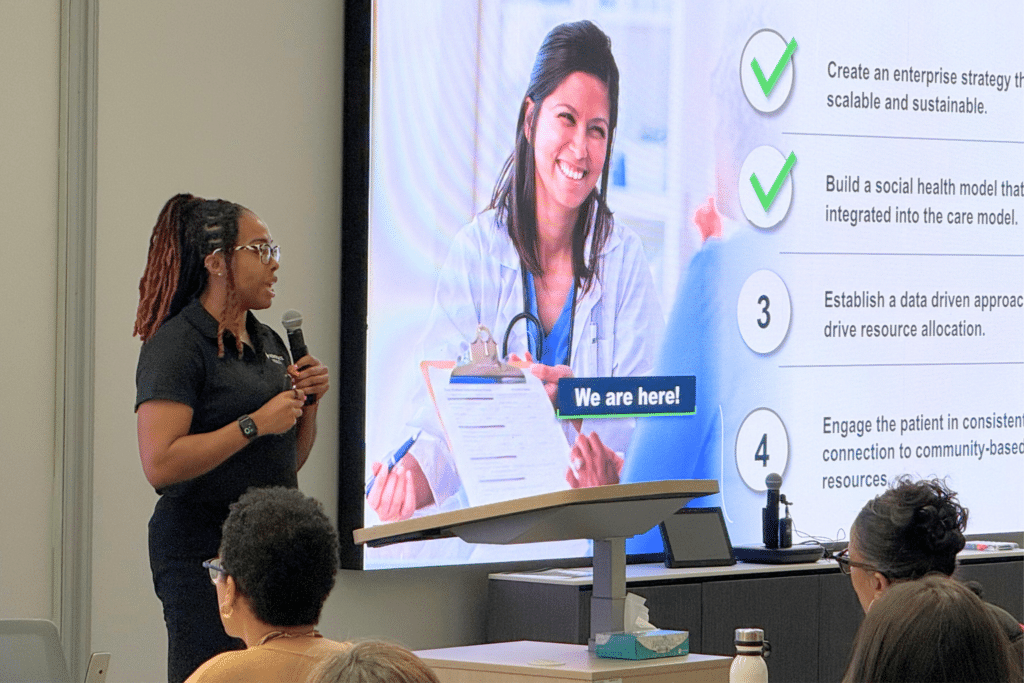
Advocate Health opened the summit by sharing how they’re embedding social health into clinical care across their multi-state health system. By integrating social drivers of health (SDoH) screening across inpatient care, emergency departments, primary care, pediatrics, and women’s health services, Advocate has built a system that identifies needs early and connects patients to support.
In 2025 alone, the organization screened more than 1.9 million patients, reaching its goal of screening 55% of patients across the enterprise. Roughly 13% screened positive for at least one need, with food insecurity emerging as the most common challenge.

“Social drivers of health needs function like vital signs.”
Cherelle Rozie
Associate VP, Social Health & Community Health Workers at Advocate Health
Patients who request help are directed to community resources through Findhelp, with links delivered through after-visit summaries and text messages. Community health workers and care teams then follow up to ensure patients receive support. Advocate’s strategy has also focused on building sustainable partnerships with community organizations. By consolidating referral workflows through Epic and Findhelp, the system has dramatically increased engagement across its network.
The results speak for themselves:
- 940% increase in users engaging with the network
- 230% increase in referrals placed
- 200% increase in programs added
Advocate is also using these insights to guide investments in the community. In 2025, the health system committed $1 million toward food security initiatives, using Findhelp referral data to identify where resources could have the greatest impact.
A new vision for North Carolina social care
Findhelp’s COO, Jaffer Traish, outlined how social care infrastructure is evolving nationally and across North Carolina. Trusted Networks across the state are continuing to expand, with health systems such as Advocate Health, Novant Health, Cone Health, and Duke Health helping build coordinated ecosystems that connect healthcare providers, nonprofits, and community organizations.

“Digitizing social care workflows isn’t optional anymore. It’s the foundation for delivering coordinated care.”
Jaffer Traish
COO of Findhelp
With Findhelp, organizations are moving from fragmented systems toward a unified model where needs assessments, referrals, eligibility checks, and service delivery can all happen within a single coordinated workflow. This model is helping partners navigate changing policy landscapes and streamline the delivery of services.
Community organizations driving local impact
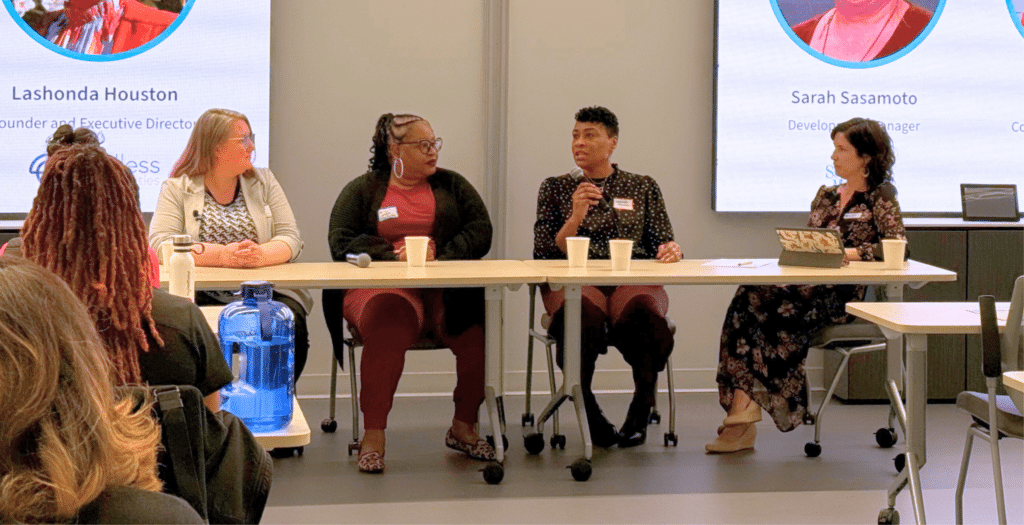
A panel featuring leaders from Endless Opportunities, Hearts and Hands Food Pantry, and Sunnyside Ministries showcased how community-based organizations (CBOs) are using Findhelp to strengthen their operations and better serve their communities.
For these organizations, Findhelp’s platform has become much more than a referral tool. It serves as a system of record, a reporting engine for grant funding, and a way to understand emerging community needs.
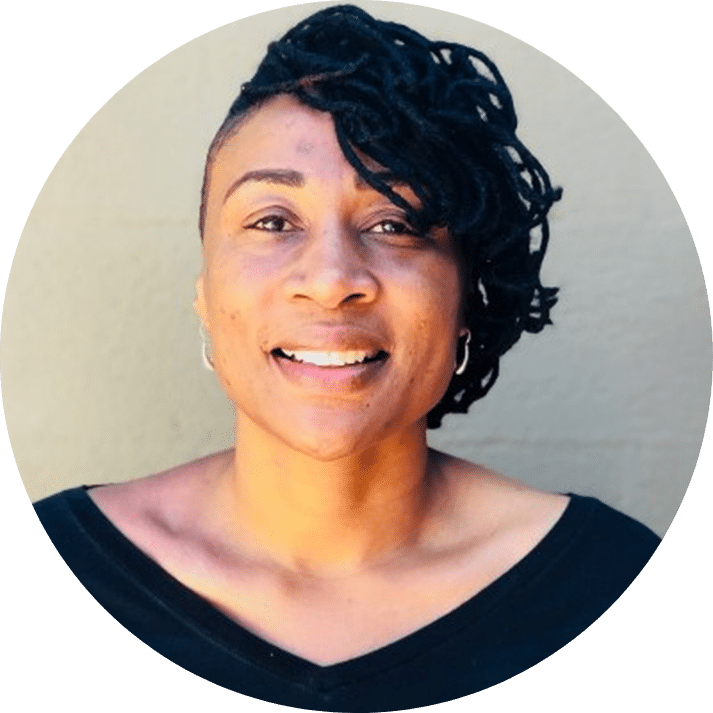
“The data helps us tell the story of what our community actually needs.”
Lashonda Houston
Founder & Executive Director of Endless Opportunities
Organizations are using search trends, referral data, and reporting tools to inform programming decisions and identify service gaps. For Hearts + Hands Food Pantry, the ability to track referral volume and map community needs has been particularly valuable. Panelists also emphasized the importance of having a shared statewide platform that allows organizations to connect across sectors.
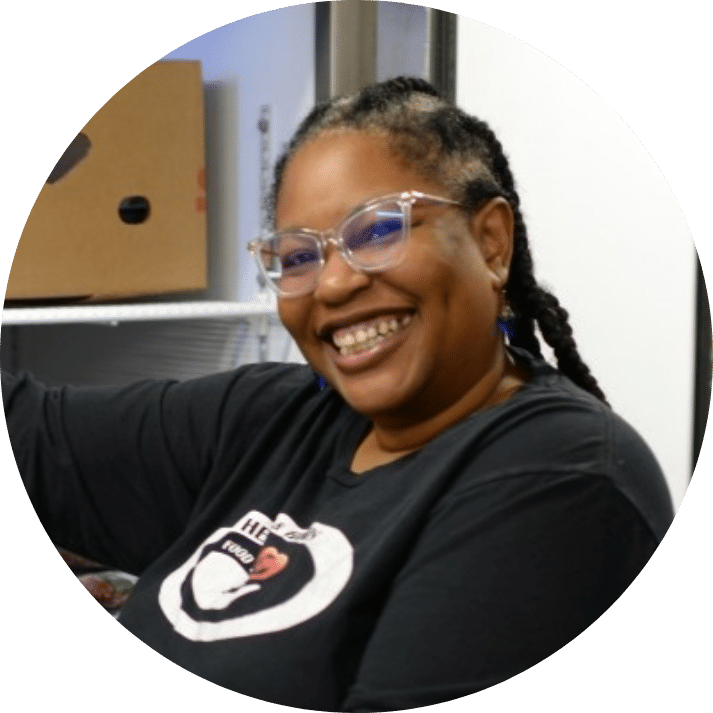
“The volume of referrals we receive would be impossible to manage without a system like this.”
Kenya Joseph
Co-Founder & President of Hearts and Hands Food Pantry
Building Trusted Networks that close the loop
Cone Health shared its journey from fragmented referral systems to a coordinated, Trusted Network powered by Findhelp. Before adopting the platform, referrals were often manual and inconsistent, leaving clinicians unsure whether patients ever received help. “The first approach looked strong on paper but failed in practice,” said Emerson Frizzell, Director of Accountable Communities at Cone Health.
By engaging clinicians and community organizations directly in the implementation process, Cone built a network based on real referral patterns and trusted partnerships. The results have been transformative.
More than 2,000 Cone Health staff members now actively use the platform, and referrals are consistently tracked and monitored.

“[With Findhelp] patients get a resolution, not just a resource.”
Emerson Frizzell
Director of Accountable Communities at Cone Health
The health system has also invested in strengthening its community partners through a CBO Capacity Building Series, offering leadership training, peer collaboration opportunities, and LinkedIn Learning access to nonprofit partners.
Cone Health’s efforts demonstrate that strong social care networks depend on the sustainability of the organizations delivering services.
Community engagement as infrastructure
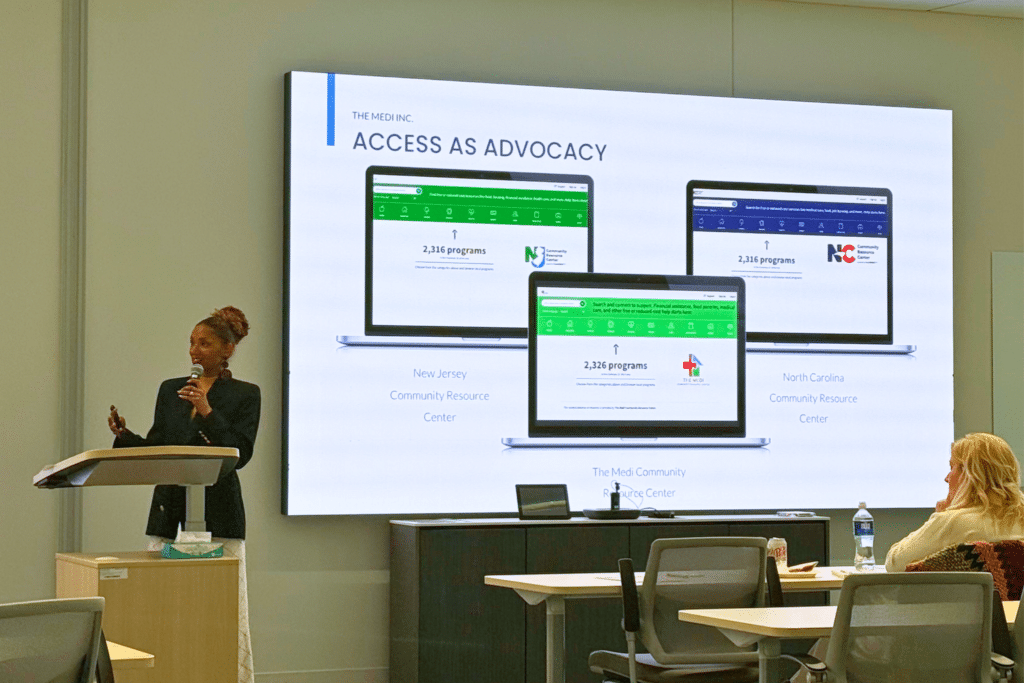
Technology alone cannot activate a social care ecosystem. That was the central message from Austen Williams of The Medi. The organization focuses on strengthening community engagement and helping organizations activate their Findhelp networks through outreach, training, and partnership building.
The Medi’s work demonstrates how intentional engagement can dramatically increase community participation.

“Access isn’t the same as activation—and activation isn’t the same as trust.”
Austen Williams
Executive Director at The Medi
Across its community resource center platforms, user engagement has grown from 715 users in 2022 to more than 17,000 users in 2025, driven by partnerships with trusted local organizations. By embedding community engagement into operational strategy, organizations can turn technology platforms into thriving ecosystems of care.
Powering the next generation of social care
The summit concluded with a look at Findhelp’s evolving platform and the future of social care infrastructure. New capabilities are helping organizations streamline eligibility checks, automate enrollment for government benefits, and expand referral networks to include behavioral health providers and post-acute care services.
Our long-term vision is simple but ambitious:
“One search, all services.”
By integrating benefits enrollment, referral workflows, and community services into a unified system, Findhelp aims to create a comprehensive social care record that supports coordinated care across sectors.
“What stood out most throughout the conversation was the power of true collaboration. Addressing social drivers of health cannot be done by any one organization alone. It requires strong partnerships, shared strategy, and a deep commitment to connecting people with the resources they need to thrive.”
Cherelle Rozie | Associate VP, Social Health & Community Health Workers at Advocate Health
Beyond the Summit: Our work in North Carolina
While the Summit provided a rich day of insight and connection, the real work continues — in homes, clinics, schools, and community hubs across North Carolina.
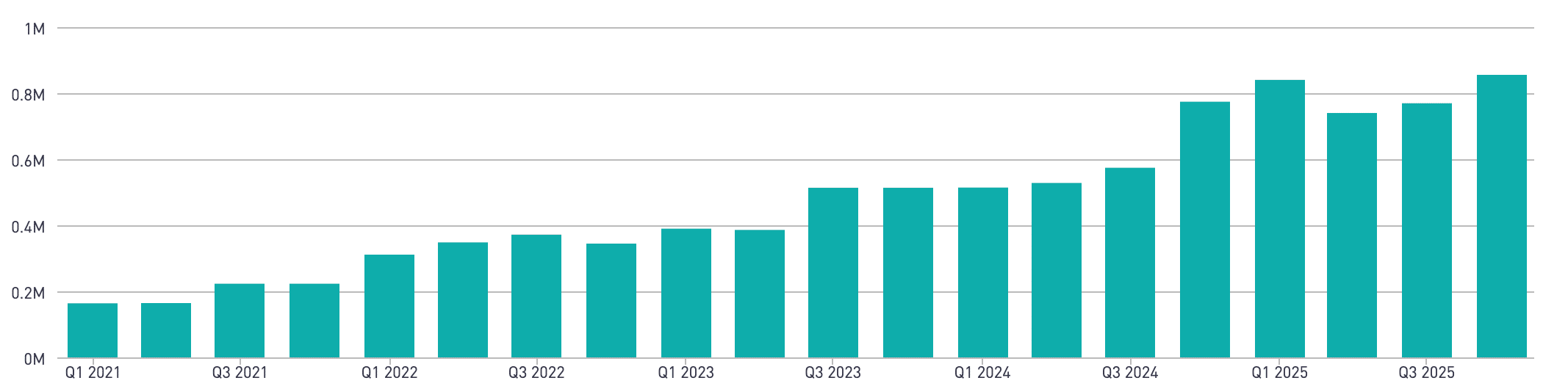
Some of the numbers that show the scale and momentum:
- 13,800 listed programs serving North Carolina
- 2.4 million users across the state
- 8.9 million searches for resources
- 41,900 social needs assessments completed
- 100% of counties have claimed programs
As of March 2026, we partner with more than 16 customers throughout the state to connect their patients, members, students, constituents, and clients to local resources. Our data and analytic tools can identify gaps in services and provide actionable insights to inform strategy and public policy.
Together, with our North Carolina partners, we’re building toward a future where social care is not an afterthought — but a foundational part of how health, housing, and human services work together.
Let’s keep the conversation going
North Carolina’s Social Care Summit highlighted the progress being made across the state to build a more connected and effective safety net.
Healthcare providers, nonprofits, policymakers, and technology partners are working together to ensure that individuals don’t just receive referrals—they receive real support. As networks continue to grow and partnerships deepen, North Carolina is helping demonstrate what the future of integrated social care can look like.
If you’re interested in how Findhelp can support your work in North Carolina — whether you’re a health system, community-based organization, payer, or state agency — we’d love to chat.