













How Denton County Created a Community-Wide Solution for Social Care
Connecting residents to the right social services at the right time is a critical challenge facing every growing community. In Denton County, Texas, community-based organizations and government leaders recognized the need for a shared digital infrastructure to connect the public with available services. In response, the City of Denton and Denton County Public Health acted as conveners, funding and facilitating a community-wide solution. Since its launch, the FindHelp Denton County platform has been used by thousands of residents to connect with vital services.
This case study details how this partnership, and collaboration with community service providers, led to the creation of a centralized resource hub that strengthens the entire network of care.
In this post, you’ll learn how:

County and City came together to implement a centralized, community-wide system for connecting residents with social services
This partnership created a methodical approach that included government facilitation, a phased implementation plan, and broad community collaboration
In the first year, 18,000 residents used the platform to connect to resources
The challenge: Binders, sticky notes and spreadsheets
Denton County’s dedicated community-based organizations (CBOs) worked tirelessly to support residents. However, without a shared, centralized system, each organization maintained its own information. For social service professionals, this often meant relying on individual expertise, hefty printed binders, or sticky notes to make referrals—a diligent but decentralized approach.
This structure created systemic issues:
- Residents faced a complex landscape with no clear starting point to find help.
- CBO staff found it difficult to connect people to services outside their own agency.
- The lack of a unified directory with closed-loop capabilities made it challenging to track referral outcomes.
- The high cost of referral technology and the need for ongoing technical support placed such a solution outside the reach of most individual organizations.


Located in North Central Texas, Denton County is a fast-growing region that recently surpassed a population of one million. This rapid growth has led to challenges in areas like housing affordability and has shifted the needs of the community. This case study highlights a partnership between two key local government entities: the City of Denton’s Community Services Department and Denton County Public Health. Their shared history, originating from work with the local United Way, fueled a long-standing goal to overhaul the community’s information and referral process.
The community recognized the need for a modern, shared infrastructure, and came together, with support from the City and County, to better connect the entire network of care.
The solution: A unified and methodical approach
Recognizing an opportunity to support community members in efficiently accessing information about services available, the City and County collaborated to support a multisector, foundational infrastructure to support referrals and connectivity to care. Their approach was guided by several key principles:
- Government as a facilitator: Local government’s role was to provide a stable, low-cost infrastructure that allowed CBOs of all sizes to easily list their services and efficiently connect with people seeking services.
- A deliberate, phased implementation: The team resisted the urge to rush. They understood that a successful launch required a precise, patient process to build trust and ensure utility. They mapped out an 11-week implementation timeline, working closely with Findhelp to ensure the platform would be reliable from day one.
- A collaborative community-wide solution: The process was not top-down. The team cast a wide net, engaging over 70 CBOs in pre-launch planning sessions. This ensured the framework for the hub site included direct input from the people who would use it most.
Real world impact: Key strategies for success
With the platform built, the Denton County team employed several key strategies to ensure its successful integration into the community fabric.
Sustainable funding and partner buy-in
The team’s approach went beyond just launching a tool; they deliberately built community-wide solution and the foundation for long-term success:
- Strategically used American Rescue Plan Act (ARPA) funds to cover implementation costs, demonstrating a strong government commitment and removing financial barriers for CBOs.
- Directly addressed a major CBO pain point by providing a free, efficient alternative to unwieldy clipboards and spreadsheets.
- In combination, these choices gave CBOs an immediate and compelling reason to adopt the system for their daily work.
Building a trusted, community-focused brand
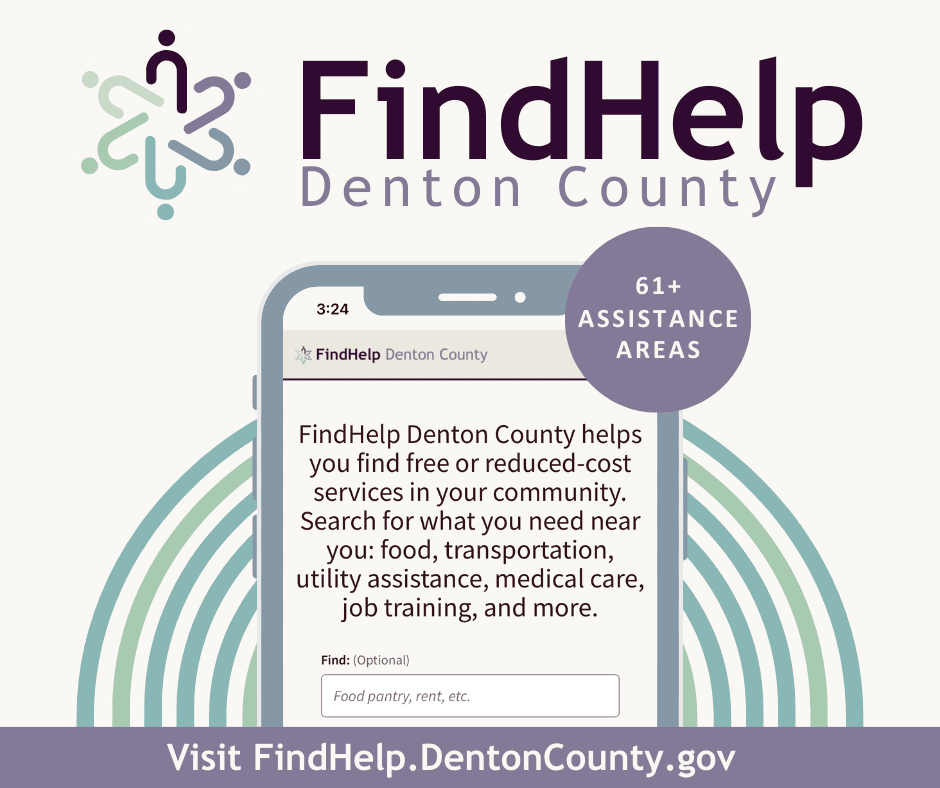
Rather than using an official government brand, the team intentionally created a unique and neutral identity: “FindHelp Denton County.”
- This unique identity cultivated a sense of community ownership and approachability.
- To bring the brand to life, they developed a simple, low-cost, and highly effective marketing tool—a business-card-sized card with a QR code linking to the site.
- Printed in English and Spanish, these evergreen cards were easy for partners like libraries, schools, and public health staff to distribute, providing a tangible and accessible entry point to the digital network.

Fostering deep CBO engagement
The team actively works to help CBOs use the platform to its highest potential. This includes:
- Training on advanced features like “Favorites Folders,” which CBOs now use to create curated, topic-specific resource lists (e.g., perinatal mental health) that have replaced outdated printed guides.
- Promoting the site’s ability to readily translate text and messages into a user’s preferred language, ensuring broader access for the community.
By helping CBOs become platform experts, the team is replacing inefficient workflows and building a more coordinated system of care.
Using data to inform strategy
The team leverages platform analytics to guide outreach and resource allocation, focused on usership trends and topic-specific searches:
- A key part of their strategy involves translating this data into actionable insights for partners and leaders.
- They provide CBOs with maps visualizing where searches originate, helping them identify geographic hotspots of need and make informed decisions about where to place resources.
- This same data is framed in visualizations for elected officials, providing a clear, evidence-based picture of community needs to guide high-level planning and policy.
An award-winning model for other counties
The National Association of County and City Health Officials (NACCHO), the representative body for over 3,300 local health departments nationwide, selected Denton County Public Health as one of the winners of its 2025 Model Practice Awards. This annual program recognizes exceptional local public health initiatives, chosen through a competitive, peer-reviewed process. Denton County was one of 19 local health departments to receive the Model Practices award in 2025.
As a Model Practice Award winner, Denton County Public Health made this short video outlining their strategy and approach to building a community-wide solution. Hosted on NACCHO’s website, the video will serve as guide for other counties who want to replicate Denton’s success.
Measurable results and future vision
These strategies translated directly into significant, measurable outcomes, establishing the platform as the backbone of Denton County’s social care strategy.
- Significant Platform Growth: In its first year, the platform was accessed by over 18,000 users who conducted more than an average of 1,440 searches per month. This activity resulted in over 23,000 interactions with program listings on the site.
- Positive Community Reception: Community feedback highlights the platform’s alignment with resident needs.
- A 2024 City of Denton survey showed that 90% of respondents were familiar with programs and services offered by nonprofits funded by the City.
- The platform saw immediate positive reception, with a survey conducted just six months after launch showing that 39.5% of respondents chose FindHelp as the tool they were most likely to use.
- This grew into sustained awareness, with the 2024 survey showing that 64% of residents now know about the site and 56% would use a website like FindHelp Denton County to connect someone with resources.
- Community members shared that they like the ability to access resource information in real time from any device.
- Data-Driven Insights: Housing is the most significant need, accounting for 54% of all search activity in 2024.
- The top search terms were “Rent” (2,104 searches), “Help Pay for Housing” (495 searches), and “Food Pantry” (363 searches).
- This data aligns with community survey results where providing housing for vulnerable populations was the #1 affordable housing priority.
- The most searches on the platform originate from the city of Denton (7,538 searches) and ZIP Code 76201.
- A Thriving and Expanding Network: The platform now lists over 2,400 organizations. In the last year, 220 new programs were added and 163 programs were claimed by CBOs, ensuring information is accurate and up-to-date.
Denton County has successfully laid the groundwork. Their year-two vision is focused on deepening their impact by expanding CBO usership, prioritizing access in asset-limited areas, and enhancing their closed-loop referral network. They are proving that with the right strategy and tools, any community can move from a fragmented system to a resilient, connected network of care.
Bring a new standard of care for your community
Let’s build your community-wide solution together! Findhelp has a history of partnership with county governments to increase efficiency, improve public health, and support their staff and residents. Schedule a conversation with our team to get started.