









Celebrating Our 2026 Community Contribution Award Winners!
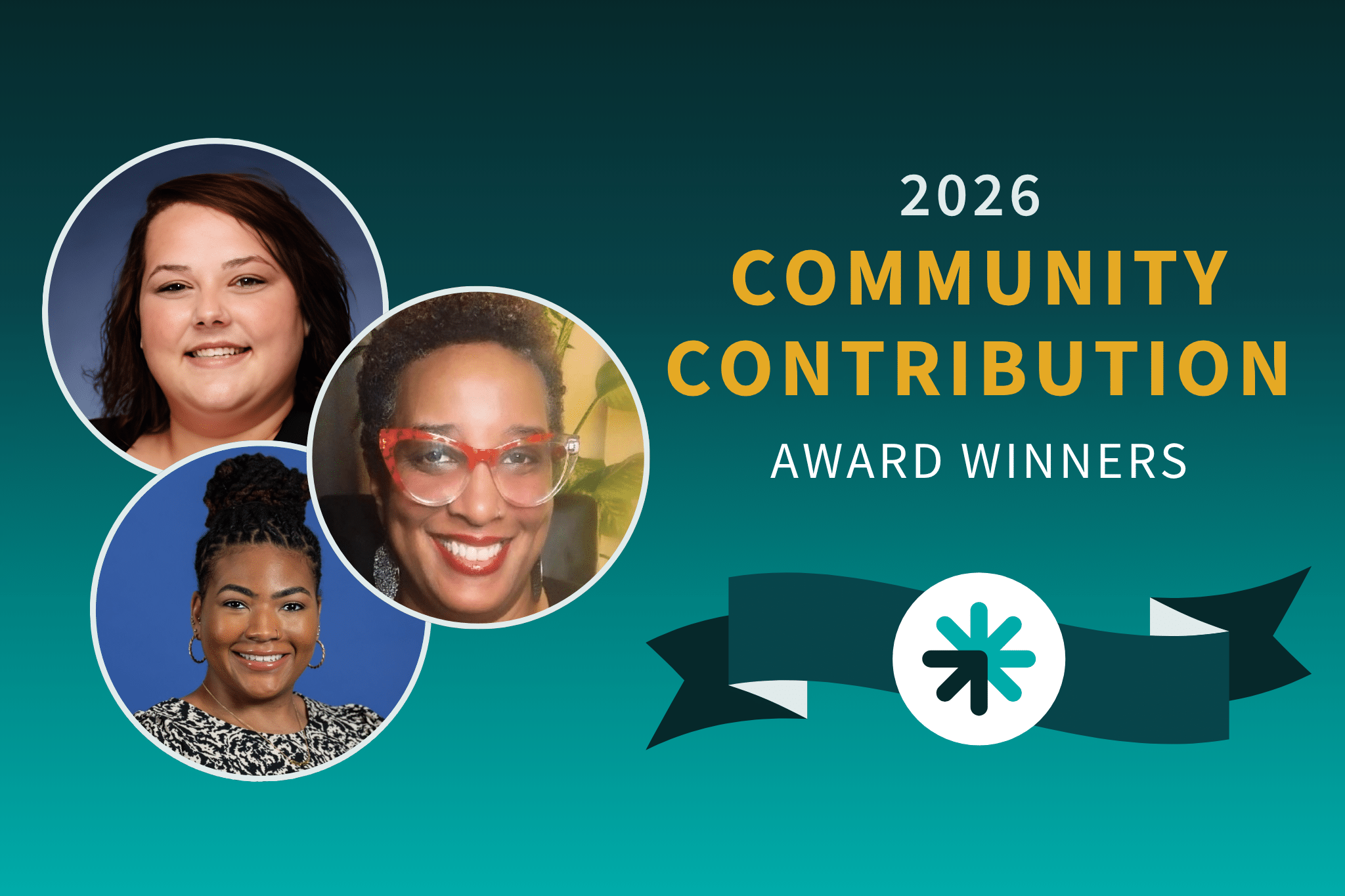
At Findhelp, we believe that technology is only as powerful as the people driving it. That’s why we created the 2026 Community Contribution Award to honor individuals at our customer organizations who go above and beyond to transform how their communities access social care.
This award celebrates leaders who embody three core pillars: exceptional contributions to the network, a deeply collaborative spirit, and an innovative perspective on solving complex challenges.
For 2026, we are incredibly proud to honor three phenomenal leaders who are setting a new standard for social care across the country.
PCA Georgia + Find Help Georgia
Fostering intentional community relationships
Building a digital resource network is one thing; getting an entire state to actively use it is another.
As the Find Help Georgia Manager, Kimberly has been the driving force behind Find Help Georgia since 2022. She understands that true community engagement requires meeting organizations exactly where they are.
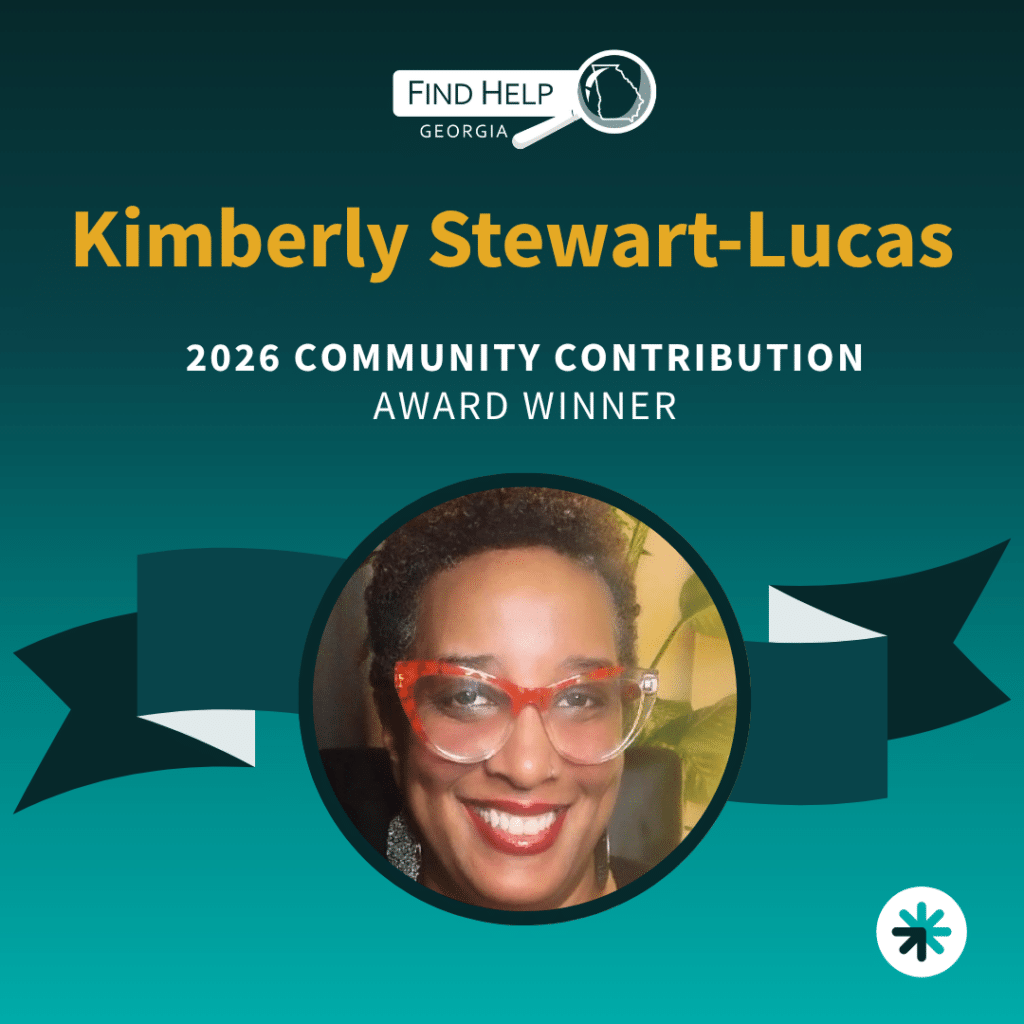
“I am so grateful to have been part of the Find Help Georgia journey with Kimberly Stewart-Lucas. The passion she brings to every aspect of her life and work is unmatched and is a large part of why she has been so successful with Find Help Georgia’s community outreach. Anyone who has been to one of Kimberly’s training can attest to how dedicated she is to making sure communities are connected. Congratulations to Kimberly and her whole team!”
Kelsey Allen
Associate Principal of Customer Success, Findhelp
By conducting more than 60 formal training sessions and showing up as a tireless advocate at community forums, Kimberly has woven the platform into the fabric of Georgia’s safety net. Thanks to her efforts, over 20% of all program claimings in Georgia now originate directly from the Find Help GA site.
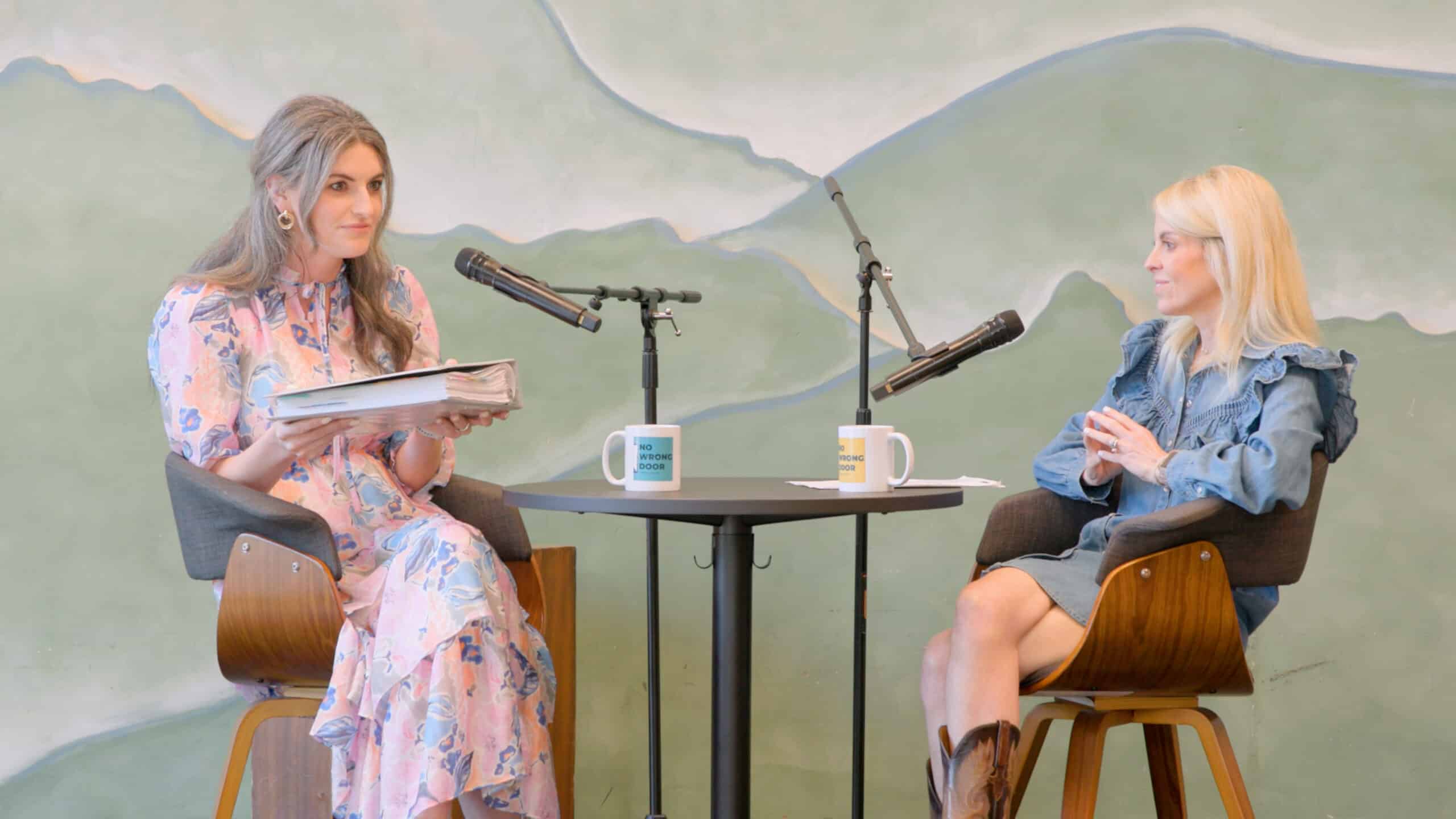
Hello, everyone. We are excited to have you join our presenters to hear more about how Find Help Georgia has been shifting and evolving in their collaborative work. My name is Kelsey Allen, and I have had the pleasure of working with our presenters today on their Find Help Georgia collaboration since the very beginning. I’m an associate principal on FindHelp’s customer success team, and I work across our customer organizations to help them incorporate their FindHelp platform into overall social care strategies. But first, some housekeeping tips. This session is being recorded, and you’ll get access to those recordings on Friday, May fifteenth. So don’t worry if you miss something, you’ll be able to see it again. And we ask that you use the Q and A tab at the right side of your screen, and we’ll do our best to answer questions at the end of the presentations. When we first began working with Georgia Department of Early Care and Learning and Technical College System of Georgia, it was to support the 2Gen work, which you’ll hear more about from Melinda. Around that same time, Positive Childhood Alliance of Georgia was approaching us as well for a way to connect families to resources. Given the overlap in the populations that all three organizations were serving, a collaborative was formed with a specific community facing site, Find Help Georgia. This is also my favorite little Easter egg. PCA Georgia had already decided on and gotten the URL for FindHelp Georgia, while FindHelp as a company was still Ann Bertha and just beginning our own rebrand to FindHelp. With this collaboration, the three organizations worked out a shared governance structure that allows each group to work to its strengths. For those of you who have attended past Connect Summits, you may have heard Kimberly speak in twenty twenty four about Find Help Georgia’s successful work in engaging CBOs and programs. Because of the work of Find Help Georgia Collaborative, they’ve seen tremendous success in getting Georgians connected to programs across the state. Since twenty twenty two, they’ve held over sixty two CBO trainings and had over eight seventy attendees. But as the landscape of nonprofit organizations, funding and needs change, our Find Help Georgia partners have also continued to evolve their approach with their platforms. With that, I’d like to bring up Kimberly here to speak more about that evolution. Kimberly Stewart Lucas is the newly promoted Find Help Georgia manager at Positive Childhood Alliance of Georgia, PCA Georgia, formerly Prevent Child Abuse Georgia, which is housed in the Mark Chaffin Center for Healthy Development within the School of Public Health at Georgia State University. She leads the Find Help Georgia program efforts through training, technical assistance, and community engagement outreach to providers and those seeking help. Along with annual conference planning, administrative marketing and logistical support, Kimberly also provides mandated reporter and supporter training. Kimberly has a passion for event planning, curating art exhibits and wellness workshops. She’s an advocate and an educator for natural and home birth, and she receives joy in bringing people together, providing valuable resources and creating lasting, meaningful memories that inspire and educate. Kimberly, we’re so grateful to have you here to talk more about PCA Georgia and Find Help Georgia. So I’ll leave it to you. Thank you so much, Kelsey. I’m so glad to be here and join you all today for this presentation. So what we’re looking at right now, this visual, the Connected Communities Model, is about making access to help simpler, faster and more coordinated for the people that we serve. So at this center are the organizations powering this work. And as Kelsey mentioned, that’s PCA Georgia, DCAL and TCSG, where state agencies, community based organizations and partners like Find Help Georgia, again working together instead of in silos. Surrounding that core is the full ecosystem that touches a family’s life, Schools and colleges, health care providers, law enforcement and first responders, courts and legal systems, local government, businesses and community organizations. And just as important on the outer layer are the people we’re all here for, children, families and individuals navigating real needs like childcare, education, food access and safety. What this model does is connect all of those touch points into a shared system. So instead of families having to figure out where to go next, the system works around them. And that’s where Find Help Georgia plays a critical role. It enables a true no wrong door approach and experience, whether someone enters through a school, a clinic, a helpline, or on their own. They’re connected to the same up to date network of resources. It also supports self navigation, which reduces pressure on the frontline staff while empowering others and individuals to find help in real time. And behind the scenes, it gives us something we haven’t always had, shared data and analytics. So counties and agencies and health plans can align their efforts, measure impact, and improve outcomes together. And finally, this isn’t just a technology solution. It’s infrastructure for collaboration. It strengthens relationships across sectors, it builds trust, and allows communities to organize around what communities need, not just what systems are designed to provide. So I want to ground us now on how we got here and why this work matters. So at Positive Childhood Alliance Georgia, again, formerly Prevent Child Abuse Georgia, our work started many years ago with the one-eight hundred Children Parent Support Line. The goal has always been simple: support families early before challenges become a crisis and connect them to the resources they need for healthy outcomes. Because when families have access to concrete supports like childcare, food, education, we reduce stress and strengthen family stability. And importantly, we see this as universal. Every caregiver at some point needs support. So what you see on this timeline is that evolution. We began with the phone line in nineteen eighty two, expanded later to a staff helpline, then onto an online resource map, and helped shape statewide prevention efforts like Georgia Essentials for Child Care and the Georgia State Prevention Plan. But even with all of that progress, a core challenge remained. Services were still fragmented, hard to navigate, and often to the people who needed the most. So we asked, how do we make access simpler, more equitable, and easier to trust? And that’s what led us to find Help Georgia. So in about two thousand and two or ‘twenty two, through cross sector collaboration with the Georgia Department of Early Care and Learning, known as DCAL, and the Technical College System of Georgia, also TCSG, and PCA Georgia, we built a shared platform grounded in a few key priorities, making it easy to search and find help in real time, allowing for anonymous self directed access, reducing stigma around asking for help, and ensuring that information is accurate, accessible, and available across languages and communities. So Find Help Georgia is the result. It’s a centralized statewide network that connects individuals and families to free and low cost services in their own communities. Just as important as the tool is how we work together behind it. So as partner agencies, we’ve aligned around a shared community community facing platform, while also supporting our internal teams, reducing duplication and expanding reach through our collective networks. We’ve also formed a formal governance structure to guide decision making, maintain alignment, and support long term sustainability as more partners join this work. As we look ahead, one of our major next steps is strengthening the connection between digital access and human support, particularly through the evolution of the helpline, including its transition and expansion with PCA Georgia at Georgia State University. So ultimately, this is about creating a system where no matter how someone enters, whether it be the phone, the website, or through a trusted partner, people can find help quickly, safely, and with dignity. So in just two months last year during the busy holiday season, our team successfully transitioned and relaunched Find Help Georgia’s helpline under PCA Georgia, and we relaunched it this year, February second of twenty twenty six. So during this extensive onboarding period, staff were trained to confidently answer helpline calls, to learn how to navigate successfully through the FindHelp Georgia platform, provide meaningful referrals, and build a curated favorite resource folders to improve response efficiency and consistency. The relaunch process required continuous learning, still does, flexibility and collaboration. Through ongoing trial and error, we refined workflows and partnered closely with Kelsey to make sure that multiple updates to the call intake assessment form to do that so it’s better reflecting the caller’s needs and improved data collection for what we need for our reports. As the helpline continues to evolve, we’re also excited to participate in Find Help’s call center early adopter program, helping test new platform functionality and features that strengthen the user’s experience, improve the referral process, and support more effective communities and connections across Georgia. So since transitioning the FindHelp Georgia platform earlier this year, we’ve gained valuable real time insight into what access to care looks like on the ground, not just in theory, but in people’s lived experiences. So one of the biggest takeaways has been identifying where the gaps truly are. While the platform includes thousands of resources, we’re seeing some pockets in areas like affordable housing, childcare availability, and culturally responsive services. And these just aren’t data points. They show up as longer searches, repeat callers, and limited referral options in certain regions in Georgia. Another key lesson is the importance of organizations actively claiming and maintaining their listings. A resource is only as helpful as it is accurate. When organizations take ownership of their information and their program cards, we see stronger connections, better outcomes, and increased trust in the system overall. We’ve also seen how powerful seeker empowerment can really be. Many individuals are using Find Help Georgia to self navigate on their own time, in their own way, and often anonymously. That autonomy reduces stigma and allows people to seek help earlier before challenges escalate. And finally, this work has reinforced what authentic community impact really requires. It’s not just about having a platform, it’s about ongoing engagement. So listening to communities, building relationships with providers, and continuously improving on the network based on what we’re seeing and hearing. The helpline just doesn’t connect people to resources. It gives us a feedback loop. And that feedback is helping us strengthen the system to be more responsive, more equitable, and more aligned with the real needs of Georgians. So another big lesson that we’ve learned in this whole process with Find is having the platform is not just enough. Community engagement must be intentional and ongoing. And these are some of the ways that we suggest that customer branded Find Help platforms can increase awareness and trust and actual utilization with their communities. First, we offer regular virtual workshops and live demonstrations that help community members and partners understand how to use this platform more effectively. Many people don’t realize how detailed and searchable the resource network is until they actually see it in action. Another strategy is helping partners partner organizations embed the Find Help search box or directly link until they’re on websites. This increases visibility and makes access easier for families who already trust and visit those organizations online. We’ve also learned how critical it is for organizations, again, to claim and regularly update their listings. An outdated resource creates frustration, we know this, for seekers and referral partners. So encouraging community partners to maintain accurate information strengthens the overall ecosystem and improves trust in the platform. So beyond awareness, staff and community partners should actively use the platform in their interactions with families every day. Not just refer people verbally, but walk them through Find Health Georgia or Find Health platform in real time when possible. That helps empower the seekers to use the tool independently in the future. The mobile app is another underutilized engagement tool. Encouraging downloads gives users easier access to resources directly from their phones, especially for people navigating urgent needs while on the go. And finally, promotion matters. Easy to share flyers, social media graphics and content, QR codes, newsletters, and community outreach materials all help normalize the use of the platform and expand reach into the community. The more visible and integrated the platform becomes across organizations and systems, the more likely people are to use it with trusted entry points and care supportive services. So I would like to thank you all for this time and the opportunity to share our experience in how we’re growing Find Help Georgia. We are really excited about how we can continue the opportunity to strengthen community connections and improve access to social services across Georgia. And now I’ll turn it back over to Kelsey. Thank you so much, I loved hearing all the work that you guys have done, the evolution of Find Help Georgia. Now, I’d love for you all to take a second to answer a poll that we’re going to put up here on screen and in the chat so that you can answer and tell us where have you seen the greatest need to evolve in your organization, whether that’s through the mindset of staff and how they’re addressing resource needs, how you’re engaging CBOs, the various populations that you’re serving, and maybe that has evolved for your organization. Or if there’s anything else, please tell us in chat. We’d love to hear from everybody here. Wonderful. We’ll give folks a minute or two to answer that. And as we have you answer that poll, we’ll be moving on to talking a little bit more about how DeCal has used Find Help Georgia as well. All right. Alright. Okay. You haven’t had a chance to answer that poll, feel free to put in chat more about where you’ve seen evolution. And I’d love to introduce you to Melinda to speak on how Georgia Department of Early Care and Learning is participating in Find Health Georgia. Melinda Knowles serves as the Development and Partnerships Project Manager for the Child Care and Parent Services or CAPS division of DeCAL. In this role, she leads cross sector initiatives that promote whole family well-being and economic mobility through the 2Gen approach. Melinda oversees the CAPS provider and family advisory councils, ensuring that the voices of families and providers shape policy and program decisions. She also leads DeCAL’s engagement with Find Help Georgia, helping connect families and early learning professionals to vital community resources. She’s played a key role in shaping how Find Help Georgia is used across the state, making sure it reflects real needs of families and providers. With a background in education and workforce development, including international experience, Melinda brings a practical, people first approach to systems change. She’s especially committed to ensuring families have a voice in programs and policies that affect them. Melinda, thank you so much for being here, I’m excited to hear more about what DeCAL is doing with Find Help Georgia. Thanks so much, Kelsey. I’m happy to be able to share today. Good afternoon, everyone. As Kelsey said, I’m Melinda Knowles and I work with DECAL, the Department of Early Care and Learning here in Georgia. And at DCAL, families come to us for childcare, but we know childcare doesn’t exist in isolation. Employment, education, nutrition, housing, all of it intersects. And Find Help Georgia gives us a way to acknowledge that reality without expecting families to navigate siloed systems on their own. We have five different divisions at DeCAL, each focusing on a different aspect of early care and learning. And we focus not only on early care and learning, but we also address nutrition and social emotional support among other areas, and that includes helping pay for childcare. The role of CAPS at DECAL, and CAPS stands for Child Care and Parent Services, is to facilitate child care scholarships for those families that are in financial need. As we all know, resources are limited, so CAPS has established priority groups to help us ensure that the most vulnerable families receive that support that they need. And I wanna talk today about one priority group we chose to focus on in a pilot program, student parents. Research shows that education can help generational outcomes, but not having the resources to complete education, basic necessities plus childcare, means that that opportunity is often lost. And that’s what led us to launch our student parent pilot. We were hearing from student parents who were doing everything right. They were enrolled in school, working toward their credentials, but they were still at a risk of dropping out. Accessing things like childcare, food, and transportation felt overwhelming to those families. And we saw them doing the hardest work. They were trying to connect all of these programs that weren’t designed to talk to each other. And at the same time, our staff were burning out. They were acting as informal navigators across multiple systems instead of focusing on helping families reach their goals. Families were running multiple online searches trying to figure out which program fit their situation and whether they were eligible. And often this meant repeating their stories several times. And even if they found a good fit, the programs might be full or temporarily closed. And Kimberly alluded to that in her presentation, talking about the resources not being up to date. Find Help Georgia addressed many of these barriers by putting all of the resources in one place, and it allows families to filter by eligibility and availability. Knowing that student parents needed more than just child care to succeed, Find Help Georgia became a key tool for connecting families to broader supports. The student parent pilot wasn’t about creating a new program, it was about changing how families access support. For the pilot, we placed CAPS consultants on Technical College System of Georgia campuses around the state, embedding them where student parents were already engaged in education and training. Typically, families will connect with CAPS by phone, but by being on-site, it allowed for warmer, more consistent support for those student parents. Our consultants introduced Fine Help Georgia and assisted with navigation as needed, but they also allowed families to self navigate. And this shift created space to focus less on searching for resources and more on long term outcomes. Now we would like to share a short video that highlights two of our CAPS consultants for the student parent pilot that are based at Wiregrass Technical College in Valdosta. Hi, my name is Carla Berlioz and my name is Larisha Simmons and we are at the Wiregrass Valdosta campus. We are consultants with the CAPS two Gen student parent pilot program here. At our Wiregrass Valdosta office we have set aside a help desk station where we have pamphlets, handouts, and a Find Help Georgia caps, kiosks for applications and searches. So, within this desk station, we do allow our two gen student parent consultants to know that there are additional resources for food if they do need additional food stamps or food banks, housing for a low income or energy assistance program, childcare, additional funding if they are denied for any reason. Also, health care parenting support and then also legal advice among many other resources. Find help Georgia. Follow us. When the Tugene student parents do come in, whether eligible or not, we also tell them about the Find Help Georgia program that we do also partner with. While the Find Help Georgia program, they’re able to go on to the link or the website, type in the desired zip code as well as it’s within anywhere within Georgia and see additional resources or funding that is also able to assist them in their day to day life. So what we’ve learned, by making targeted changes to how information was organized and shared, staff gained faster access to verified local resources, cutting down on time spent searching or double checking information. We also reduced duplication and confusion by ensuring everyone was working from the same up to date source. That clarity directly boosted staff confidence, especially with real time updates that reinforced they were sharing accurate information. And on the family side, the impact was just as important. With clearer, more reliable options, families felt more informed and more in control of their choices rather than being overwhelmed by uncertainty. Overall, these weren’t large system changes, but they showed how thoughtful adjustments can meaningfully improve both staff experience and family outcomes. But those improvements didn’t just happen because we turned on a tool. We quickly realized that to see these benefits consistently, we had to change how we were working. This required a mindset shift from being fixers to connectors. In our field, it is natural to want to solve everything for families in one interaction. But the tool only worked when we equipped staff to confidently guide families to resources to support long term problem solving. To help support this shift, we introduced Family Centered Coaching across CAPS. This helps staff meet families where they are and focus on the goals families identified, not the goals we assumed they should have. We’ve woven the training for both Find Help and Family Centered Coaching into our onboarding of new staff as well as offering refresher training to our more seasoned staff. Additionally, we stay up to date on the additional tools Find Help offers on their platform to make sure we are taking advantage of not only the best way to offer resources to families, but to help support those community based organizations whose resources are listed on the platform. Building on those experiences, this slide reflects what we learned about adapting along the way. One clear lesson was that a one size fits all approach doesn’t work. Each agency has unique structures and pressures, and our approach had to remain flexible. We also learned the value of starting small, testing ideas, adjusting based on what worked, and improving without overwhelming staff or disrupting workflows. Data and frontline feedback were essential. The strongest changes happened when paired performance and data with lived staff experience. And finally, governance and shared accountability matter. This work succeeded because DCAL, PCA Georgia, and TCSG each contributed expertise and capacity toward a shared goal, getting resources into the hands of Georgia families who need them. Those lessons shaped our internal work, but they also point to something bigger. This work matters beyond decal because shared tools enable shared outcomes. When agencies operate from the same foundation, alignment becomes easier and silos begin to break down. It reduces the burden for families and staff, Families are navigating fewer systems and staff are spending less time troubleshooting and more time supporting meaningful outcomes. It also strengthens statewide collaboration by creating a shared language and a consistent approach while still allowing local flexibility. And ultimately, it positions Georgia for a collective impact where aligned systems make it possible to create coordinated, lasting improvements for families across the state. And now I think that we will move into questions. All right, there we go. Thank you so much, Melinda and Kimberly both for sharing those wonderful experiences that you all have had, what you’ve been doing with your organizations. And love that, Melinda, about shared outcomes require shared tools. I think that’s wonderful. I know we may have some questions to answer. And so one of the ones we wanted to make sure to call out and see if Melinda and Kimberly, if you wouldn’t mind answering for us was in terms of the shifting landscape as we’ve talked about and evolving how your approach works, what impact do you think that has on the populations that you’re serving and the organizations you’ve been working with over this time? And yeah, I don’t know, Melinda, if you want to start or Kimberly, happy to put it out there to either one of you. Well, I know with our transitioning to helpline and our staff has experienced, of course, great change. Providing direct services is new for many of us. And because of the changing landscape, we are a helpline, not a crisis line, but people are in crisis right now. And so that is informing us, again, on the importance of updated listings, again, having that extended or that continued relationship with organizations to add their programs, particularly in rural areas in Georgia that may be there and they’re just not listed and people don’t know. But we’re still making those connections because we’re still finding the organizations to add. But it’s really informing us of how the challenges that people are experiencing right now and what they’re going through and just what the need is and how greater the need’s becoming for people across, whether it’s health care, housing assistance, transportation, career assistance. So it’s definitely made a big difference because we’re receiving those calls directly. Wonderful, and Melinda? Yeah, so to echo what Kimberly is saying, that lack of resources for some areas of the state, that’s something that DCAL is focused on this year is increasing the amount of resources available. That gets tricky because resources are limited. We might see some of our organizations that were offering a lot of help before closing down, having limited bandwidth but we are making it a priority this year to keep searching out more organizations to add to the platform and make sure there’s that awareness there and let them know what they can offer families through the platform and how it can benefit them as well. Yeah, and then Kimberly and Melinda, both you have had those shifts and those evolutions in like you’ve mentioned staff training and their mindset. What other than their mindset, has there been other difficult aspects or lessons learned from just shifting their responsibilities, their roles, and as this landscape has evolved? I think the level of care that we’re extending to the seekers that are calling, there is just a need. I heard another session that we need each other more than ever. And Find Help is an amazing tool. And of course, through Find Help Georgia has really been a tool for people to rely on. It could be in the middle of the night. Our helpline hours are what they are now, but it’s a tool that people can use when they’re thinking about how they’re going to pay their rent at three o’clock in the morning and the ease of access they have to those resources. So even when people call the helpline because sometimes people want to just talk to someone and share their story we like to empower them and let them know that the platform that we’re using to connect them to resources, they also have access to that twenty fourseven and it’s free to use. It’s just, again, that level of care that people need. People are really going through some challenging times right now. But to give them a little more of a push, I think Find Help Georgia really does that, to let them know that they have access to these resources whenever they need them. And the phrase from all of the materials that has always stuck with me from day one of working with Fine Help Georgia with dignity and ease that always sticks with me. And I think that it’s very important that our staff understand that and that the families who need that help understand that. And so we’re always very aware of letting them know, hey, this is anonymous, here’s this resource. If you don’t feel comfortable coming through us, you don’t have to sign in, go out on your own and get it. I think that really promoting that you can get it without giving your name to us. I think that that’s really helped families feel more comfortable to reach out for that help because we’re seeing families that typically a year ago may not have needed help, now they need help and it’s a new place for them to be and so that dignity and ease piece really just, I feel like that’s important to let those families know that. Yeah, before we move on to this question we got in chat, I did wanna just kind of call out something you said, Melinda, which was moving from that fixer mindset as somebody who also wants to solve everybody’s problems immediately. I thought that really resonated pretty well because that’s kind of where we’re at, right? And we’re not going to be able to solve every problem that we come across, but we can connect somebody somewhere with this platform. And I thought that was really well said. How was it trying to get past that fixing mindset with staff? Was that something that was like one on one sessions with your staff talking through it? Was that stuff that had come up just naturally as time has been going on? I think that all of our work that we’ve done with TwoGen and moving toward that family centered coaching has helped our staff be more aware of what we may think is the fix might not be the fix for that family because we can’t know everything in one phone call about all of the things that might be happening for that family. We only know what they feel comfortable sharing with us. Moving toward understanding, let’s ask this family what their goal is, what are they trying to accomplish? Knowing what they’re trying to accomplish, what pieces can we give to help them get there? Instead of us saying, Oh, if you get this done, then your life will be great. Maybe they don’t have the resources to go to school right now or to get that job that would give them a higher income. So really listening to our families and hearing what they need and then connecting those things. I think that the family centered coaching has really been important to help that happen. And it’s hard, we still wanna fix, even though we’ve had the training, but we still wanna fix. I think that’s hard to step away from as a human. Yeah, exactly. There is a wonderful question in chat and it’s kind of moving us around to the organizational and governance structure here. But somebody in chat asked if there was any advice on how to do what Georgia has done in this incredible partnerships in other southern states. Well, I believe Yes, please. I’m gonna say, I believe there is power in partnership. I know that this engagement team came together because we serve similar populations. And instead of reinventing the wheel and again, DeCal and TCSG already had something collaborative together. And then it was like, hey, we also serve those same populations. So to me, it’s about aligning with maybe other organizations that have similar goals and similar connections to the community. But there’s just strength in numbers and to do this work together because what we’re able to do, we do because of what DCAL is able to do. And so there’s just a synergy there and what TCSG is able to do. So we have different roles, but it covers all the areas, I think, really well in that partnership. Yeah, I think one thing to sorry, Melinda, go right ahead. I was going say, definitely, when you find those organizations that can work together the way that PCA Georgia, DCAL and TCSG have, keep in mind each organization has something different to offer based on the number of staff they have or their workflows. Kimberly mentioned all of the trainings that have been done, that’s primarily been Kimberly’s team. Despite DeCal having a much larger group of people than Kimberly’s team has, Kimberly’s handled all those trainings. We’ve taken on the outreach work because we have the numbers to make the phone calls to the organizations. So it’s really when you find that group of organizations to do the work, do what you can from each organization to create that common goal. Yeah, I love that. And I think that was one thing is finding those groups that are targeting the same areas, but in different ways, so you kind of have that blanket of care and outreach. I want to say there are also other ways to kind of find those organizations, collaboratives that exist today in your states where you’re working together with other organizations that have similar goals. And so look there as a way to start and see where other collaboratives can be put together like this one too. And then of course, I know Kimberly and Melinda both will be very happy to give anybody any advice. I know they’ve been wonderful at a lot of our other organizations who have also had questions about how to manage this sort of collaborative in the past as well. And with that, I think we’re going to go ahead and put some surveys up on the screen here in a minute. So we ask that everybody who has attended here to go ahead and take some time to answer those survey questions. And I’ll go ahead and pull them up here too. As we say, thank you so much, Melinda, Kimberly, if there’s any parting words you’d like to say here, feel free. I’m just glad that we got the band back together again. We were together in December at the summit in person here in Georgia, and this is my second time being part of the summit. So I’m grateful to be asked back and to be here with Melinda and you, Kelsey. So thank you. Yeah, so happy to get to share our work in Georgia with everyone. Hopefully it inspires some other states to put something like this together in their states. Yes, well, you guys have done amazing work. We’ve seen a lot of progress in Georgia through the Find Help Georgia work that you guys have done, and we’re really so excited that you guys were able to come on and talk more about how it’s evolved because things don’t stay the same day after day, right? We have to evolve and shift and look at what priorities come up. And so I am so grateful for you guys to be here today. And thank you, everyone in the audience as well, who asked questions and engaged with us. Really excited. Hopefully, you guys are able to find other sessions today with the Connect Summit that you can enjoy and see those different networking opportunities as well. Thank you, Kimberly and Melinda. Thanks so much, Kelsey. Thanks.
CONNECT SUMMIT 2026
Explore how Georgia’s leading agencies are transforming service access through the statewide Find Help Georgia network. Learn how self-navigation and real-time resource updates reduce the burden on families, and discover how Findhelp’s analytics and governance enable counties and health plans to advance shared accountability and collective impact.
TennCare
Leading implementation of a statewide social care infrastructure
When it comes to systemic innovation, Nicolette, the Director of SDoH, is leading the pack. She was the primary architect behind the Tennessee Community Compass—a country-leading, Medicaid-wide closed-loop referral system launched in March 2025.
Nicolette successfully united Managed Care Organizations, state agencies, and major provider networks into a single, cohesive coalition. Crucially, she ensured the network was accessible to all Tennesseans, not just Medicaid members.
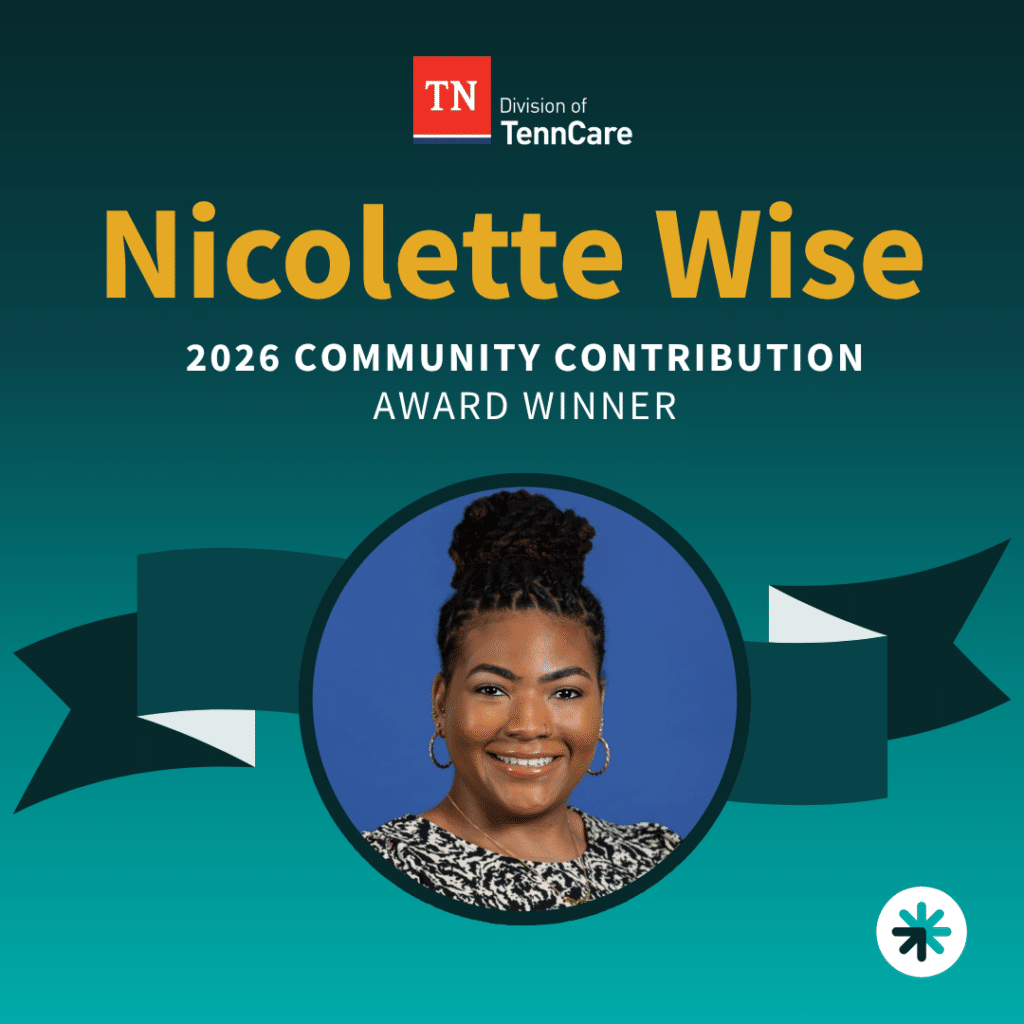
“It has been such a pleasure to work with Nicolette and the TennCare team for the past year and a half. Their dedication, expertise, and commitment to Tennesseans is inspiring and will continue to lead the way in social care innovation across the country. Extending my biggest congratulations to their teams. Thank you for all your hard work to make Community Compass successful!”
Alison Steinbacher
Associate Principal of Customer Success, Findhelp
Under her leadership, the system has already facilitated tens of thousands of referrals, proving that massive state-wide infrastructure can still feel deeply personal and community-focused.
Okay, everybody. Welcome. Our session is titled Tennessee Community Compass, Tencare’s approach to a statewide CLRS. My name is Allison Steinbacher, and I’m an associate principal on Findhelp’s customer success team. Thank you for being here today. Before we get started, just a couple of housekeeping items for you all to be aware of. This session is being recorded. You will get access to the recordings on Friday, May fifteenth. If you have questions throughout the presentation today, please use the q and a tab at the right side of your screen, and we’ll do our best to answer all of your questions at the end of the presentation. With that, I would like to introduce our speaker for today, Nicolette Wise. Nicolette is the director of social determinants of health at TennCare. She works diligently to design and lead community based strategies that address the root causes of health across the state of Tennessee. I’m gonna go ahead and turn it over to Nicolette to get us started now. Hi. Good afternoon, everyone. As Allison mentioned, I’m Nicolette Wise. I’m the social determinants of health director at TennCare, ten Tennessee’s Medicaid agency. I’m really excited to be here and talk more about our find help or find help as our closed referral system, also known as Tennessee Community Compass. So here’s an agenda just to level set us for this next hour or so. I’m gonna talk a good bit about some background and vision as it relates not only to our closed referral system work, but our larger social determinants of health strategy. And then I wanna dive into some key features of our platform with find help as well as well as how we think about unifying the ecosystem to support health related social needs and then also how we’ve thought about scaling and sustainability in this work and as we look into the years ahead. Alright. So I wanna level set. I don’t wanna assume that all of us here in this group are on the same page, though. I feel pretty confident that we are. Wanna just start with this really popular tagline that health care alone is not enough. And as a public health practitioner and prior to become prior to before before I came into the, the Medicaid space, I did a lot of work in the public health space where we knew that social determinants of health were really the key drivers to health and clinical care was not going to solve or improve health outcomes alone. So, social needs really do go unidentified, and they go unmet. And part of the reason for that is there traditionally hasn’t been a an opportunity to meet individuals where they are and identify those social needs. And as a result, they go on to impact the the health outcomes of individuals. We also know that systems are fragmented across health care and also across community organizations. And what that really means is that what’s happening in the clinical space or what’s happening in health care may not necessarily make its way over to community organizations, or there may not be any formal or informal partnerships between the health care space and the community organizations to really facilitate high quality cost effective care across the continuum. And then lastly, we know that those referrals that exist to meet identified social needs, they lack visibility, so we don’t know who can see them. We don’t know who is necessarily taking ownership or accountability of meeting those social needs or or meeting those social needs through the services. And then we also know it’s difficult to track whether or not those needs were met through those those referrals and the services that are attached to them. So with that framing, we about five or six years ago here at the agency agency started to think about this new model for whole person care. And we didn’t do this unilaterally. I don’t think that we were the only state agency that was thinking about this new model for whole whole person care. And in fact, we found that a lot of these components that we thought about were also being, considered by other state agencies, whether that is Medicaid, health, human services, or otherwise. So I wanna just kind of walk through what these four key concepts are here on the left hand side of the slide and and what that means in the whole person care model as well as in the social determinants of health space. So the first is the integration of social needs into care delivery. So as I mentioned on on on the previous slide, health care alone is not enough, but there has to be an intentional integration of social needs being addressed in the health care system and in care delivery. And whether that exists in the outpatient setting, the inpatient setting, or in other spaces, we know it’s really important for that integration to be intentional. And next, we we think about the idea of connection. And the connection not only to resources once identified once needs are identified, but also the connection between those clinical and community ecosystems or community based organizations that can really help facilitate the meeting of those social needs. And then next, we have this idea of tracking. There are several, threads and points within my presentation today around data, but we we know that data is not the full picture. But in order for us to really see a return on investment, for us to understand the impact that we’re having, it’s important for us to be able to track those outcomes beyond the point of referral. So it is great to know that a referral was placed, but what happens after that referral is really important, especially in the immediate term. And then as we think long term and look at those health outcomes and the improvements of those health outcomes, we have to be able to track that in some way. And then lastly, this idea of building sustainable and scalable solutions is really important. We, at the agency, put a lot of emphasis on thinking about scalability and sustainability throughout all of our programs, especially here in the social terms of health space. And we we try to integrate that into the strategy as we’re building out our programs. Alright. So that leads us to our health starts initiative. So as I mentioned, we started thinking intentionally about whole person care, social determinants of health, health related social needs about five or six years ago when I started here at the agency, and we developed the Health Starts initiative as a result of some really intense strategic conversations. And it is our approach to whole person care. And what health starts is is our our, this idea that by focusing on the conditions where individuals live, work, and play, we can improve the health of of our member population. Ten care covers about one one point five million individuals. And so, when we think about the impact that addressing social determinants of health can have across our population, it’s it’s it’s really significant. And then when we think further about the the vulnerability that exists in the Medicaid population as we’re covering primarily, pregnant individuals and children, we know that it’s extremely important for us to be intentional in how we intervene or how we provide systems for intervention to exist in the health related social needs space. So the the depictions here below just really kind of further delineate how we we think about social terms of health and and that it really starts before illness, and it’s important for us to prevent and address needs early. And that prevention doesn’t necessarily just exist in the social determinants of health space. We also have a strong population health models that help support early intervention, and also support consistent early and periodic screenings, vaccinations, and other other efforts to support overall health and well-being across our member population. We also know that communities and and social ties are really important, and health really does begin there. And we think about, in our homes, having safe and stable housing, having electricity in housing, to make sure that refrigerators work, air conditionings air conditionings work, making sure that air filters work to ensure that that environment is extremely healthier, as healthy as can be for our members, but also in schools and understanding that individuals that schooling is individuals, do put it there’s an emphasis on education for all individuals and not just for children. We have a a significant portion of our population that desires to, improve their education, go back to receive more education, and that is a really strong indicator of of health and the ability to achieve optimal health outcomes. And lastly, in our jobs, we spend a lot of time working, and, it’s really important that we’re able to do that and to do that healthily and to be able to show up to work as our best selves. So with that in mind, we have our Health Starts vision, but then we also have our our vision or our Health Starts program and then our vision for whole person care and for Health Starts. So this this top tagline is really how we think overall about health related social needs and social determinants of health care at the agency. And it says that a health care ecosystem where health related social needs are not an afterthought, but a foundational element of whole person care. And what this means is that we want social determinants of health, health related social needs to be integrated into the fabric of of care models. And whether that is in the inpatient setting or outpatient setting or otherwise, we want it to be a part of the day to day tradition that exist in the clinical space, and we recognize that is a really significant, and lofty goal. But we’re hoping that through our strategy and some of our guidance that we can support providers and others to be able to do this work and to do it more continuously. On the left hand side of this slide, you’ll see, there is a a Venn diagram here that really depicts our existing population health and data ecosystem. And each of these bubbles, excuse me, each of these bubbles are attached to, different role players in our population health model. The first is our MCO model of care. So this essentially says, how is it that our managed care organizations are providing care and support to their member population? As I mentioned, there are robust population health models that exist across our managed care organizations, and there are significant insertion points for health related social needs within those models. We also have risk stratifications and other concepts that really support identifying opportunities to improve the health of individuals based on their current state and based on their their living, based on their circumstances. We also have provider care delivery, which is very similar to the MCO model of care in that it is based it it really means how how is it that providers are providing adequate care to our members. We have some providers who have been have integrated health related social needs practices and social care practices into their into their care models for many years prior to to to TennCare really diving into this space. We have others who are still kind of dipping their toe in the water and trying to understand how to integrate this meaningfully. We also have some providers that have integrated social supports, if you will, within their practices, such as food pantries or clothing closets. So there’s a wide spectrum of how providers provide care to our members, and that’s really what that particular portion is about. And then next, we have our CBO network. And this is not just community based organizations. It also includes our nontraditional health care providers like community health workers and doulas and lactation consultants and how they’re able to, insert themselves into the clinical model of care while also maintaining integrity in their role. And, for the CBO for the CBO piece, it is CBO’s ability to provide services such as food boxes and clothing and utility assistance to our members and how that is probably one of the most critical pieces to this puzzle and standing up a program, for health related social needs that is sustainable and scalable and also reflective of what our members need most. On the right hand side of the slide, this just talks a little bit about our work streams here in health starts. I’m gonna focus today on b, technology supports, but do wanna provide just a little bit of context in provider partnerships as well as workforce development. Provider partnerships is our program specifically related to addressing social needs in the provider setting. And the provider partnerships program is our most mature program, and we actually use a lot of the learnings from that program to fuel how we think about technology supports or our work with find help through Tennessee Community Compass. And workforce development is our approach to integrating nontraditional health care providers like community health workers, doulas, lactation consultants into care models. And the this is actually one of our newer programs and happy to talk more about either provider partnerships or workforce development offline or if we have time during questions and comments today. Alright. So this is my last vision slide, and then we’ll really get into into the meat of the presentation today. So this particular slide is our vision for Community Compass. And I should also say Community Compass has been a labor of love for us for many years. For those that are familiar with procurements, they are tough, and we we spend a lot of time, a lot of resources in in building out what we thought an ideals an ideal system and platform would be. And and Findhub has been an absolutely incredible partner in this journey with us as we’ve been, trying things and, not trying things, placing things into the model, and moving things out of the model. But, overall, our the structure and the purpose and the vision for Community Compass has remained the same even as we’ve learned along the way. So three primary buckets here as we think about community compass and and what we really want to accomplish and what we want it to be involved in the system. The first is that we wanted to be able to strengthen CBO relationships. As I mentioned on the previous slide, CBO relationships or the CBO network is a really critical piece to the to the puzzle of addressing health related social needs. Individuals can have needs identified, but if there is nowhere for an individual to go to get a referral to have those social needs met, then actually identifying those social needs doesn’t really do much other than providing a data point and and placing an individual in a space of vulnerability to disclose the fact they have needs, but then we’re not actually doing anything to achieve them. So within the CBO relationship space, we really wanted to support the work that CBOs do, recognize that they are not medical providers. We didn’t wanna overmedicalize the CBO space and encourage reliable referral pathways. We also wanted to ensure that programs are claimed and actively accepting referrals, especially in rural areas where there may not be a lot of referrals or a lot of, referral options for a particular individual. We recognize that not all CBOs are in a place to receive referrals, and that’s okay. But we we put a lot of emphasis on ensuring that we can build out that model as much as we can to build out that network as much as we can to support our members as they’re being referred to services. And then lastly, recruiting and incentivizing CBOs to join focused network. So we’ve done a lot of work with our managed care organizations, a lot of work with Find Help and the Rural Health Association, which I’ll talk a little bit more about later, to, recruit and incentivize CBOs to meet certain milestones in order to improve or enhance their engagement with the platform. We also, wanted to focus on a unified approach to addressing health related social needs. And what this really means is ensuring that there is loop closure from MCOs and, providers, state agencies, CBOs, or and even the member. And we also wanted to leverage the connectivity and the data congruency to provide streamlined care and support that consistent member experience. As I mentioned, it’s not always about the data point, but we all we wanna make sure that the members are actually getting the help that they that they need and also to ensure that there is a level of of transparency across that across that data flow. And then lastly, we wanted to measure the impact of addressing health related social needs. And and this is a place that we we spent a lot of time thinking, but we’re also very early on in our in our integration of Tennessee Community Compass. And so haven’t been able to look at some of those longer, or some of those outcomes that take a little bit longer to realize. But we did wanna start the process of collecting meaningful data and developing an integrated database to to store that data so that when we’re ready, we can pull that data out and begin to bump it up against some of our other data sources here at the agency. We also wanted to emphasize standardization and alignment in data elements that are being reported, and that’s really across our MCOs to make sure that we’re comparing apples to apples and oranges to oranges. If we’re continuously gathering different data points from all of our different partners, there we have we don’t have the ability to really track and and scale and to do that to do that intentionally and meaningfully. Alright. So here are the four kind of primary concepts within Tennessee Community Compass. So these are not unfamiliar to the social care space. We’ve just kind of thought about how do we adapt these to our particular population and ensure that it works with our strategy and what we’re trying to achieve in in the long term. So the first is a social needs assessment. Social needs assessments are embedded either in our managed care organization case management systems. They are also embedded within key provider partner EHRs. And and what that does is it really improves the the experience for our partners in ensuring that they have a streamlined, a streamlined way to address health related social needs. One thing that’s really unique about the model here at TennCare as we are kind of leading the way for for Tennessee in a statewide closed loop referral system is that we are social needs assessment agnostic. So, we are open to whatever screening tool a particular partner would like to use. We do have a a set set a set of domains that we are particularly interested in, which includes food, housing, transportation, and then navigation supports, which is an intricate category, but essentially says that there might be a particular organization or a a CBO specifically that can provide support to an individual to assist with, receiving housing, for instance. So maybe that’s helping with an application. So that’s not that doesn’t fit very clearly into one of those other three primary domains, but is one that’s really important and we found to be critical in this space. Next is the community resource directory. We wanted there to be a public facing directory, which we have, in in a public URL where individuals can, can navigate that re that resource directory on their own, but that resource directory is also integrated into those, it’s a part of the integrations for all of our our partners, and they can customize feature programs, favorite folders, and all of those things based on the community resource directory and their organization’s needs. We also wanted there to be, and there exists the referrals to community based organizations, which I think kind of goes without saying. We have many partners that are sending referrals to community based organizations. We also have instances in which individuals decline referrals, and that’s also okay. But we wanted that functionality to be there, and it is it is definitely being used in in our our current model here. And then lastly, the social needs outcomes and tracking. This might be the last time I say tracking in the presentation. It may not. I’m not sure. But it is something that’s really important for us here at the agency, and and this really is a critical point to ensuring that we are meaningfully integrating the system and and meeting folks where they are and meeting the needs of our partners, and we’re able to do that through through tracking data. Alright. So I’ve I’ve talked a little about the kind of care models that exist at the provider level and at the MCO level. And I wanna kinda just talk a little bit about kind of what was the previous state before we, went on this journey to find help with community compass and then kind of where we are now that we have a a statewide system. So before, there’s a lot of different approaches across managed organizations and providers and how they, one, screen for social needs and then also how they’re connecting individuals to resources. So, some providers just had a list of community based organizations on the fridge in the break room, and, they would just go to that list and say, here’s the food bank that we love. Let’s send let’s send our our patients there. In other instances, there are just community advocates and community experts that know exactly what resources are available, and they’re just pulling those out of the top of their head, sharing them with their with their patient or whoever’s in front of them at the time, and and then going from there. So no release no standardized approach, but there’s also the inability to really ensure that that information is accurate and up to date. If a community based organization changes their phone number, that that list on the fridge in the break room is not gonna change. And so we wanted to to try to provide a little bit of certainty in in the quality of the resources, but also ensure that there are adequate resources regardless of location and and across the state for individuals to place referrals. We also couldn’t scale across the ecosystem because we just had too many too many perspectives and too many approaches to really be able to have a refined approach as we move forward. And then TennCare at the time had no visibility into processes and data outcomes. We were solely just the receiver of information from our managed care organizations or from our providers, and we had had no say in kind of data points. We had a little bit of say with our managed care organizations, but generally speaking, not a ton of control over over that social care process. And so now we pretty much have the antithesis of that through through the platform, and and we’re really excited about how we’re able to to take the the continuity and the congruency that exists now and and use that to inform how we scale and how we strategize in the coming years. So this slide really just kind of depicts the entire social care workflow that exists across our partners. So there are some variances in each of these. For instance, obviously, I’ve mentioned our screening tool or the screening tool approach, and that looks different based on our partners. Some of them have longer screening tools. Some of them are a bit shorter. We have some that use prepare, some of them that do not, some of them that use homegrown tools. So it really just depends on the organization and what their needs are. And then there’s an opportunity to identify gaps or identify those needs through through those assessments. And then we match to the resources. They refer to resources, and then TennCare receives that data back for TennCare members only. One thing that I’ll also mention kind of in this workflow as we’re thinking about the provider setting specifically, providers can leverage this workflow across their patient population. It is insurance agnostic. Individuals can be commercially insured, Medicare, Medicaid, or uninsured, and they can leverage this exact same workflow. That was really important to us to ensure that providers were not experiencing a level of abrasion because they were trying to decide, well, this is a member, so I have to do this particular workflow. But when I move to another patient that does not have TennCare, then I have to come out of this workflow. And we recognize that an individual may not have TennCare today, but they may next month. And so if we’re able to meet their social needs while they’re not a TennCare member and they eventually become a TennCare member, then we’re already, when we enter into, into their life circumstance, we know that they’ve already had some social needs that have been identified and addressed and hopefully on a pathway to become healthier. One other key feature that I I wanna highlight that I think is extremely valuable, and I would also say is probably one of the the the features that we explain the most and sometimes get the least amount of understanding, and so we reexplain it. And so through that process, I’ve learned how to explain this probably five different ways to a lot of different groups. But this particular feature is called our coalition feature, and it is structured care coordination. We thought it was extremely important for us to think about how is it that we can ensure a few things. One, that if an individual is seen by multiple folks across the TennCare health care continuum, and they have leveraged or they they interacted with Tennessee Community Compass in one of those circumstances, how can we almost guarantee that wherever they present next knows that they have that interaction with Tennessee Community Compass. And and coalition consent or coalition allows us to do that. So the coalitions enable a secure, organized collaboration across entities that are leveraging Community Compass, and there’s proper data segmentation for the sake of security and privacy. And then that’s also based on our managed care organization membership. MCOs are all in their own coalition, and that allows for separation of workflows and for data. And as a result of that that separation across MCOs, we’re also able to ensure that if an individual falls off of TennCare coverage and then comes back on to TennCare coverage and then they move to a different MCO in that process, there’s no visibility that exists across the MCOs. There’s also permission based access. So only users are only able to view, refer, and report within their designated coalition. So they can’t jump from coalition to coalition. There’s also referral matching logic. So members are matched to the correct coalition based on their eligibility and the manage your organization assignment. And then lastly lastly, there’s some custom commit configuration. And this custom configuration also includes the ability for, individuals to, have their own consents for coalition as well so that exist on each of their white labels or may exist within their assessments. And and so that there’s a high level of customization across the board with coalitions. But at its core, we’re accomplishing the same, the same thing. So one example that I like to give to just add a little bit of color to how coalition plays out in practice is if we have one individual who, is with their MCO, in case management, and they are screened for social needs using Tennessee Community Compass. They opt in to coalition. They say, yes. I wanna be a part of coalition and share my data across the coalition. And then they receive a food box from their MCO or receive a referral for a food box from their MCO. And then let’s say the next month, they go over to one of our health care providers in West Tennessee, and they are West Tennessee is is using this particular using Tennessee Community Compass. They would be able to see that this member talked to their MCO a month ago. They received a food box as a referral or as an opportunity to meet a social need, and they can follow-up on that referral. They said, hey. I did you get your food box? Yes or no? Did you if you didn’t, can I give you a different referral to get another food box? And that’s really important because sometimes folks get lost in in the pathway, and referrals get lost in the pathway if there is no additional follow-up that happens afterwards. And we wanna make sure the individuals are getting the help that they need when they need it most. And so coalition consent allows us another opportunity, another intervention point, and an an informed intervention point that does not cause member abrasion by reasking the same questions. And and and that’s really important to us to ensure that we’re protecting the member throughout this this social care workflow. Alright. So this next concept of unifying the ecosystem, I’ve talked a little bit about of how a little bit how a little bit about how Tennessee Community Compass is being leveraged across our ecosystem, and we’ve engaged key partners across the care continuum. So a wide variety of folks that are leveraging Tennessee Community Compass. The first are providers. We have some value based payment providers such are such as our patient centered medical home population as well as our Tennessee HealthLink population, which is a behavioral health value based payment program here at the agency. And, a lot of those providers were already integrating this work into their care models, and so Tennessee Community Compass is is merely a complement to that workflow. And then we also have large integrated health systems. Some of those are leveraging it within their maternal health population. Others are leveraging it in their in their ED and and in their outpatient clinics. So there’s a wide variety of approaches based on the particular provider or health system that might be leveraging the the platform. We also have our three managed care organizations, which I’ve I’ve talked a good bit about today, and then we also have state agencies. And one of our state agencies right now is Tennessee Department of Health, and they’re leveraging the platform in three of their programs. One of which is a care coordination program. The other is viral viral hepatitis, and the other is evidence based home visiting. And it’s been really exciting to see how Tennessee Community Compass can exist in in kind of the nontraditional provider space through the health department. And we also know there’s a lot of overlap that exists between TennCare member and also health department presentation. And so we’re excited about the ability to to kind of look at that data and understand how we can serve our members better based on where they’re presenting across the state. So next, I think probably one of my favorite topics in in this work is community engagement and how we’re building a strong network to ensure that we are supporting members in in the referral and social, in the social services process. So, find help has partnered with the Tennessee Rural Health Association to support the community engagement work for Tennessee Community Compass, Tennessee Tennessee Rural Health Association has done a lot of work in the community and and definitely will be considered experts across the board in in how they have built relationships over the years to to meet CBOs where they are, to provide advocacy and resources to support organizations across the state, not just in in rural in rural places. So here are just some some key concepts that exist across the community engagement work stream of the larger Health Starts or the larger Tennessee Community Compass work. The first is the training and onboarding of CBOs. We recognize that not all community based organizations will want to leverage a technology platform, but for those that do, they need training and support to make sure they’re able to do that and to do it efficiently. There’s also the expanding of the resource directory and increasing the engagement across organizations. So what this means is that we wanna make sure that the organizations that are in there are the organizations that are in there are are ones that are able to meet the needs across our population, but we also want to increase that number if we can to make sure that there’s an adequate volume of organizations to meet to meet folks where they are. There’s also the supporting of participation statewide, so making sure that there’s representation across the state. Tennessee is a very wide state, and there is a very wide range of needs that exist. We have very rural areas. We have a very urban areas. And each of our regions of the state, we think about them in east in the east, middle, and west. Each of them have kind of their own personality, and and we wanna make sure that there are state there’s statewide support and representation across the state to not necessarily just meet those personality types, but making sure that the rural areas have enough resources. The urban areas also have enough resources. And and then lastly, we have ensuring that those accurate those programs are accurate and up to date and monitoring how active they’re being or how engaged they’re being in the platform so that if if RHA or Find Help needs to intervene to provide necessary support to those organizations, they can do that. Alright. So as we think about, this concept of data and how that that fuels and informs our decisions, the first concept that I wanna talk about is is just this idea of making social needs visible, and that really is, has been really important to us, and and Find Help has done a lot of work in providing really robust dashboards to support data visualization for us. So we have geographic insights through heat maps. We have, the ability to see member level insights as well. So we have PII dashboards. We have aggregate dashboards. We can, track how referrals are how many referrals have been sent out, how many screenings have been done, what those look like across all of our partners, many filters and stratifications across across the across our dashboards. And then the secs the the second is how we’re we’re driving better outcomes through this data. So we’re able to identify gaps in services, allocate those resources effectively, and then also being able to measure impact across populations as well as improving that care delivery over time. Improving care delivery over time is is one of the things that’s, as I mentioned, very significant, but also one of the things that takes a little bit more time. And so we’re continuously thinking about what data points and elements are important to us in order to inform that process and that future work. Alright. So some key insights that I wanted to share with the group here. These are really tied to what we some of these are are based on what we learned, as I mentioned, very early on through provider partnerships and how we use that to fuel the development of of community compass. And then others are things that we’ve learned as we’ve been in this work with find help over the last, few years and and things that we think is important to share with folks that might be interested in or in the early stages of embarking upon a similar a similar, pathway. So the first is intentionally designing a system to support our key partners. We prior to to jumping into this work with Five and Help had a very clear vision of who we wanted to to to be impacted by a statewide CLRS. We knew we wanted our management organizations. We knew that our value based payment providers were were also, very interested in in viable candidates to leverage the system. But we also wanted to make sure we’re being very intentional about receiving feedback from those partners along the way and and adjusting workflows, adjusting capabilities and functionalities to support them. The next is considering the community resource directory, a key facilitator of success. We heard this from several other states as we’re doing our our kind of landscape analysis. But in practice, we found that this was in extremely important. And and FindHub has done a lot of work in ensuring that all partners are able to submit the the community resource or the community organizations that they want embedded in the community resource directory. If those meet the standards and the qualifications and criteria set out by Find Help, then they add those programs. And that’s really important to us too because there are organizations that I’ve mentioned that have already been doing this work. We’re already leveraging some sort of informal community resource directory, and we’re comfortable with certain organizations and services. And so having that level of familiarity embedded into the platform is is really critical and improves the overall experience of the platform, and then that goes on to drive the data that we’re able to extract. So lastly, I wanna talk about scaling and and building for sustainability and kind of how we think about that here at the agency and through Tennessee Community Compass. So I’ve talked about how we we started off with this statewide infrastructure, procured our own contract that is owned by the Medicaid agency to stand up a statewide closed loop referral system. And then we’ve got this idea of cross sector collaboration and and being very intentional about the feedback that we receive from our partners being very collaborative across our partner organizations as well and making sure that we’re not not operating in a silo and that we’re also speaking to the things that are truly our area of expertise and not speaking to the things that are not our area of expertise. Our providers know what works for their for their population. They know what they need their staff to do, and sometimes they they just need the the infrastructure to do that. It is our job to provide the infrastructure, and to not overstep into into their area of expertise. And then, that kind of takes care of the continuous feedback and the improvement and making sure that we’re embedding, embedding the feedback timely so that they can start to see the changes and the differences in their experience as a result of the integration of that feedback. And then lastly, it’s the ability to scale across populations and regions. So, as I’ve mentioned, we’ve got several partners across, across the care continuum and across the state, and, each of them are thinking about scaling this across their their patient populations. Our MCOs are already scaling across their member populations and really are focused on how do they increase their touch points with members in order to integrate the social care workflow into their processes and to touch more members and ultimately improve health outcomes in that way. So what’s to come for us? So I I talked a lot about our vision, where we are today with Tennessee Community Compass, and we’ve we’ve got a lot more work to do. And we’re really excited that we’ve been afforded the opportunity to do that, especially through the rural health transformation program. And we’re actually gonna be expanding to three other state agencies. So I mentioned health is is leveraging it with three of their programs. They’re gonna scale it across their their state agency over time. We also have our department of human services as well as disability and aging that are gonna be leveraging Tennessee Community Compass through the Rural Health Transformation Program. And we’re incredibly excited not just for the data points, but for the opportunity for other state agencies to have an to have the option to integrate such a powerful workflow across their population and and then for us to be able to share data with each other and to inform our strategies as we continue to do this really meaningful work. Also, Tennessee Community Compass as a result of r h of RHT will be funded through twenty the end of twenty thirty one, and that is monumental for us in that we we recognize that that funding and, well, finances in general are a really tough space to live in, specifically with social care when there’s billable codes are not in play, and there doesn’t seem to be a consistent pathway for financial sustainability. And so we’re excited about being able to maximize our time up until twenty thirty one, but we’ll also continue to, to to ensure that we’re talking about the value of Tennessee Community Compass, talking about the impact that it’s had on our member population to continue this work well beyond twenty thirty one. Those agency implementations that I mentioned will occur simultaneously and simultaneously ish, if you will. So it really depends on where each agency is. They’re all in different places in their social care work, but we we plan to roll it out relatively simultaneously across those agencies. And then, also, each of them will have agency specific scopes to support that implementation, and we’re really excited about Craig Dalton joining that work. He’s been our state director. It’s been fantastic and has really been leading the statement of work development and also helping us think about strategy and governance across the board. So, with that, that is the end of my, my slides as they of me talking, essentially. But I wanted to pass it to kind of the to the attendees here and just get a a feel for who all we have in the virtual room with us and and kind of maybe inform some of our our questions as we move into that portion of the discussion today. So the the poll that is on the screen is where is your organization in charting for own social care road map? And there are five different options here. The first is exploring opportunities to implement social care workflows. So maybe you’re not quite there yet, but you’re really interested and wanna think more about how to do that. Then there’s also your screening for health related social needs. That’s the second option. The third is establishing partnerships or CBOs and or CBOs, and in doing that somewhere in the health care continuum that you work within or the health continuum that you work in. And then investing in technology to support workflows is the next option, and then building toward a closed loop referral system is the last. So we’ll give you all a few moments to tackle that poll. Yeah. Thanks, everyone. Thanks so much, Nicolette. Your presentation, and it was so great. It’s awesome to hear about the wonderful work that TennCare and your partners have been doing over the past couple of years. It’s been an honor, from my perspective to be a part of this work. We are seeing some of those, polls come in now, which is awesome. Please, take a moment, vote in that poll. I know it only gives you one option. So if you can just choose the the top one that you’re focused on, right now, that would be wonderful. Looks like building towards a closed loop referral system is winning with forty five percent right now. Alright. Thank you all so much for your responses here. We’re gonna go ahead and transition over into our q and a section. So if you haven’t already, please go ahead and add some questions into the q and a session section on the right hand of your screen there. Nicolette, we do have a few questions that have come in so far. The first one is what kinds of incentives are you giving CBOs, especially small ones? Absolutely. Good question. So there are financial incentives, unrestricted funds, which is we’ve learned very nontraditional, and and we support kind of leading the pathway of innovative opportunities to to support CBOs. It is milestone based, so it’s not just an upfront funding model. They are having to meet milestones along the way over the course of the year in order to receive those funds. They also are some of those milestones include training and keeping their information up to date, meeting certain referral benchmarks. And the we’ve actually just reworked our incentive model. So in this new model, there is kind of a control for large organization versus smaller organization, but there is there’s no size restriction on organizations that can be a part of the incentive model. Our managed care organizations help to inform which organizations will be included in that incentive model, and that is supported by data and engagement that exist in the the Community Compass platform. Awesome. Thanks, Nicolette. Any other questions that folks have? Please go ahead and drop those in our q and a. I see another one in here, but I think it was meant to be a response to our poll. Yeah. What questions do folks have about the the innovative work that Tencare has done? Okay. Well, I’m gonna go there’s, okay, couple that have come in now. There’s a question about timelines for disability and aging. Nicolette, do you wanna speak to that? I can speak to it the best that I can. I don’t have a timeline for disability and aging, mostly because we are still in the contracting process for the real World Health Transformation process. So we have several steps before we get there, before we’re able to really think about timelines and implementation. World Health Transformation has a very strict time line for, getting funds allocated, getting contracts signed, and so we’re we’re sticking to that very, very closely. So we’re hoping to start our work later this year, around September or October, and then implementation will will fall after that. Awesome. I’ll ask you a couple questions since, I know there’s there’s questions that we get frequently. What where do you see Tencare and your provider partners going in terms of integrations and innovations in technology moving forward? I think that’s something that comes up really frequently in the work that you and I do day to day. Where what successes have you seen with some of our our partners, and and where do you wanna see those those partners go in the future? Yeah. That’s a really good question. You know, there, the integration piece of this work has been really critical for a lot of organizations. I think more critical than I than I anticipated. We have some organizations that start this work, and they’re like, we want the Cadillac version of integrations. We want all the things. And it it is really exciting to see that they’re willing to kind of take on the lift of technology to support social care. And I think it really speaks to the investment that they’re willing to make into social care and how critical they they find the space to be, which is kind of a flip from from where we were ten to fifteen years ago in the health care space where clinical providers were saying, this is my lane, and I’m staying in it. It had nothing to do with social care. So as we continue to look forward and think about rolling this this platform out to other organizations, I hope that we can continue to see EHRs that are that are willing to integrate, to find help to support a variety of different providers in in their integration of of Findhelp in their their care models. And then I also hope to see that there are opportunities for organizations to really leverage the data that exist in those integrations and in those platforms to drive their own in their own quality improvement at the clinical level. So we use a lot of that data on a on a member population level, but I think there’s real opportunity for for providers to leverage the platform to drive some of their data and to improve how they provide care to their members across the board. Absolutely. Such a good point. The the data is something that comes up all the time for us, and I think, working continuously towards how can we leverage that data to show the great work that we know is happening, with our partners, across the state. Another question for you, Nicolette. What challenges or hesitations did, senior leadership express when building this up? How how do you get everybody onboard the ship to to get this officially launched when you first started? Yeah. Good question. You know, I’m I’m really fortunate to work at an agency where leadership is extremely supportive. I I think in some ways, our our chief medical officer was more excited about it than I was some days and and and really is an advocate for us across our executive executive leadership team at the governor’s office during during legislative sessions. And and and so not a ton of pushback from that perspective of why do we need the platform that doesn’t feel like a good investment. One thing that we we had a a point of contention for us in any sort of technology platform, but especially this one because it was so new, is getting CMS to understand the platform and understand what it actually does and how it is used across across the health care landscape. So we have great teams here at Tencare and resources at Tencare that helped us to kind of sell that particular portion of it. The other piece, I would say, is from a security and privacy standpoint, we’ve had a lot of conversations with our internal teams around that, and making sure that the system is secure and making sure that it is meeting all of the very specific benchmarks for TennCare as a Medicaid agency. And so not necessarily a a man an insurmountable challenge, but one that we’ve spent a lot of time on, especially during the development of our request for proposal and then once we got into implementation and started to see these things in practice. One thing I would say as far as challenges related at the at the legislative level, we put a lot of emphasis on on member stories and and really telling how members have been impacted or providers have been impacted by the initiatives that we’ve done through Health Starts, and that includes Tennessee Community Compass. And so we’ve put together some really, really strong member stories, and we look to our partners to help provide those to us. And I think that helps with mitigating some of the the uncertainty around, like, does this actually work, and does this actually make sense? And and once again, another plug for our amazing chief medical officer who does a great job of telling those stories in in front of the right folks and ensuring that we continue to receive funding and receive support to continue to continue this work. Awesome. Couple of other questions, before we close out for today that have come through the chat. Can you talk through the incentive milestones that you mentioned for referrals a little bit deeper? Sure. So the intensive milestones, I don’t have them up in front of me right now, and, also, we haven’t quite got to full finalization. So I don’t wanna fully disclose the the next incentive model because it’s not final yet. But an example of the referral milestone specifically would be if an organization a community based organization has received a referral, did they respond to that referral in a reasonable amount of time, and did they do that at a reasonable proportion of the time? So let’s say that reasonable amount of time is five days, and then the proportion is that they’re doing that eighty percent of the time. And then another milestone would be on the closed loop side. If an organization receives a ref a referral, are they closing the loop on that referral? And what is that closed loop rate? Is that eighty percent or ninety percent? And so if they’re able to meet that milestone quarter over quarter, then they receive the payment. It is quarterly based payments, though. So they can meet a milestone one quarter and not meet it the next quarter. It is not an all or nothing incentive model. So we we know that organizations can sometimes be in flux, especially recently where there was a lot of shifts in funding for community based organizations. We wanna make sure they had many opportunities to meet milestones and meet milestones throughout the year as well. Another example of a milestone is loading their organization into the resource directory and turning referrals on. That is a milestone, and they can receive payment for that. So not all of them are database. Some of them are purely just action based. Did you do this thing? Yes or no? Really to set them up for success throughout the rest of the quarters. Hope that helps. Absolutely. Yeah. I think there’s different stages of this. Right? And we what Tencare has done a great job of recognizing is that every org is really at a different level of this, and there’s different levels that might be appropriate based on the type of organization, their size, what they have available for volunteers versus employees. So I think it’s been, great to watch how, that flexibility has really allowed for increased participation of CBOs. Okay. I think we have time for one final question that came through the chat here. I’m gonna modify it a little bit just because I think that there’s, some it’s it’s a good question, but I I kinda have it for a little bit more broad than was asked in the chat here. So, what implementation barriers do you expect as you continue to expand and roll out to other agencies like the health department? And then what are you most excited about with the expansion and rollout that we’re planning through twenty thirty one? Yeah. Good question. So the good news is TennCare does have to own that implementation that implementation plan for those other state agencies, which we are grateful for because it is a a tough undertaking, but we are definitely gonna be great partners to our other state agencies as they are embarking upon this journey. As far as challenges, you know, the health department is is expansive, and there’s a lot of different programs. There are a lot of opportunities for them to insert this sort of work into their their model as as it exists today. And I think whenever you’re looking at a larger organization, the change management piece is probably the biggest, in understanding that there are well integrated processes that exist for these teams and across these departments and and asking them to kind of uproot those in some ways or to switch some components out to be able to support the integration of Tennessee Community Compass or any sort of technology platform is a is a really significant challenge. So I I think that’s the case really across all the state agencies. Change management is is is a really big one. I think the other thing is is really figuring out for each state agency, and I think this goes for anyone who’s standing up a closed referral system or even thinking about kind of a social terms of health strategy, understanding what the actual outcomes are that they’re looking to assess and being able to back out of that and determine what data points they need to receive and then take another step back and say, how is it that we get there? And and that’s something that takes a lot of time. It is an iterative process. And sometimes there are moments where you think that one data point is the right one, and then you find that there are significant gaps in that. So for any sort of any state agency in their implementation process, making sure that they’re really intentional about intentional about and bring the right resources to the table to think about those really critical those really critical questions that set them up for success in the long term. Wonderful. Thank you so much, Nicolette. Great responses. Great discussion today. With that, I’m gonna go ahead and close this out for today. Before you go, please, we we would really appreciate you taking our survey on how helpful this session has been for you all. Really, really appreciate your participation and attending today. Hope you have a good rest of your afternoon or evening wherever you’re at, and thanks again.
CONNECT SUMMIT 2026
Discover how TennCare is transforming member outcomes through the Tennessee Community Compass (TNCC), a statewide movement toward equitable, holistic care. See how they integrate SDoH into clinical care, unify the state’s social care ecosystem, and drive health outcomes.
Dallas College
Improving student persistence by 70% with Findhelp Fulfillment
As the Dean of Basic Needs & Student Care, Stephanie is proving to the higher education sector that student success depends heavily on meeting basic needs.
Dallas College has built a nationally recognized, data-driven social care model. Instead of just handing students a list of phone numbers, Stephanie uses Findhelp Fulfillment to provide immediate, tangible aid.
“It’s inspiring to see the level of care Dallas College shows its students. It goes beyond the classroom—there is a genuine focus on holistic wellbeing. Their recent Findhelp case study is proof that all those hours of hard work and determination are paying off for their students. I feel so proud just to be a part of it. Huge congratulations to Stephanie and everyone on the Dallas College team!”
Taylor Olson
Customer Success Manager, Findhelp
Today, Dallas College seamlessly connects students to thousands of essential programs—even providing instant Uber Health rides and emergency gift cards to bridge critical gaps. Her innovative approach is directly driving student retention and rewriting the playbook for workforce development.
Good afternoon. Welcome to our session this afternoon, From Crisis to campus response, and statewide housing infrastructure in action. Join the Nebraska Investment Finance Authority, NIFA, and Dallas College to explore how integrated technology and housing policy creates stability for both statewide populations and students in crisis. I’m Lisa Boyle, senior customer success manager here at Findhelp. Before we start, a few housekeeping items. This session is being recorded. You will get access to the recordings, on Friday, May fifteenth. And please use the q and a tab on the right side of your screen, and we’ll do our best to answer questions at the end of the presentations. We have two presentations today, a set of paired perspectives. First, we will hear today from Nebraska Investment Finance Authority where they’re gonna talk about connecting housing and services using Nebraska dot find help dot com. Our presenter is going to be John Turner, community collaboration manager at NIFA. We will also hear how Dallas College meets students’ immediate needs. Our presenter for that session is Wednesday Newell, senior student care coordinator at Dallas College. Remember at the end of our presentations, we will take questions and answers from the, q and a tab. Alright. We’re gonna start today’s presentation with Wednesday Newell at Dallas College. Good afternoon, everyone. Before I introduce Dallas College or our model, I want to start with the end first. I want to start with the real student experience that captures why campus response matters. I supported a twenty one year old student. Do you remember being twenty one? This student was with it, bright, efficient, and actively responsive. If she said she was going to do something, she would do it. The student was enrolled full time, taking classes, passing classes, and she was also working full time. The job was emotionally and physically demanding. While working and going to school, the student was also serving as a caregiver for her two younger siblings, one in middle school and one in high school. She was waking them up, getting them to school, and providing them meals. The student also served as a caregiver for her mother who struggled with mobility challenges. The family had been living in a weekly hotel for a year and despite the student having steady employment, the cost structure made saving to move to an apartment nearly impossible. The price crisis point came when the student could not pay the next week’s hotel cost. Instead of focusing only on immediate relief, we partnered with the student to build a short term stabilization plan with the clear path to longer term housing. Using Find Help, we were able to coordinate resources in a paid housing support service to help the student move from weekly hotel living into a three week extended stay, creating space to save for a deposit and transition into a two bedroom apartment that the student could afford. That story frames today’s focus, campus response and action, How Coordinated Care plus the Right Tools Can Move Students from Crisis to Stability and Protect Academic Continuity. Now here’s what you’ll take from this session. One, how help supports rapid response and follow-up for students facing housing financial insecurity. Two, how addressing basic need barriers support academic continuity and retention. And finally, how find help strengthens rather than replaces relationship driven case management. Now with that context, let me introduce who we are and why this work is essential at Dallas College. So good afternoon again. My name is Wednesday Null and I am one of seven senior student care coordinators at Dallas College. I have the honor and responsibility of serving students through vulnerable times in their lives and helping keep the campus safe through chairing the care team. I am a licensed master social worker, and I have been a social worker for a very long time. What I enjoy most about being a social worker is empowering people with correct information so they can make the best decisions for themselves. One of the reasons I am proud to serve Dallas College is because Dallas College is rich in resources and people. Dallas College is a community college and serves a large and diverse student population of over a hundred twenty thousand students annually. Fifty percent of the student population is female, seventy seven percent are part time, and nearly one third are adult learners balancing school, work, and family. The college consolidated seven independently accredited institutions into one college model to remove structural obstacles that previously hindered student completion. Now Dallas College vision aims to break through traditional barriers becoming a twenty second century global institution where learners can pursue transformative learning opportunities anytime, anywhere. Dallas College provides several ways to take classes in person, online, hybrid classes, weekend classes, six AM classes, even eight PM classes. Now even though we have a variety of classes, we do not have on campus housing, which means students experiencing housing instability are navigating it in the community while trying to remain enrolled. Our mission is to transform lives and communities through higher education. This is another reason why I’m proud to serve with Dallas College. I get the opportunity to transform lives every day. I don’t have to do it, but I get to do it. And student care coordination, my department, is one of the ways we operationalize that mission with student when students face barriers outside the classroom. We are barrier busters. So that mission shows up in how we define student success in the pillars that guide our work. We have four pillars of success. These pillars reflect the Dallas College priorities that students care aligns with every day. Pillar one, student success. We strive to create a seamless supportive experience for students to succeed from enrollment through graduation and career placement. Pillar two, exceptional workplace. We strive to create an environment of continuous improvement where employees thrive, grow professionally, and deliver outstanding service to students, internal and external stakeholders. Pillar three, we prepare students for workforce readiness and economic mobility with in demand skills that local employers need, increasing economic opportunity across the region. We break down barriers to success and create pathways to higher paying careers for all community members. And pillar four, inclusive excellence and smart resource use. We build a community where varied perspectives drive innovation, continuous improvement, and everyone has an equal opportunity to succeed. We maximize our facilities, technology, and programs to best serve students and our community. The work we do is embedded in these four pillars. So you may ask, why does student care matter so much in a community college environment? College is more than classes. It is socialization, clubs, groups, organization, friends, and parties. It is learning how to manage your time and prioritizing. It is the first taste of freedom in making your own decisions. We found that college outcomes are influenced by life circumstances, especially for students balancing work, caregiving, and financial responsibilities. Students face real life challenges, the same challenges that you and I face, basic needs like food, clothing, shelter, utilities, and transportation. Let’s not forget that gas. These basic needs can quickly disrupt attendance, grades, and enrollment. One must understand that basic needs must be met in order to learn. Have you ever tried to do something when you are hungry? I have, and all I could think about is eating. What I’m going to eat, how it’s going to taste. So imagine if you did not have resources to obtain the food. That is a barrier. The student care work is about reducing nonacademic barriers so students can remain engaged long enough to reach their academic goal to obtain a degree or certificate. Now let’s talk briefly about the landscape of need we’re responding to. This is Dallas College student financial wellness survey results for fall twenty twenty five. It was conducted by Trellis Strategies, which is a research and technical assistance firm that focuses on the student experience. As you see here, forty percent of students reported housing insecurity. So students do not know where they will live either today or tomorrow next month or how they will pay for it. Forty four percent of students were found food insecure. Seventeen percent identified as parents. Thirty eight percent of students indicated a generalized anxiety disorder. Now the third reason right here is why I love serving at Dallas College is this eighty six percent of students. Eighty six percent of students say a college degree will provide them with a higher quality of life. That, ladies and gentlemen, is hope. Now when those barriers of food and shelter and mental health show up, here’s how our campus response is structured. At Dallas College, our response includes both the care team and the student care network. These roles complement each other. Dallas College has a care team because Dallas College cares about their students. That’s right. We care about the students’ academic, emotional, and physical success. The CARE team, which stands for Campus Assessment, Response, and Evaluation, was created to accept referrals regarding individuals in distress or whose behavior raises concerns about their well-being or that of others. The team consists of a group of qualified, dedicated college professionals with a shared focus on coordinated response when students are in distress or crisis with attention to safety, care, connection, and support. These dedicated professionals function in the role as police, conduct, counselors, nurses, student care coordinators, accessibility advisors, financial aid, and of course faculty. Now the Student Care Network is a holistic network of care that provides relationship based one on one support for food, medical resources, housing and rental assistance, scholarship information, transportation, mental health support, and academic navigation. We are the first point of contact for student resources. We are coordinating care and walking alongside students through the stabilization process. So, how do students actually connect with us? Well, they submit a referral. Students, faculty, staff, or community may submit a referral. They submit a student care referral online. We also receive early alerts, concerns, or walk ins. So once a referral comes in, here’s what the case flow looks like. Well, we receive a referral. The students behaviors are assessed. We reach out to the students via email or phone or both within twenty four to forty eight hours. Through email, we provide the needs assessment and the link to schedule an appointment. The student and care coordinator have an intake appointment. And during the appointment students’ needs are connected to resources through Find Help. The student and care coordinator create an action plan. The care team reviews behaviors. And then we follow-up. Now that you’ve seen the structure let’s remember our student. Now remember our remarkable student our wonderful student our selfless student who’s very with it going to school working and caring for family members Now that story I shared is not just one student. It reflects the complexity many of our students carry. When those demands of school and work collide with the housing or financial disruption the risk of stop out increases quickly. The crisis. So our remarkable, wonderful, selfless student experienced the crisis. Hotel rent was due, no savings, no plan. So what the crisis often looks like in student care is imminent loss of housing, inability to meet immediate cost, no food, and limited options. In these moments, the student isn’t choosing between school and success. The student is choosing between school and survival. Our goal is not only to resolve the immediate crisis but to create a pathway forward. The plan The student care coordinator and the student created a plan together. The plan was to reduce the immediate cost burden long enough for the student to redirect funds towards a deposit and longer term stability. The coordinator was able to access FindHelp website and services during the student’s appointment. We completed the application for Dallas College Emergency Housing, which consists of an extended stay hotel for three weeks. Hotel stays are usually strategic with a documented plan that leads towards stable housing and not as an open ended solution. The student had certain goals she had to complete. She had to muster up the courage to leave her extended stay hotel that she had been living in for a year. She had to pack and move. She had to save money. And for and finally, she had to find an apartment. But never fear. Her trustee coordinator had the technology and services to assist her. So through find help, the student was awarded the hotel stay and provided a housing coordinator that assisted with placement. The student was also connected with resources for food and shelter. So that’s where becomes a strategic partner in our workflow. Now we use FindHelp as an integrated support tool, not just as a directory or search engine, but a platform that enables coordination, documentation, and fulfillment of services. We use Find Help to identify resources, coordinate paid services like housing coordination, Uber Rise, to and from school or health visits, and financial support through gift cards. We also can track if the student accessed services and tracked follow-up. We are notified when the student actually got help from Find Help to Got Help. So Find Help supports tangible resources, tangible help. If you are hungry, you receive a gift card for food. If you need a ride to the doctor, we order you a ride to the doctor. While our team provides relational, Find Help powers our relationship. With Find Help, Dallas College moved from a referral based model to a fulfillment based model based one. Find Help fulfillment allows the college to order social goods and services directly from the platform ensuring students receive immediate support. The implementation removed the hurdles of contracting with multiple vendors which would have been too cumbersome for the institution to handle on its own. Now in addition to the powerhouse Find Help, there was still some work for the coordinator and the remarkable, wonderful student to do. There was six hours of direct work contributed. The student received housing placement coordinator. Support was provided during the transition, and we had to search for apartments. We had to search for stable housing. So I have some good news for you. Stability was achieved. The family left the weekly hotel, lived in extended stay for three weeks, saved enough money, and moved into an affordable two bedroom apartment. So the student exited from unstable temporary housing, had a successful transition period, and entry into stable housing aligned with income. This isn’t only a human outcome. It shows up in retention and persistence. So why does this matter? Why does retention and success matter? Stable housing leads to reduced disruption caused improved attendance and engagement which equals improved persistence and retention. Persistence means re enrolling from term to term and retention means re enrolling from year to year. So we’re investing in basic needs support because it protects academic continuity and completion. The return on investment. This is our return on investment from the marketplace services from fall twenty twenty three to spring twenty twenty six here are totals for students who receive find help marketplace services Total hotel placements, thirty five. Total gift cards, one thousand seven hundred thirty four. And total transportation supports, seven hundred for a total of two thousand four hundred and sixty nine students receiving Find Help Marketplace services. Please note a relatively small intervention like a ride to the doctor at the right moment can preserve an entire semester of enrollment. This chart shows the retention and persistence of students who received help through Find Help services. One of our strongest outcomes, the persistence rate from fall twenty four to spring twenty five was a ninety percent rating and from fall twenty four to fall twenty five there was eighty five percent, students re enrolled or graduated. So we see when basic needs are stabilized students are more likely to remain enrolled and maintain momentum. Now why does Dallas College choose FindHelp? It functions as both a resource pathway and a service delivery support especially through paid services that address immediate barriers. Also the platform enhances our response. It doesn’t replace human care coordination. It enhances it. Now Findhelp is innovation at its finest. It has been our experience. There are no other platforms that offers marketplace items. So before Find Help fulfillment, students were referred to community organizations and expected to follow-up. Now Dallas College can fulfill needs instantly. What I’d like for you to take away, I want you to know that crisis is common, but it’s addressable with care and technology. Basic needs is academic success work, and tools like find help strengthen consistency, speed, and follow through. When we reduce barriers, students can focus on the work they came to do, learn, graduate, and move forward. In summary, our case study, Dallas College, one of the largest community colleges in Texas, partnered with to support their comprehensive student care network that addresses students basic social needs beyond academics. By leveraging find help fulfillment, Dallas College can meet student needs immediately through services, such as emergency housing, ride sharing, and gift cards for food and gas. The initiative have led to to significant improvement in student persistence and completion rates. Now if you like to talk workflows, implementation, cost campus coordination, I’m happy to connect with you after this session. I would also like to thank you for your time, for meeting with me, and introduce you to my co presenter, John Turner. Thank you so much. Thank you very much, Wednesday. The the successes that you’ve had with Dallas College are very impressive. Really enjoyed hearing about that. You’d spoke about the case study. For anyone who’s interested, I’ve posted a link to that case study in the chat, so please check that. And if you have any questions, put them in the q and a, and we will now move along to John Turner. Thank you, Wednesday. Thank you, Wednesday. Hello. Yeah. Thank you, Wednesday. Thank you, Lisa. Hello. My name is John Scherner, and I’m the community collaboration manager at the Nebraska Investment Finance Authority. And today, we’re gonna talk about connecting housing and services. So every state in the union has a housing finance agency, and and we are Nebraska’s. We are a quasi governmental organization, and we were created in nineteen eighty three. I always like to start any kind of presentation with our mission, which is growing Nebraska communities through affordable housing and agribusiness. And there, you can see our vision and our values that we strive to achieve in any work that we do here at NYFA. So NYFA provides a lot of housing resources across Nebraska. And many of you may be familiar with your housing finance agency because many of them provide assistance for first time homebuyers and down payment assistance. So for homeownership, NIFA has provided assistance for over a hundred and four thousand homeowners across Nebraska since we began in nineteen eighty three. We also administer the low income housing tax credits, which really drive affordable housing production, and we’ll talk about that as I move forward with this presentation. And then community development, we’re very involved throughout Nebraska to try to help strengthen Nebraska communities, and and we do work with whole communities. We provide a level of technical assistance. And like my job title says, we do a lot of collaboration with communities to help them succeed. So today, we’re really focused on Nebraska dot findhelp dot com. That’s the website that we partnered with housing with Find Help to create. And really, what the focus of that is is is the connecting housing and services. It was partnering NIFA with Find Help to really create a unique relationship, I think unique across the country, to connect the properties that we invest in and that we help fund so they can provide low income housing, connect those properties with services. And why does this partnership matter in Nebraska is really what I’d like to touch on. So I actually looked this up before the presentation. The first emails we got from FindHelp were in November of twenty one. So we have been talking about this for a long time. The early conversations were really about what unmet needs there were in rental housing navigation. As I mentioned, we the Low Income Housing Tax Credit program that we administer that helps produce housing, gets housing multifamily rental housing built across the state, and I’ll show a map later that’ll show those. But we had those units, and we didn’t always have the best way to identify, like, these neighborhoods and people understand where these units are. You know, maybe if you lived in the community, you were aware of it, but we really wanted to have that footprint so people could find those. We needed a way to show what accessible features there were with those units and what kind of local resources there are. We also recognize that property managers need better tools. I’m a social worker. I started doing home visits. I did thousands of home visits across Nebraska, you know, when I was working with families and households and people with behavioral health issues. But property managers aren’t social workers. I mean, maybe you might have a few that might have wear both hats, but a lot of times, the property managers look to the community based services. And we just wanted to make sure that they had better tools. And that’s what’s so great about this summit is because we’re hearing so many great examples of those community based organizations. So we decided to partner with FindHelp to bridge housing and services and to launch nebraska dot findhelp dot com as a housing inclusive platform. So what you know, why again, why is this? The problem was a fragmented system leaves renters unsupported and property managers overburdened, harming stability and increasing eviction risk. The solution is to have a unified statewide platform that streams lie streamlines access to affordable housing accessibility options and community resources. So I mentioned the Low Income Housing Tax Credit program. This is just a snapshot of where those properties are across the state of Nebraska. We currently have four hundred and seven active projects. Actually, this is from twenty twenty five, so we probably have some new ones since then. But we’re looking at about fifteen thousand active units. And this is a a snapshot from another slide where we do kind of an NIFA one zero one for, you know, legislatures and different folks throughout the community. And it shows you what the income level is for four person household through the Low Income Housing Tax Credit units. So those rents are capped in those they’re they’re built, so you have to be below those income thresholds. So it really does work with people that are low, very low, and extremely low income. And one thing that’s great to see so we started talking to FindHelp in twenty one. About twenty twenty three is really when we got started with Nebraska dot FindHelp dot com. And it’s exciting for me to see this heat map of of the utilization and the search activity across Nebraska. It’s nice to see representation. And some of those kind of blank spots are very rural and don’t have a lot of communities in them. So this really is is pretty close to the LITECH map that I showed you earlier. So I mentioned that searches are getting stronger and stronger at NYFA, and so we wanted to do a poll and ask you. So the four things that were the top or the yeah. The top four searches in Nebraska with this Nebraska dot findout dot com are health, housing, money, and food. And I think we’d like to ask you if you could chime in and and which one do you think is the most searched. So you should be able to see that screen come up. Should be able to click on which one you think is the most searched in Nebraska. And, Lisa, I’m not seeing, results yet. Hi, John. I thought I’d join you. I don’t I’m making sure that I am adding it correctly. Well. We’ll move on. We’ll see if if I can get capture the answers on the back end. They may be captured on the back end. Okay. Sounds good. I just need to advance to the next slide if I can. Let’s see. I’m not seeing the advanced slide, but here we go. Got it. Okay. So big surprise. You probably figured it out. Housing is the most searched resource at sixty three percent. So you can see that that pie chart there that really shows the need. I mean, it I think a lot of folks probably on this call right now recognize that housing is a huge issue. Trying to find affordable housing, attainable housing is really tricky right now. You have to be creative. You have to build partnerships and really strengthen relationships with property managers, landlords. So but, you know, for me, the fact that this program exists and that more and more people are searching, it’s it just show it shows the need, but it also shows that we’ve built a system that is working and people are hopefully getting connected to the right place. So Nebraska dot findhelp dot com. It’s a free online resource to search for thousands of services by ZIP code. Every everybody on here is probably very familiar. This is a specific Nebraska site. When I do presentations, I have to kind of tell people, don’t type in findhelp dot org. Type in nebraska. Findhelp dot com because this is a unique thing that has housing listed. So we list those Low Income Housing Tax Credit rental units as programs on the site. And the one of the great things about the low income housing tax credit units is they have to take section eight vouchers or housing choice vouchers, which are sometimes hard for communities to find landlords that’ll take them. Well, these projects do take those section a vouchers. And a lot of people can’t live affordably without some level of rental subsidy, and they’re trying. You know? Even folks that are working still can qualify for a section a voucher, and they can use it at these projects. In Nebraska, we’ve spent a lot of time over the last year learning more and more about accessible housing. And so one of the things I like about when we list a unit, we can list one of the tags, the disability tags. So we can click that this unit is for a person with limited mobility. This unit is for someone with hearing or vision impairments. And so that’s really helping our community that has people with disabilities to at least be able to search for housing and then can see if it actually is accessible for them. So last year, fifty eight thousand nine hundred and seventeen total searches. And I like I said, sixty three percent of them housing related and help pay for housing, help find housing. And I would I would guess that that’s something happening across the country. So we have over four hundred properties on on find help. We also when you click help find housing, we also try to have some resources in there, like places that maybe have rental assistance. We in Nebraska, we have something called RentWise, which is a tenant education program, and you can take that online. And landlords will give people a second chance if they know they have a RentWise certificate. Some housing authorities will give that a preference on the waiting list so you can kinda move up the waiting list if you show you’ve completed RentWise. And like I said, the the properties are restricted to sixty percent area median income, which makes those rents affordable. I already kinda spoiled this, but take section eight vouchers and the units. If you get federal funding when you’re building housing, low income housing, you have to make sure that five percent of them are for people with limited mobility, two percent are for people with sensory impairments, hearing and vision. They’re scattered across Nebraska. And by getting the funding, NIFA, where I work, we have a compliance team that will do reviews, and they’ll do on-site inspections. So NIFA does collaborate with multiple groups and partnerships. NIFA brought me on eight years ago as a social worker, which is a little bit different for a housing finance agency. And since I did direct care, we really work to integrate with the reentry initiatives and the Olmstead planning, which is Olmstead, you know, for people that live in the lowest level of care possible, people with disabilities, the continuance of care, you know, to prevent and end homelessness, children and family collaboratives. And we’ve really been pushing this with the state legislatures this year because accessible housing actually came up. There was a bill to discuss and and and talk about accessible housing. We work very closely with in Nebraska, we have the Health and Human Services, and there’s several divisions, Medicaid, behavioral health, public health. So we work with those different divisions. And then we have a strategic housing council that’s goal is to produce more housing across Nebraska because we have a shortage. And there are four pillar groups in that council, and I chair the third pillar group was which is targeted to help households that make below twenty two thousand a year and what we call in the development world special need populations, which are covered in some of these groups we work with. So we do a bunch of training. You know, I I work really closely with the team at NIFA to make sure they’re very well versed and and find help. And we train the low income housing tax credit property managers at our conference every year. We have a big conference. That’s a picture of it. We just had that in April. And then we train the state economic development housing staff. There’s Nebraska. There are regional behavioral health authorities across the state. So we work to train those housing coordinators because they have some housing money, and I mentioned the health and union services. So the future vision is, you know, we have it set up now that when someone gets funding from us to build, as soon as that project is built and it’s ready to come online and start putting tenants in it, they go to our website. They fill out a form, and then we, NIFA, will add that unit, that property to the website. So the number of units is just gonna continue to increase. And we’re going to expand tagging. So any property that’s currently on there, we’re gonna survey them and find out, do they have accessible housing for people with limited mobilities and sensory impairments? So then we’ll add those tags. So eventually, you’ll start to see more and more accessible units on there, which folks with disabilities have been very vocal saying that it’s very challenging to find accessible housing. So we wanna try to solve for that. Collaboration, that’s what it’s all about. Deep in those partnerships, I’m working really closely with the property managers. I’m excited about Keep, and I saw that that was one of the groups you could join today. But I think keep is a great option for a property manager that owns multiple properties to keep track of the tenants that come in and ask for help. I really didn’t talk about that, but that’s what we want. A tenant walks into the front office and says, I don’t know how I’m gonna eat tonight. The property manager gets on find help and looks at where the nearest food pantry is and tries to get them connected. And that’s that’s starting to happen more and more, but I think Keap would be a great resource. So that’s something I’m excited about. And so all of this is about keeping tenants stable, stably housed. It’s about reducing turnover. Landlords want that. They want tenants to pay the rent and stay in the unit, and we wanna get people successfully placed in the unit that of their choice because it’s really all about housing choice across Nebraska. Alright. I got through it a little faster than I thought. So I guess we’ll see if there’s any questions. Alright. You, Ron. Thank you. This is the last call for questions for either of our speakers. You can put that in the q and a if you have a question. While we do that, we’re going to also publish a survey. If everyone who attended could just look in the survey section on the right hand of your screen and, let us know how helpful and interesting today’s session was. John and Wednesday, I really wanna thank you both for your time today, your information, sharing with us your successes, and the impact that you’ve had on your communities. Really, really appreciate it. I do not see any questions in the in the questions, so we will end here today. Thank you everyone for your time for being here, and have a wonderful afternoon. Thank you. Thanks, everyone. Thank you. That was enough time.
CONNECT SUMMIT 2026
Learn how Dallas College uses human-centered case management and Findhelp to deploy rapid-response interventions—such as temporary housing and transportation—that protect academic persistence and student well-being.
Thank you to our awardees
To Kimberly, Nicolette, and Stephanie: thank you for your vision, your collaboration, and your relentless commitment to making care more accessible. You don’t just use our platform—you bring it to life. We couldn’t think of anyone more worthy of the 2026 Community Contribution Award.